

The majority of people never witness a certain type of Saturday morning in London. Around nine o’clock, a parent volunteer is tapping a hand-drawn Polish flag to a whiteboard, stacking workbooks on folding tables, and dragging plastic chairs across linoleum in an Ealing church hall or a Hammersmith community center. Kids show up with lunchboxes in their hands and winter coats, not totally excited. They’re at football practice with their friends. They’re still in bed with their siblings. However, here they are, learning how to conjugate verbs in a language that occasionally feels more like a second skin they’re still developing than a mother tongue.
There are currently more than 180 Polish Saturday schools in the UK, with the highest concentration found in London. The figure is astounding on its own, but the tale behind it spans almost eight decades and is based on displacement, exile during the war, and an unwavering refusal to allow a culture to fade into assimilation. Following World War II, when Polish soldiers who had fought alongside the Allies were unable to return to their now-Soviet-controlled homeland, the first schools were established.
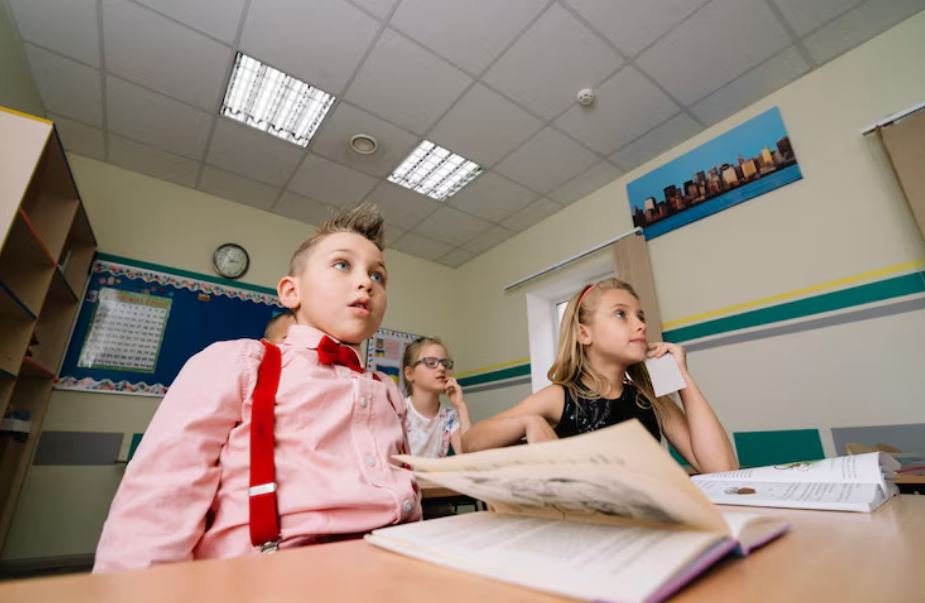
Their children came to Britain with a broken education and a language that was not recognized in British classrooms because they were born in refugee camps dispersed throughout Europe. Under the spiritual guidance of General Wałysław Anders, the Polish Educational Society was established in London in 1953 and started organizing a network of weekend classes, which were typically housed in Catholic school buildings that were empty on Saturdays and connected to Polish parishes.
What began as a temporary solution turned into a custom. And what started out as a custom eventually evolved into something more akin to a cultural institution, albeit one that relies heavily on volunteer labor and limited funding. These schools frequently employ qualified Polish educators who work during the week as waiters, childcare providers, or IT specialists. They don’t get paid. Some schools have tuition as low as seven pounds per session. The real currency is time—hours spent writing lesson plans at kitchen tables, driving minibuses full of kids to community halls, and converting multipurpose rooms into temporary classrooms before the first bell rings. The Polish government partially funds building rentals and textbooks.
Language is not the only subject taught in schools. Polish literature, history, geography, and national holidays are all included in the curriculum to help a child who has never visited Poland feel a connection to the country. Watching a group of eight-year-olds in a suburban Cambridgeshire room chant the Polish word for pineapple while stumbling over a picture of a gooseberry in their workbook is subtly moving because, like any child raised in Britain, gooseberries just don’t exist in their world. The real teaching occurs in the space between the textbook and real life.
Over the years, there has been a noticeable shift in the urgency of these schools. About 832,000 Polish-born people immigrated to the UK after Poland joined the EU in 2004, with about 180,000 of them settling in London. Compared to the postwar generation, the newcomers were younger, more mobile, and unsure of their permanent status in Britain. Enrollment at some schools increased following the Brexit referendum, not out of nostalgia but out of practicality. In case the family had to return, parents wanted their kids ready. A child could reintegrate into the Polish system without falling behind if they attended school on Saturdays.
The schools handle this tension with grace. They serve as a sort of insurance policy against an uncertain future in addition to serving to preserve identity. When the kids go, they frequently speak perfect, accent-free English with their friends and halting, foreign-sounding Polish with their grandparents. To put it simply, one mother in Ely said that her kids now think in English. The only thing preventing the Polish from completely disappearing is the Saturday school. Without these few hours per week, a whole generation might not be able to communicate with their own families on the other side of the border.
When asked what she enjoyed most about Saturday school, a girl in one of the younger classes instantly raised her hand. She said, “It’s shorter,” and everyone in the room chuckled. She was correct. However, something about those brief hours—the singing, the potato prints, the unwilling boys bought off with Pokémon Go—seems to have a significance that extends well beyond the schedule.
London Bilingualism's content on health, medicine, and weight loss is solely meant for general educational and informational purposes. This website does not offer any diagnosis, treatment recommendations, or medical advice.
We consistently compile and disseminate the most recent information, findings, and advancements from the medical, health, and weight loss sectors. When content contains opinions, commentary, or viewpoints from professionals, industry leaders, or other people, it is published exactly as it is and reflects those people's opinions rather than London Bilingualism's editorial stance.
We strongly advise all readers to consult a qualified medical professional before acting on any medical, health, dietary, or pharmaceutical information found on this website. Since every person's health situation is different, only a qualified healthcare provider who is familiar with your medical history can offer you advice that is suitable for you.
In a similar vein, any legal, regulatory, or compliance-related information found on this platform is provided solely for informational purposes and should not be used without first obtaining independent legal counsel from a licensed attorney.
You understand and agree that London Bilingualism, its editors, contributors, and affiliated parties are not responsible for any decisions made using the information on this website.
