

Somewhere in a classroom right now, a three-year-old is effortlessly switching between two languages in the middle of a sentence without even realizing she’s doing something amazing. Her teachers are aware of it. When it’s time for pickup, her parents are silently observing through the window. It’s simple to overlook the fact that her brain is performing a function that scientists have been debating for decades.
Raising a child who speaks two languages was thought to cause confusion, a sort of cognitive traffic jam, for a long time. That opinion proved to be incorrect. It was first undermined by Peal and Lambert’s 1962 study, which demonstrated that balanced bilinguals—those who were truly proficient in both languages—performed better on a number of cognitive tests than their monolingual counterparts. Even though it happened slowly, it was a paradigm shift. Old ideas, particularly those ingrained in parenting advice columns and school systems, die reluctantly.
Since then, researchers have discovered something more intriguing than a straightforward benefit. The bilingual brain does more than simply store two languages next to each other like files in a folder. It controls both at the same time, continuously suppressing, filtering, and choosing one while turning on the other. Thousands of repetitions of that management process throughout childhood seem to strengthen specific mental muscles, such as executive function, attention, and the capacity to switch between tasks without losing focus. This could be the reason why bilingual people typically think more abstractly and are generally better at changing with the times.
Bilingualism as a social fact—a community where two languages coexist—and bilinguality as a lived personal experience differ significantly and are worth considering. One has to do with geography and policy. Identity is the subject of the other. Your inner life is revealed through the language you speak to yourself when you’re afraid or when you’re worn out. It sounds weird until you’ve experienced it, but bilinguals frequently talk about feeling somewhat different in each language.
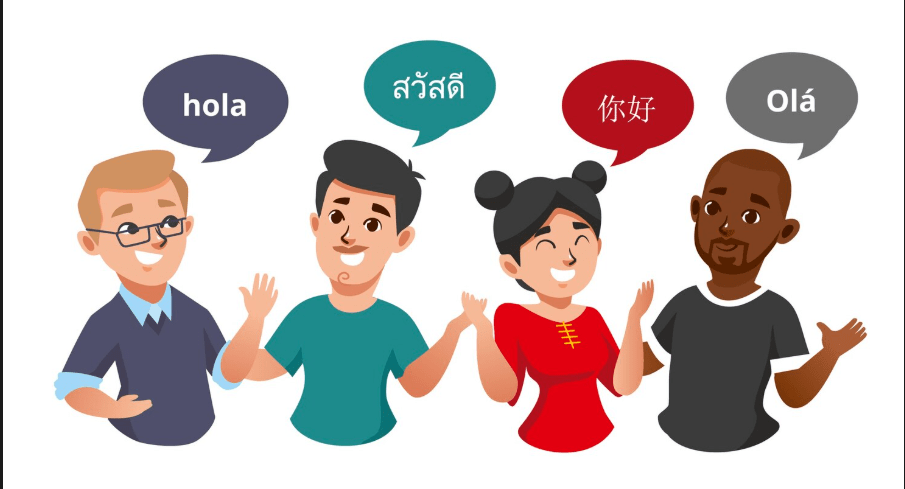
Seldom is the emotional layer given enough consideration. Speaking two languages in public can be extremely stressful, particularly in situations where one has greater social standing. Accent turns into a target. Instead of being interpreted as fluency, code-switching is perceived as confusion. In order to demonstrate that you are the owner of each language rather than merely borrowing it, there is frequently a subtle pressure to perform belonging. See how closely language is linked to power by observing this dynamic in immigrant communities or in international schools where students arrive speaking one language and depart navigating three.
However, early exposure appears to mitigate all of this. It turns out that because they haven’t yet learned to be afraid of making mistakes, young children are remarkably adept at picking up the sounds and rhythms of a new language. The phonological architecture is most adaptable during the preschool years, when a child will happily mispronounce a word 100 times before correcting it on the hundred and first. During those years, language immersion—complete immersion, not translation exercises—replicates the process of learning any first language. Through songs, stories, play, repetition, and the natural chaos of conversing with other children.
The long-term perspective is just as convincing. Individuals who have managed two languages for decades seem to have a slower rate of cognitive decline as they age. Although the exact reason is still unknown—perhaps the continual mental switching preserves neural pathways that might otherwise be underutilized—enough research has shown a link between lifelong bilingualism and a delayed onset of dementia and Alzheimer’s to warrant serious consideration. When a child learns the word for “apple” in two sounds rather than one, that is a substantial return.
It’s difficult to ignore how the discourse surrounding bilingualism is changing. What was once perceived as a challenge is increasingly appearing to be preparation for a global labor market, a more interconnected social world, and a longer-lasting sharper mind. When the child switches languages in the middle of a sentence during pickup, it doesn’t confuse them. She is honing a skill that will benefit her for the rest of her life.
London Bilingualism's content on health, medicine, and weight loss is solely meant for general educational and informational purposes. This website does not offer any diagnosis, treatment recommendations, or medical advice.
We consistently compile and disseminate the most recent information, findings, and advancements from the medical, health, and weight loss sectors. When content contains opinions, commentary, or viewpoints from professionals, industry leaders, or other people, it is published exactly as it is and reflects those people's opinions rather than London Bilingualism's editorial stance.
We strongly advise all readers to consult a qualified medical professional before acting on any medical, health, dietary, or pharmaceutical information found on this website. Since every person's health situation is different, only a qualified healthcare provider who is familiar with your medical history can offer you advice that is suitable for you.
In a similar vein, any legal, regulatory, or compliance-related information found on this platform is provided solely for informational purposes and should not be used without first obtaining independent legal counsel from a licensed attorney.
You understand and agree that London Bilingualism, its editors, contributors, and affiliated parties are not responsible for any decisions made using the information on this website.
