

The discussion of bilingual kids went in a single direction for a very long time. Either two languages were praised as a sort of cognitive vitamin, improving attention, increasing flexibility, and even delaying the early symptoms of dementia decades later, or two languages were said to overcrowd a young brain, slowing speech and confusing thought. Parents have heard both versions, sometimes within the same week and sometimes from the same pediatrician.
The current state of the science is fascinating. Following years of self-assured headlines regarding the “bilingual advantage,” a more subdued wave of researchers has begun to question whether the initial studies were measuring what everyone thought they were measuring. According to a 2018 meta-analysis, publication bias may have exaggerated the effect, and if there is a cognitive bump at all, it is small and associated with very particular circumstances. The majority of parenting books don’t tell that tale.
| Field | Detail |
|---|---|
| Subject | Cognitive effects of bilingualism in children |
| Primary research area | Developmental neuroscience and sociolinguistics |
| Key cognitive domains studied | Executive function, selective attention, metalinguistic awareness |
| Notable researcher | Ellen Bialystok (York University), pioneer in bilingual cognition |
| Estimated bilingual population worldwide | Over half the global population speaks more than one language |
| Age window most studied | Birth through age 5, with follow-up into older adulthood |
| Recent shift in findings | Move from “automatic advantage” to context-dependent benefit |
| Public health relevance | Possible delay in dementia onset by up to four years |
| Common misconception | That two languages confuse or delay young children |
| Current scientific consensus | Bilingualism is a resource, not a risk — though benefits are conditional |
Nevertheless, you can practically see the question being answered in real time if you walk into any preschool in Brussels, Toronto, or Karachi. When her grandmother walks in, a four-year-old changes mid-sentence from Urdu to English, then back again to argue with her brother. “Chien” is not what she reaches for when she means “dog.” All day long, something in her prefrontal cortex is silently sorting. Researchers think that the muscle known as executive function is developed through continuous sorting, which involves keeping two systems in mind and selecting one over the other.
Newer researchers believe that the field has been asking the wrong question for far too long. The question of whether bilingualism is “good” or “bad” for the brain presupposes a level of purity that language never possesses. Youngsters do not pick up two languages overnight.
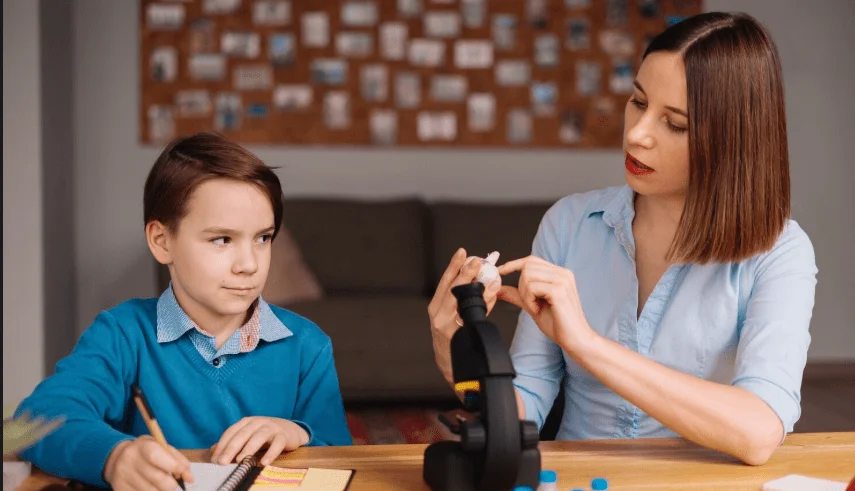
They learn them within families, communities, educational institutions, and economic conditions that influence the frequency and value of each language. The cognitive experience of a child who speaks Spanish at home in a Spanish-speaking neighborhood differs from that of a child who discreetly hides her native tongue at school.
Sociolinguists contend that context may be more important than bilingualism per se. It’s possible that what appears to be a cognitive advantage in certain studies is a result of active parenting, supportive families, or just kids getting to use both languages in ways that feel natural rather than taxing.
Contrary to popular belief, the cognitive advantages that researchers do discuss are more limited. improved distraction screening. easier to switch between tasks. What experts refer to as “metalinguistic awareness” is a more acute understanding that a word is merely a label rather than the thing itself. A bilingual child is not generally smarter as a result of any of this. Better grades are not guaranteed by any of it. However, the attention system, which is developed early in life, tends to endure, which may explain why some studies associate lifelong bilingualism with delayed cognitive decline in old age.
It’s difficult to ignore how much our cultural anxieties are projected onto children’s brains as we watch this debate play out. Bilingualism was a shortcoming in the 1950s. It was a superpower in the 2010s. These days, it’s a messier and more truthful resource that relies on usage rather than exposure. There isn’t likely to be a single clear solution for parents trying to decide which language to use at dinner tonight. The new study seems to be subtly suggesting that worrying was never the best place to start.
London Bilingualism's content on health, medicine, and weight loss is solely meant for general educational and informational purposes. This website does not offer any diagnosis, treatment recommendations, or medical advice.
We consistently compile and disseminate the most recent information, findings, and advancements from the medical, health, and weight loss sectors. When content contains opinions, commentary, or viewpoints from professionals, industry leaders, or other people, it is published exactly as it is and reflects those people's opinions rather than London Bilingualism's editorial stance.
We strongly advise all readers to consult a qualified medical professional before acting on any medical, health, dietary, or pharmaceutical information found on this website. Since every person's health situation is different, only a qualified healthcare provider who is familiar with your medical history can offer you advice that is suitable for you.
In a similar vein, any legal, regulatory, or compliance-related information found on this platform is provided solely for informational purposes and should not be used without first obtaining independent legal counsel from a licensed attorney.
You understand and agree that London Bilingualism, its editors, contributors, and affiliated parties are not responsible for any decisions made using the information on this website.
