

When most people hear the word “multilingual,” they envision someone sitting confidently at a dinner table and effortlessly switching between Mandarin and French. Despite its flattering appearance, that image is probably deceptive most of the time. Compared to any idealized version, the true multilingual meaning—what it actually describes in practice—is far messier, far more fascinating, and far more human.
Since 1992, linguist Vivian Cook has maintained that most multilingual speakers fall between two extremes: someone who can order coffee or ask for directions in a foreign city, and someone who has complete native-level proficiency in multiple languages. Cook refers to those in this broad middle ground as “multi-competent,” which seems appropriate. It’s a term that allows for the fact that language proficiency rarely comes in neat, equal packages and that fluency isn’t binary.
This is evident almost instantly when you stroll through a bustling market in Karachi or stand outside a train station in Brussels. You’ll hear people switch between languages in the middle of sentences—not because they’re confused, but because that’s how language functions when it’s inside a person rather than on a whiteboard in a classroom. It seems that the academic definition of multilingualism has never been able to keep up with the real-world activities of speakers.
However, the economic case for multilingualism is simpler to understand. Multilingualism is positively correlated with individual salaries, corporate productivity, and national GDP, according to Swiss research, adding nearly 10% to the country’s total output. According to a different U.S. study, bilingual employees earn about $3,000 more annually than their monolingual peers. These figures are not insignificant. Although it’s still unclear how much of that premium is due to linguistic aptitude alone versus the cultural flexibility that frequently accompanies it, the relationship is difficult to ignore.
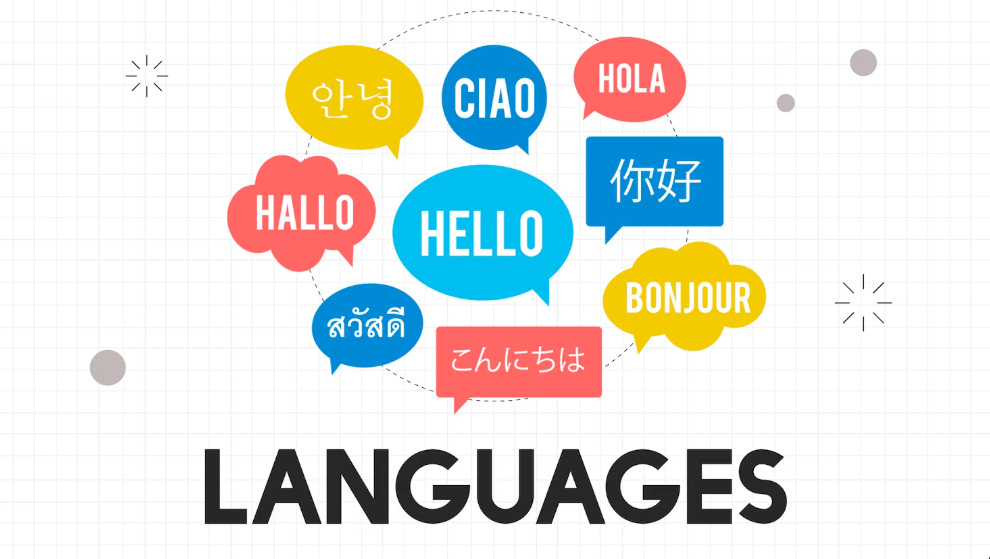
It turns out that children make the majority of these decisions. Researchers have long observed that learning a language at a young age is important for both the ease of assimilating new languages and pronunciation, which deteriorates most quickly when a language is acquired later in life. The most obvious institutional example of this philosophy being taken seriously is probably Finnish children, who are mandated by the national curriculum to study at least three languages, including Finnish, Swedish, and a foreign language. Many of them continue, learning Spanish, French, or German in the process. It’s difficult to ignore the fact that nations with these kinds of early expectations typically produce adults who can function in multilingual environments without being viewed as exceptional.
Two very different routes to the same goal are represented by sequential and simultaneous bilingualism. Simultaneous bilinguals, or children who hear two languages from birth, may favor one over the other for years before balancing out. According to research, children who migrate at a young age and later come across a second language go through sequential acquisition, which is a longer and less linear process but doesn’t ultimately make them worse off. The brain is incredibly accommodating, especially when it is young.
The ability to comprehend a language without speaking it is another aspect of receptive bilingualism that merits consideration. This is a common occurrence in immigrant communities in the US, where parents and kids speak different languages but manage to understand one another just fine. It’s a subtle, unnoticed type of multilingualism that probably merits more recognition as a true linguistic ability than it usually gets.
In the end, multilingual meaning boils down to this: neither language nor its users exist in a vacuum. Politics, geography, identity, and history all influence language boundaries. Following the dissolution of Yugoslavia, Serbo-Croatian was divided into four languages. For political rather than linguistic reasons, Ukrainian was written off as a dialect of Russian. It turns out that language has always been about more than just words—it has always been about power and belonging. That is unlikely to change. However, it appears that more and more people are using multiple versions of it.
London Bilingualism's content on health, medicine, and weight loss is solely meant for general educational and informational purposes. This website does not offer any diagnosis, treatment recommendations, or medical advice.
We consistently compile and disseminate the most recent information, findings, and advancements from the medical, health, and weight loss sectors. When content contains opinions, commentary, or viewpoints from professionals, industry leaders, or other people, it is published exactly as it is and reflects those people's opinions rather than London Bilingualism's editorial stance.
We strongly advise all readers to consult a qualified medical professional before acting on any medical, health, dietary, or pharmaceutical information found on this website. Since every person's health situation is different, only a qualified healthcare provider who is familiar with your medical history can offer you advice that is suitable for you.
In a similar vein, any legal, regulatory, or compliance-related information found on this platform is provided solely for informational purposes and should not be used without first obtaining independent legal counsel from a licensed attorney.
You understand and agree that London Bilingualism, its editors, contributors, and affiliated parties are not responsible for any decisions made using the information on this website.
