

On a weekday morning, you might not notice the difference if you stroll down Cromwell Road. There are still crossing guards. The parents are still gathered outside the gates of the Lycée Franço Charles de Gaulle, their coats pulled tight as they speak the short, clipped Parisian French that used to give South Kensington the impression that the 7th arrondissement had subtly taken over a portion of west London. However, there are fewer people. The rambling is quieter. Additionally, the head teachers no longer act as though everything is alright when you ask them off-the-record.
Since the First World War, the Lycée has been a part of London. For many years, London made it easy for French diplomats, bankers, lawyers, chefs, and a long list of other professionals to relocate to the City. The school was full by 2012, when the French presidential candidates were publicly campaigning in Kensington town hall. There was a years-long waiting list. It’s difficult to ignore the fact that today’s waiting list is empty.
It was replaced by something more subdued and difficult to identify. It’s not a collapse; French schools in London continue to operate, maintain their reputation, and are still overcrowded in some year groups. However, the center of gravity has moved. Families with five-year plans who arrived in 2010 began departing without a return ticket in 2018. A few relocated to Paris. Surprisingly, many traveled to Dubai, Singapore, or back to Brussels and Lille via the Channel Tunnel, where their EU passports still had the same significance as before. Speaking with parents who stayed gives the impression that those who departed seldom returned.
Brexit is both the blatant offender and the indolent one. The reality is more nuanced. The 2016 referendum led to a gradual, courteous reevaluation rather than a stampede. Residents of France were not deported. Year after year, all they were asked to do was submit paperwork, explain to their teenage children why the family was now officially a migrant household, watch the pound fluctuate, and justify their presence. Biometric appointments, pre-settled status, settled status, and the minor embarrassments of being a stranger in a city you had contributed to its development all added up. While balancing a school bag and a baguette, a mother I met near Bute Street described it as “death by a thousand forms.”
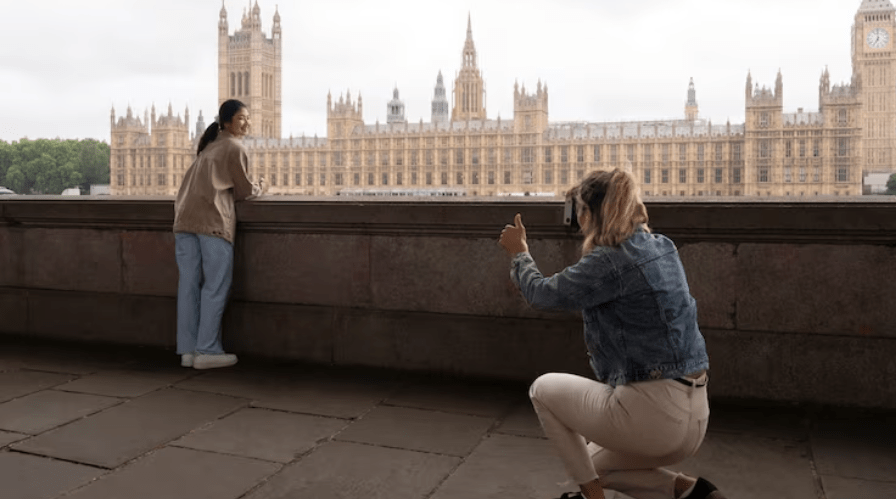
In their own subtle way, the numbers surrounding it are stark. GLA Economics estimates that by 2019, London’s economy was operating about £32 billion below potential levels, or almost £9,500 in lost revenue per household. Because no one can pinpoint the exact moment it occurred, that type of figure hardly ever makes the front page. It’s not an event; it’s an absence. Its mirror is the diminishing Lycée, which is merely a fading rather than a closure.
Walking by the school in the late afternoon gives me the impression that London is losing something it never fully realized it had. The “middling movers” from the continental middle class, who came to London for opportunity rather than safety, were the soft tissue that gave the city its European vibe. Teachers, parents, bankers, and baristas. They didn’t advocate. They didn’t object. They simply stopped coming or departed. And the city hardly noticed the farewell because it was preoccupied with bigger dramas.
It’s still unclear if this will last forever. Shocks have previously been absorbed by London. However, the quiet thinning of the Lycée is, in its own subtle way, one of the most accurate estimates of the true costs of Brexit.
London Bilingualism's content on health, medicine, and weight loss is solely meant for general educational and informational purposes. This website does not offer any diagnosis, treatment recommendations, or medical advice.
We consistently compile and disseminate the most recent information, findings, and advancements from the medical, health, and weight loss sectors. When content contains opinions, commentary, or viewpoints from professionals, industry leaders, or other people, it is published exactly as it is and reflects those people's opinions rather than London Bilingualism's editorial stance.
We strongly advise all readers to consult a qualified medical professional before acting on any medical, health, dietary, or pharmaceutical information found on this website. Since every person's health situation is different, only a qualified healthcare provider who is familiar with your medical history can offer you advice that is suitable for you.
In a similar vein, any legal, regulatory, or compliance-related information found on this platform is provided solely for informational purposes and should not be used without first obtaining independent legal counsel from a licensed attorney.
You understand and agree that London Bilingualism, its editors, contributors, and affiliated parties are not responsible for any decisions made using the information on this website.
