

London is the undisputed global center of curated exclusivity, with about 130 private members’ clubs as of the last count. This number still dwarfs New York’s fifty or so offerings. On a calm Tuesday, you can practically feel the centuries’ worth of political horse-trading, gossip, and trade seeping through Georgian brickwork as you stroll down St. James’s Street. However, over the past ten years, there has been a less obvious change within these organizations as well as within their more recent, glitzy competitors. The rolls of members are evolving. Not only in gender and generation, which have been thoroughly documented, but also in language. People who switch between two, three, or even five languages before lunch are increasingly shaping London’s private clubs, and the clubs themselves are starting to take notice.
It’s difficult to ignore the reason. With over three hundred languages spoken throughout its boroughs, London continues to be one of the world’s most linguistically diverse cities. With passports from Lagos, São Paulo, Dubai, or Singapore, the financial, tech, and creative professionals swarming into Mayfair townhouses and Shoreditch co-working lofts bring their networks and their expectations with them. The traditional clubs created for English-speaking gentlemen who drank hock at Boodle’s aren’t exactly made for members who might use Mandarin to close a deal over cocktails and switch to French for conversation after dinner.
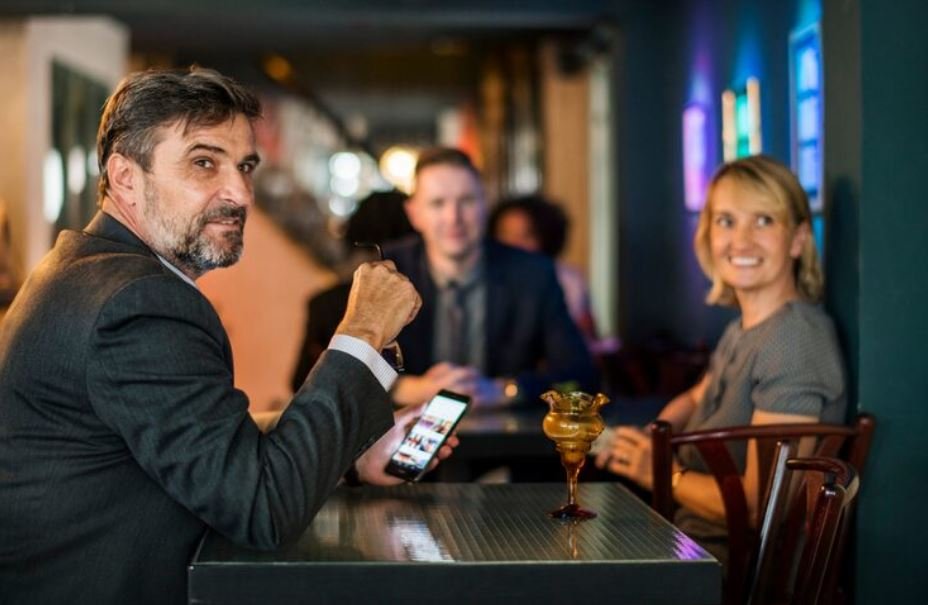
Certain clubs have adjusted more quickly than others. Because wealth has always been multilingual, Annabel’s, that Mayfair institution where a Picasso greets you in the lobby and gentlemen still need jackets after six, has long drawn an international clientele. A few blocks away, the Arts Club attracts a creative clientele that is almost exclusively multilingual: filmmakers who alternate their year between London and Mumbai, architects from Milan, and gallerists from Berlin. Although these locations seem to have always been multicultural, the intentionality surrounding it seems more recent. Small but significant cues include multilingual events, concierge personnel who speak Arabic or Portuguese fluently, and printed materials that subtly acknowledge that not everyone thinks in English first.
Newcomers have gone farther. Clubs like The Twenty Two on Grosvenor Square and Maison Estelle, with their distinctly European sensibility, almost seem to be made to draw members who order in Italian, negotiate in English, and gossip in their native tongue. Former Soho House commercial director Jamie Caring, who currently advises on new club ideas, has discussed how clubs need to be more than just places to hang out. For multilingual professionals in London, this larger role frequently entails cultural fluency—not just a wine list, but a setting where changing languages in the middle of a sentence doesn’t seem out of the ordinary or performative.
This change may reveal more about London as a whole. The private club scene used to feel like one of the last places where a certain monocultural Englishness persisted, despite the city’s constant promotion of its cosmopolitanism. The oldest club in London, White’s, still only accepts men. This year, the Savile Club decided to completely exclude women. According to a recent study on clubland, these organizations continue to exist because they cater to a unique, self-selecting membership. However, when the world outside your bow window has drastically changed, distinctiveness can become irrelevant. Clubs like the South Kensington Club and Morton’s closed because the people they were meant to serve no longer cared about them.
Beyond tokenistic internationalism or diversity metrics, the multilingual dimension adds another level. Language has an impact on how people network, establish trust, and complete transactions. When a Brazilian fintech entrepreneur joins a club where she can converse in Portuguese with three other members during a productive breakfast, she receives something very different from what an English-only setting provides. No amount of curated programming or interior design can match the social shorthand found in shared language. It appears that some club managers have an innate understanding of this. Others are still catching up, rushing into multilingual events or translation services in the same way that older clubs used to rush into wellness rooms. They are sincere, but they are lagging behind.
It’s genuinely unclear whether this trend will permanently alter London’s clubland. Private membership economics continue to favor the group of people who can easily pay four-figure annual fees, and by definition, that group is becoming more multilingual and worldwide. The cultural question, however, is more difficult. Soho House may have learned this lesson the hard way during its explosive growth: a club that tries to be everything to everyone ends up becoming nothing to anyone. Clubs that view multilingualism as a texture, something woven into the fabric of the establishment rather than something added after the fact, are likely to be the ones that prosper. Perhaps the only city where that experiment can be carried out is London, with its three hundred languages and unwavering love of seclusion.
London Bilingualism's content on health, medicine, and weight loss is solely meant for general educational and informational purposes. This website does not offer any diagnosis, treatment recommendations, or medical advice.
We consistently compile and disseminate the most recent information, findings, and advancements from the medical, health, and weight loss sectors. When content contains opinions, commentary, or viewpoints from professionals, industry leaders, or other people, it is published exactly as it is and reflects those people's opinions rather than London Bilingualism's editorial stance.
We strongly advise all readers to consult a qualified medical professional before acting on any medical, health, dietary, or pharmaceutical information found on this website. Since every person's health situation is different, only a qualified healthcare provider who is familiar with your medical history can offer you advice that is suitable for you.
In a similar vein, any legal, regulatory, or compliance-related information found on this platform is provided solely for informational purposes and should not be used without first obtaining independent legal counsel from a licensed attorney.
You understand and agree that London Bilingualism, its editors, contributors, and affiliated parties are not responsible for any decisions made using the information on this website.
