Close Menu
London BilingualismLondon Bilingualism
    Facebook X (Twitter) Instagram
    London BilingualismLondon Bilingualism
    Subscribe
    • Home
    • About
    • Trending
    • Parenting
    • Kids
    • Health
    • Privacy Policy
    • Contact Us
    • Terms Of Service
    London BilingualismLondon Bilingualism
    Home » Inside the Bilingual Preschool Classroom Where Two-Year-Olds Switch Languages Mid-Sentence
    Education

    Inside the Bilingual Preschool Classroom Where Two-Year-Olds Switch Languages Mid-Sentence

    paige laevyBy paige laevyJune 6, 2026No Comments3 Mins Read
    Facebook Twitter Pinterest LinkedIn Tumblr Email
    Share
    Facebook Twitter LinkedIn Pinterest Email

    The first thing you notice when you walk into a bilingual preschool isn’t the noise, though there is plenty of it. It’s the small switch. A four-year-old asks for milk in German, then turns and tells her friend something about a missing shoe in English, all without pausing. Adults find this disorienting. The children don’t. They’ve already learned something most of us forget by adulthood, which is that languages are tools, not walls.

    The accadis Bilingual Preschool, like a growing number of similar programs across Europe and the United States, runs on what educators call the immersion method. Each mixed-age group is supervised by two teachers, one speaking only English and one speaking only German. There’s no translation, no formal grammar instruction, no flashcards. The children pick it up the way they pick up everything else at that age, which is to say through repetition, mimicry, and the slow, stubborn business of figuring out what the grown-ups want.

    Watching this unfold, it’s hard not to feel a little envious. Adults take expensive courses and download apps. Toddlers absorb a second language the way they absorb dust.

    The day begins early. From 07:45 the doors open, and by 09:00 they close for morning circle. There’s a sugar-free breakfast, then crafts or music or time in the gym, depending on the day and the group. The youngest children, the Daisies, are still learning to use the toilet and hold a pencil correctly. The Sunflowers are doing arts projects on their own and learning their first letters and numbers. After lunch, the small ones nap. The older ones rest briefly, then head outside.

    There’s a temptation, when discussing programs like this, to lean on the research. And there is research, plenty of it, suggesting that bilingual children show better executive function, stronger working memory, and a kind of cognitive flexibility that holds up well into old age. But the studies, however persuasive, sometimes miss what parents actually notice. Which is something subtler. A child who hesitates less before speaking to a stranger. A child who corrects herself mid-sentence, then shrugs and moves on. A certain comfort with not knowing.
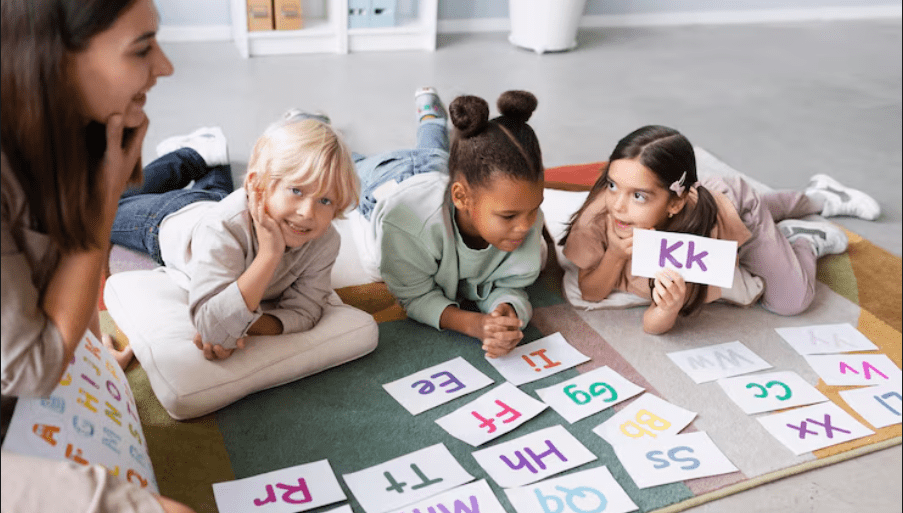
    Inside the Bilingual Preschool Classroom
    Inside the Bilingual Preschool Classroom

    The transition from preschool to elementary school is, for most families, the first real academic milestone. The bilingual Primary Class, beginning at age five, is designed to bridge that gap without losing what came before. Children continue in both languages while taking on more formal work, including reading, writing, and arithmetic. By Grade 1, the hope is they arrive prepared, not just in vocabulary but in temperament.

    Whether bilingual preschool is the right choice for every family is a different question, and one without a clean answer. It costs more. It requires commitment. Some children take longer to start speaking, which can be unnerving for parents waiting on first words. And there’s still mild debate among researchers about how durable the cognitive benefits really are if the second language isn’t maintained at home.

    But there’s a sense, talking to families who have stuck with these programs, that the value isn’t only academic. It’s something closer to perspective. A child who learns early that the world can be described in more than one way tends to assume, later, that most things can. That’s harder to measure than vocabulary tests. It might also be the part that matters most.

    Disclaimer

    London Bilingualism's content on health, medicine, and weight loss is solely meant for general educational and informational purposes. This website does not offer any diagnosis, treatment recommendations, or medical advice.

    We consistently compile and disseminate the most recent information, findings, and advancements from the medical, health, and weight loss sectors. When content contains opinions, commentary, or viewpoints from professionals, industry leaders, or other people, it is published exactly as it is and reflects those people's opinions rather than London Bilingualism's editorial stance.

    We strongly advise all readers to consult a qualified medical professional before acting on any medical, health, dietary, or pharmaceutical information found on this website. Since every person's health situation is different, only a qualified healthcare provider who is familiar with your medical history can offer you advice that is suitable for you.

    In a similar vein, any legal, regulatory, or compliance-related information found on this platform is provided solely for informational purposes and should not be used without first obtaining independent legal counsel from a licensed attorney.

    You understand and agree that London Bilingualism, its editors, contributors, and affiliated parties are not responsible for any decisions made using the information on this website.

    Bilingual Classroom
    Share. Facebook Twitter Pinterest LinkedIn Tumblr Email
    paige laevy
    • Website

    Paige Laevy is a passionate health and wellness writer and Senior Editor at londonsigbilingualism.co.uk, where she brings clinical expertise and genuine enthusiasm to every article she publishes.Paige works as a registered nurse during the day, which keeps her on the front lines of patient care and feeds her in-depth knowledge of medicine, healing, and the human body. Her writing is shaped by this real-life experience, which gives her material an authenticity and accuracy that readers can rely on.Her writing covers a broad range of health-related subjects, but she focuses especially on weight-loss techniques, medical developments, and cutting-edge technologies that are revolutionizing contemporary healthcare facilities. Paige converts difficult clinical concepts into understandable, practical insights for regular readers, whether she's dissecting the most recent advances in medical research or investigating cutting-edge therapies.

    Related Posts

    Early Childhood Education Program: What the World Keeps Getting Wrong About the First Eight Years

    June 6, 2026

    The Bilingual Website Boom: How Small Brands Are Outsmarting Global Giants

    June 6, 2026

    How Long Is the AP Environmental Science Exam — and Why the Calculation Question at the End Trips Up More Students Than Any Other Part

    June 5, 2026
    Leave A Reply Cancel Reply

    You must be logged in to post a comment.

    Education

    Early Childhood Education Program: What the World Keeps Getting Wrong About the First Eight Years

    By paige laevyJune 6, 20260

    I can’t stop thinking about a small, somewhat disorganized classroom in a Lahore primary school…

    Inside the Bilingual Preschool Classroom Where Two-Year-Olds Switch Languages Mid-Sentence

    June 6, 2026

    The Bilingual Website Boom: How Small Brands Are Outsmarting Global Giants

    June 6, 2026

    The End of the Bilingual Customer Service Rep , Inside America’s Looming AI-Driven Layoff Wave

    June 5, 2026

    Why a Bilingual Whitechapel Sign Photo Tells Us Everything About Modern Britain

    June 5, 2026

    Why London’s Tech Sector is Rejecting Monolingual Developers

    June 5, 2026

    Inside the London Hospital Where Cancer Forms Are Now Printed in 23 Languages

    June 5, 2026

    The Bilingual Babysitter Boom , Why Wealthy New York Families Are Paying $30 an Hour for French-Speaking Nannies

    June 5, 2026

    How Long Is the AP Environmental Science Exam — and Why the Calculation Question at the End Trips Up More Students Than Any Other Part

    June 5, 2026

    Argosy University Is Gone — But Its Former Students Are Still Fighting for Loan Relief Years Later

    June 5, 2026
    About
    About

    London Bilingualism (https://londonsigbilingualism.co.uk) was founded to serve a growing community hungry for credible, nuanced content that bridges two deeply human experiences: the cognitive richness of bilingualism and the ever-evolving world of health and medicine.

    Disclaimer

    London Bilingualism’s content on health, medicine, and weight loss is solely meant for general educational and informational purposes. This website does not offer any diagnosis, treatment recommendations, or medical advice.

    We strongly advise all readers to consult a qualified medical professional before acting on any medical, health, dietary, or pharmaceutical information found on this website. Since every person’s health situation is different, only a qualified healthcare provider who is familiar with your medical history can offer you advice that is suitable for you.


    Must Read

    APUSH Exam Timing Explained , 3 Hours and 15 Minutes, Four Sections, and One 15-Minute Reading Window That Could Save Your DBQ

    June 5, 2026

    St Lawrence College Kent Closure: How 146 Years of History Quietly Ended in Ramsgate

    May 22, 2026

    The AI Copilot , Why Bilingual Programmers Rely on AI to Translate Code to Human Speech

    June 4, 2026

    The Bilingual Brain at 80: New Stanford Study Reveals Why Two Languages May Delay Dementia by Five Years

    May 2, 2026
    • Home
    • About
    • Trending
    • Parenting
    • Kids
    • Health
    • Privacy Policy
    • Contact Us
    • Terms Of Service
    © 2026 ThemeSphere. Designed by ThemeSphere.

    Type above and press Enter to search. Press Esc to cancel.