

Seeing a machine negotiate honeymoon packages in Hindi has a subtly peculiar quality. There won’t be any awkward pauses where a phrase doesn’t quite land or stumbles over transliteration. Just natural, contextual dialogue, switching between Hindi and English as a seasoned travel agent in Delhi might with a client who switches between languages in the middle of a sentence. In any case, this is the rationale behind MakeMyTrip’s improved GenAI assistant as well as the increasing number of bilingual AI travel tools that are currently vying for India’s sizable, mainly unexplored online travel market.
In August 2025, MakeMyTrip unveiled its redesigned AI trip planner, expanding upon its current assistant Myra. More Indian languages are reportedly on the roadmap for the tool, which can handle text and voice in both Hindi and English. The group CEO and co-founder of the company, Rajesh Magow, was open about not pursuing quick profits. He stated, “We are not putting a number right now and telling our teams: ‘Okay, here’s the target on this interface,'” at the press conference. In an industry that is fixated on quarterly performance, that level of restraint is uncommon. It’s also instructive.
There are about 900 million internet users in India. Only a small portion of that—possibly a fifth, depending on whose estimate you believe—actually make online travel reservations. The disparity goes beyond access and digital literacy. It has to do with comfort, language, and the enduring perception among hundreds of millions of people that these platforms weren’t truly designed with them in mind. It’s not a gimmick if a Hindi-speaking AI can guide someone through a reservation for a beach resort in Goa or a family vacation to Shimla without requiring them to navigate English menus and dropdown filters. It could mean the difference between an addressable market worth $5 billion and one worth $50 billion.
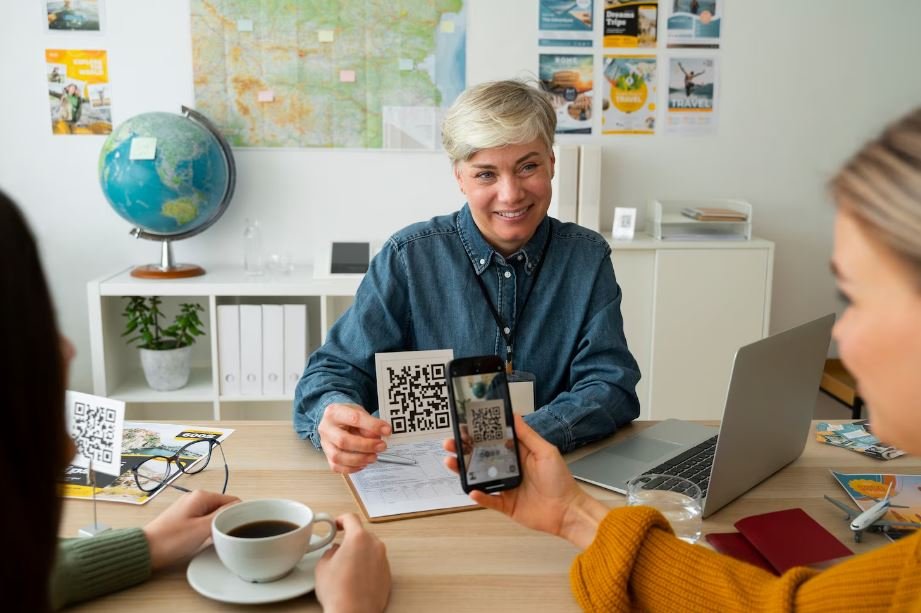
MakeMyTrip is not the only company that has noticed this. In June 2025, Agoda launched an AI Vacation Planner for Indian tourists, featuring Bollywood actor Ayushmann Khurrana as Mr. Vacaywala, a fictional “Chief Wellness Officer.” The program creates customized video itineraries that speak to users by name, utilizing Google’s Gemini and Imagen models. It is ostentatious, campaign-driven, and intended to operate for a brief period of time rather than function as long-term infrastructure. However, it is evident that international platforms view India’s linguistic diversity as a competitive advantage that merits significant investment rather than as a barrier.
In the meantime, investors are paying attention to startups developing voice AI in ten or more Indian languages because they recall what happened when fintech companies managed to crack vernacular payment interfaces. Although the comparison isn’t flawless, it rhymes. The emotional, complex, and intensely personal aspects of travel make language particularly sensitive. It is not only inconvenient but also alienating to ask someone to organize their parents’ anniversary vacation using an interface they are unable to fully utilize.
MakeMyTrip’s group CTO, Sanjay Mohan, described the investment as existential. “If you don’t catch the right trend and if you’re not a front runner in that area, there’s a larger risk,” he stated. That anxiety doesn’t feel staged; it feels real. For the first quarter of FY26, the company reported adjusted operating profit of $47.3 million, a 21% increase from the previous year. Good numbers, but not the kind that would allow you to overlook a possible disturbance that may be developing in your own backyard.
It’s more difficult to gauge whether these bilingual agents will ever manage the kind of complex, high-value reservations that still rely on human judgment and relationship-building, such as destination weddings, multi-city luxury itineraries, and corporate retreats costing hundreds of thousands of dollars. For the majority of travelers, AI might be able to handle 90% of the complexity while identifying edge cases for human review. It’s also possible that the wealthiest segment of the market is still adamantly analog, favoring someone who can recall their Oberoi room preference.
However, the direction seems unchangeable for the time being. The bilingual AI travel agent is no longer a novel concept. It’s evolving into infrastructure—imperfect, still learning, sometimes awkward when using idioms, but getting better every time. Somewhere in a Tier 2 city, under the guidance of an impatient machine, someone is organizing their first foreign trip entirely in Hindi. That’s a big deal.
London Bilingualism's content on health, medicine, and weight loss is solely meant for general educational and informational purposes. This website does not offer any diagnosis, treatment recommendations, or medical advice.
We consistently compile and disseminate the most recent information, findings, and advancements from the medical, health, and weight loss sectors. When content contains opinions, commentary, or viewpoints from professionals, industry leaders, or other people, it is published exactly as it is and reflects those people's opinions rather than London Bilingualism's editorial stance.
We strongly advise all readers to consult a qualified medical professional before acting on any medical, health, dietary, or pharmaceutical information found on this website. Since every person's health situation is different, only a qualified healthcare provider who is familiar with your medical history can offer you advice that is suitable for you.
In a similar vein, any legal, regulatory, or compliance-related information found on this platform is provided solely for informational purposes and should not be used without first obtaining independent legal counsel from a licensed attorney.
You understand and agree that London Bilingualism, its editors, contributors, and affiliated parties are not responsible for any decisions made using the information on this website.
