

A middle-aged Army veteran is talking about his phone habits in a therapist’s office in a mid-sized American city. He began searching for guitar lessons and watching music videos on social media. It’s fairly easy. But gradually, almost unnoticed, his feed changed; night after night, street fights, security altercations, and police body-cam footage filled the screen.
He was unable to stop observing. And over several months, he underwent a transformation. His emotional reactions became flat. He began using a coldness that had never been present before when describing strangers in news clips. This is no longer an uncommon tale. It is a common occurrence for psychiatrists, and it begs the question, which no one in Silicon Valley seems particularly eager to address: what precisely are these platforms doing to us?
| Category | Details |
|---|---|
| Topic | Social Media Narcissism & Algorithmic Empathy Erosion |
| Key Concern | Algorithms engineered for engagement quietly reshaping personality traits, emotional responses, and capacity for empathy |
| Primary Age Group | Young adults in their 20s — the most narcissistic demographic in recorded research history |
| Research Benchmark | NPI scores among American college students rose significantly between 1982 and 2006; follow-up studies showed continued increase |
| Algorithm Mechanism | Micro-engagement signals (pausing, replaying, hovering) used to escalate content toward more extreme, high-arousal material |
| Neurological Impact | Repeated violent or emotionally charged content reduces amygdala reactivity; prefrontal cortex engagement weakens over time |
| Notable Finding | Simulated teen accounts on YouTube saw misogynistic content rise from 13% to 56% within just 5 days |
| Documented Platform Harm | Facebook’s own internal research identified vulnerable users as disproportionately exposed to borderline content |
| Clinical Observation | Psychiatrists now report patients whose mood, judgment, and behavior appear shaped by algorithmically curated feeds |
| Broader Cultural Signal | Over 10% of people in their 20s are believed to meet criteria for subclinical narcissism — a figure that would have seemed extraordinary a generation ago |
Based on an increasing amount of research, the short answer is more than most people think. Algorithms used in social media are not impartial delivery methods. They are optimization engines that feed content that elicits the strongest physiological response in order to maximize the amount of time a user spends on a platform. Threatening content, moral outrage, and graphic footage are more likely to draw viewers in than anything serene or impartial. The platforms are aware of this. Facebook’s own researchers had found that vulnerable user groups were disproportionately drawn to content that caused serious harm, according to the Facebook Papers, leaked internal documents that attracted intense scrutiny when they came to light. For the industry, that detail hasn’t held up too well.
The narcissism component, which is frequently separated from the desensitization discussion but probably shouldn’t be, is what makes this particularly noteworthy. Narcissistic traits, as measured by the Narcissistic Personality Inventory, increased gradually from the early 1980s through the 2000s, with the greatest increases occurring in tandem with the emergence of image-focused platforms, according to research that followed college students over several decades. According to a 2018 study that followed young adults for four months, those who shared a lot of selfies increased their narcissistic traits by about 25% during that time. It’s possible that the relationship is reciprocal: narcissistic individuals are drawn to these platforms, which then magnify preexisting issues. However, the result is more important than the directionality.
Observing all of this over the past ten years has given me the impression that the most underreported casualty is the empathy piece. Self-image issues, such as excessive vanity, selfies, and attention-seeking, are frequently used to describe narcissism. However, the loss of the ability to truly feel what another person is going through might be the more serious harm. According to neuroimaging research, the brain regions in charge of empathy and moral judgment become less responsive after repeated exposure to violent or emotionally charged content. The brain adjusts to the amount of distress it receives, interpreting it as background noise instead of something that calls for a human reaction. Patients eventually characterize it as “not feeling anything.” Although it sounds more like a cultural description, that is a clinical one.
It is more difficult to write off this as a minor issue given the extent of youth exposure. According to a 2024 survey of over 10,000 teenagers, 70% of them had come across real-life violence on social media, and 25% said the content had been suggested by algorithms rather than being searched. Nearly two-thirds of teenagers who had acted violently themselves claimed that social media had some influence. In addition to general concerns about screen time, the US Surgeon General’s 2023 advisory on social media and youth mental health specifically identified algorithmic content delivery as a separate pathway of harm. The public discourse has been slow to acknowledge this important distinction.
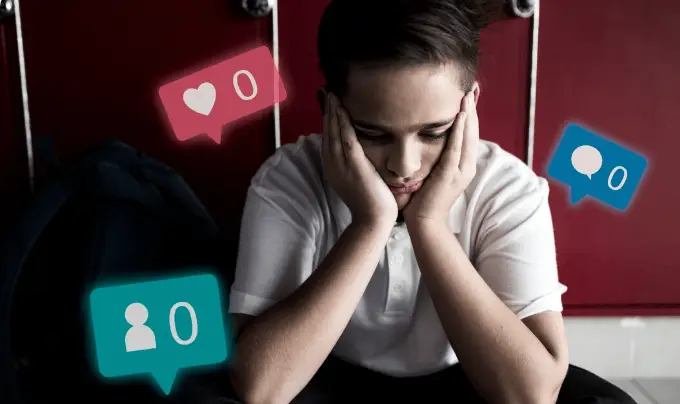
It’s still unclear if there will be significant regulatory pressure or if the platforms will change their ways on their own; history indicates that the latter is unlikely when engagement metrics continue to be the main indicator of success. What is evident is that these systems’ architecture, which was designed to maintain attention at nearly any psychological cost, has resulted in a generation that is emotionally calibrated to a feed rather than to one another. This is something that the original designers either failed to foresee or chose not to consider.
London Bilingualism's content on health, medicine, and weight loss is solely meant for general educational and informational purposes. This website does not offer any diagnosis, treatment recommendations, or medical advice.
We consistently compile and disseminate the most recent information, findings, and advancements from the medical, health, and weight loss sectors. When content contains opinions, commentary, or viewpoints from professionals, industry leaders, or other people, it is published exactly as it is and reflects those people's opinions rather than London Bilingualism's editorial stance.
We strongly advise all readers to consult a qualified medical professional before acting on any medical, health, dietary, or pharmaceutical information found on this website. Since every person's health situation is different, only a qualified healthcare provider who is familiar with your medical history can offer you advice that is suitable for you.
In a similar vein, any legal, regulatory, or compliance-related information found on this platform is provided solely for informational purposes and should not be used without first obtaining independent legal counsel from a licensed attorney.
You understand and agree that London Bilingualism, its editors, contributors, and affiliated parties are not responsible for any decisions made using the information on this website.
