

In the rural outskirts of Villavicencio, the capital of Meta department in Colombia’s eastern lowlands, a school is situated on a plot of land that doesn’t appear to be much from the road, somewhere past the Caracolí condominium. Then you get nearer. The sports courts appear, the green areas expand, and in the distance, kids are studying English in an environment that seems purposefully cut off from the bustle of the city. This is Stanford School, and although it shares a name with one of the most prominent universities in the world, it came to that identity on its own terms, beginning in a much more modest setting.
Liceo Infantil Hansel y Grettel, a childhood story title for a childhood-focused institution, was established in 1998 with 12 students and the conviction of a single teacher who thought that rigor and love could coexist in a classroom. After steadily expanding through elementary and secondary education, the school changed its name to Stanford School sixteen years later and formalized its identity around English immersion, values education, and what it refers to as a campestre approach to learning—instruction embedded in nature, open space, and physical space rather than confined to traditional urban buildings. With official approvals for every level of the Colombian national curriculum, the school has expanded to over 300 students by 2026, ranging from preschool through Grade 11.
Reading the school’s history gives the impression that the 2014 name change was more about solidifying a pedagogical vision that had been developing for fifteen years than it was about branding. With its expansive green areas, football, basketball, and volleyball fields, cultural kiosks, and spacious classrooms, the campestre campus is a tangible manifestation of the idea that learning occurs more effectively when kids are able to move around, breathe outside air, and regularly interact with nature. This school is not the only one with this philosophy, but it is uncommon in the area, and it seems to be one of the reasons families choose this specific option in a city with many private school options.
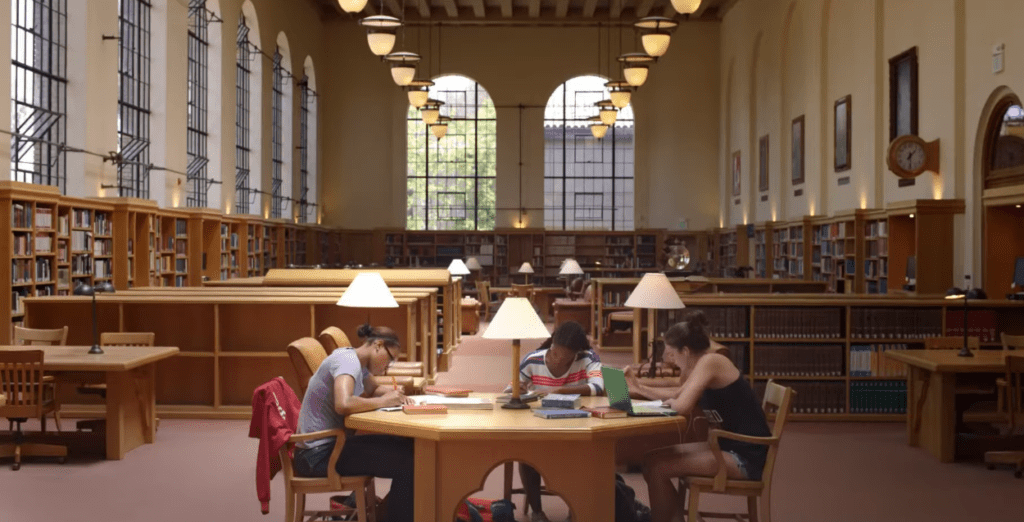
From preschool onward, the school’s curriculum places a strong emphasis on English, which in Colombia is seen as a sincere commitment rather than a requirement. English is taught in the majority of the nation’s private schools. It is framed by Stanford School as a throughline, a competency that is not limited to scheduled language classes but rather permeates many subject areas and everyday school life. This method tends to yield significantly different outcomes than traditional foreign language instruction, especially for students who start at age three and continue through graduation, if it is maintained with consistency and qualified teachers. It is more difficult to confirm from the outside how consistently that vision is implemented across all grade levels, but the school’s longevity and enrollment figures indicate it has found a constituency that supports the model.
Another aspect that truly sets the institution apart from the majority of regional options is the international program. Stanford School connects students from Colombia, Canada, and Europe through cultural exchange programs through a partnership with Educultura STF. Participants between the ages of 17 and 21 can participate in immersion tracks in Spanish, English, and German. Maintaining active international partnerships across two continents is a significant accomplishment for a school in Colombia’s Meta department that operates with a campestre campus in a historically underserved area. It conveys institutional aspirations that transcend local reputation management.
Stanford School may have to deal with the same challenges as the majority of mid-sized private schools in Colombia: finding and keeping competent instructors in an area where there is actual salary competition, maintaining infrastructure throughout a rural campus, and maintaining enrollment stability as the region’s demographics and economy change. These are serious difficulties. However, 25 years of operation, a comprehensive K–11 approval system, and an identity that Villavicencio families have had ample time to assess and re-enroll in are not insignificant. In a field outside of the city, the school that began with twelve students and a name inspired by a fairy tale continues to teach kids how to think in at least two languages.
London Bilingualism's content on health, medicine, and weight loss is solely meant for general educational and informational purposes. This website does not offer any diagnosis, treatment recommendations, or medical advice.
We consistently compile and disseminate the most recent information, findings, and advancements from the medical, health, and weight loss sectors. When content contains opinions, commentary, or viewpoints from professionals, industry leaders, or other people, it is published exactly as it is and reflects those people's opinions rather than London Bilingualism's editorial stance.
We strongly advise all readers to consult a qualified medical professional before acting on any medical, health, dietary, or pharmaceutical information found on this website. Since every person's health situation is different, only a qualified healthcare provider who is familiar with your medical history can offer you advice that is suitable for you.
In a similar vein, any legal, regulatory, or compliance-related information found on this platform is provided solely for informational purposes and should not be used without first obtaining independent legal counsel from a licensed attorney.
You understand and agree that London Bilingualism, its editors, contributors, and affiliated parties are not responsible for any decisions made using the information on this website.
