

In a Caltech lab, scientists are performing a procedure that seems almost too straightforward to be revolutionary: applying a bandage to an injury. However, this specific bandage has the ability to read the chemistry of a wound in real time, transmit that information to a smartphone, anticipate the onset of an infection days before the patient experiences any symptoms, and accelerate the healing process of the tissue. The thing is barely thicker than a strip of tape.
The persistent ulcers and non-healing cuts that affect about 2% of the world’s population are known as chronic wounds, and they have been quietly costing the US healthcare system more than $25 billion annually for years. That figure is accompanied by a more somber one: many patients, especially those with diabetes or poor circulation, eventually require amputation as a result of these wounds. For the most part, observation has been the standard response. A clinician looks at the wound. makes a decision. modifies the dressing. returns in a few days. It’s a system that mainly depends on the provider’s experience and hasn’t undergone significant structural changes in decades.
Smart Bandage Technology — Key Facts at a Glance
| Technology Name | Smart / Intelligent Wound Dressing (incl. iCares by Caltech) |
|---|---|
| Lead Research Institution | California Institute of Technology (Caltech), in collaboration with USC Keck School of Medicine |
| Principal Investigator | Prof. Wei Gao — Professor of Medical Engineering, Caltech; Heritage Medical Research Institute Investigator |
| Wound Types Targeted | Diabetic foot ulcers (DFUs), venous leg ulcers (VLUs), pressure ulcers (PUs), post-surgical wounds |
| Human Patients Tested | 20 patients with chronic wounds (diabetes or poor blood circulation); additional pre/post-surgery patients |
| Key Sensors / Biomarkers | pH, temperature, nitric oxide (inflammation), hydrogen peroxide (infection), moisture, oxygen, blood flow |
| Early Detection Capability | Detects infection biomarkers 1–3 days before symptoms appear |
| Published In | Science Translational Medicine (iCares study, 2025); Trends in Biotechnology (2018 overview) |
| Global Chronic Wound Burden | Affects approx. 2% of the global population; costs the US healthcare system over $25 billion per year |
| Material / Construction | Flexible biocompatible polymer (3D-printable); nanoengineered sensor array; reusable PCB with wireless data transmission |
| AI Integration | Machine-learning algorithm classifies wound status and predicts healing time at clinician-level accuracy |
| Wound Market Size | Wound closure products: $15 billion; scar prevention: $12 billion (combined global market) |
What’s currently taking place in a number of research labs worldwide seems like a true break from that. The nano-tech dressings known as “smart bandages,” which can heal wounds three times faster in some tested settings, are getting closer to being used in clinical settings. They are no longer science fiction. The focus now shifts from whether they are effective to how quickly they can scale and whether hospitals will implement them before the next generation of patients with chronic wounds runs out of options.
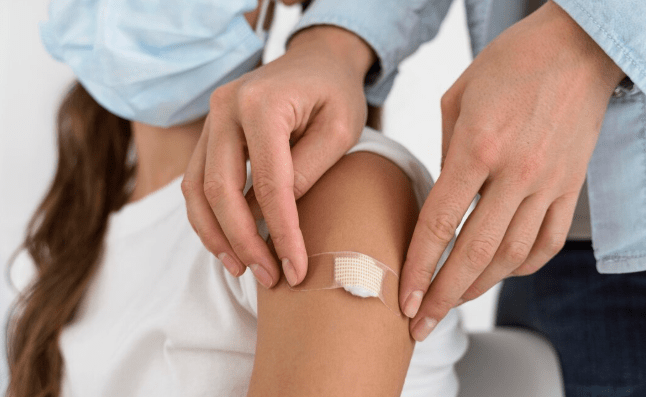
In a study published this year in Science Translational Medicine, 20 human patients with chronic wounds were used to test Caltech’s version, called iCares. Fundamentally, the bandage uses a tiny microfluidic system to extract fresh wound fluid from the surface, which is the most recent secretions rather than a pool of old, mixed fluid. It then analyzes the fluid on-site for signs of infection and inflammation. When tissue is inflamed, nitric oxide levels rise. Bacterial activity is indicated by hydrogen peroxide. One to three days prior to patients exhibiting any symptoms, the device picked up these signals. In clinical terms, that seemingly tiny gap is actually huge.
“By providing actionable information on wounds themselves, we hope to bring expert-level wound care to patients, whether they’re in a hospital, at a clinic or at home,” stated Dr. David Armstrong, a podiatric surgeon with Keck Medicine of USC who co-authored the study. Early detection of an infection can mean the difference between a course of topical treatment and a surgical intervention. Because there are genuine expectations associated with this type of statement, researchers take great care when making it. Millions of patients, including those with diabetes, the elderly, and those recovering from surgery, are eager for this kind of assurance to visit their physician.
It’s difficult to ignore the fact that this study was conducted at a time when passive wound care was becoming increasingly problematic. The majority of dressings available today are basically inert. Antibiotics are released by some. Exudate is absorbed by some. However, none of them pay attention. They don’t all report back. And none of them change. With sensors, drug delivery systems, and occasionally low-level electrical fields that promote tissue growth, smart bandages are currently being developed not only at Caltech but also at RMIT University in Australia, MIT, and several Swiss research groups. In September 2025, a-Heal, an AI-powered device, released results demonstrating that continuous imaging and bioelectronics accelerated wound healing by approximately 25%. That is a substantial margin.
The iCares bandage is inexpensive enough to be regarded as disposable for a single use because it is printed—literally 3D printed—from a flexible biocompatible polymer. The circuit board that manages wireless transmission and signal processing is reusable, but the sensor array is nanoengineered. In cost-sensitive healthcare systems, that design decision is crucial because it has the power to make or break adoption. Smarter architecture and less expensive materials. The question of whether health insurers will cover this type of device at scale is still up for debate.
It is becoming increasingly evident that these systems’ machine-learning component is catching up to the hardware. According to the researchers, the algorithm built into iCares has the same level of accuracy as a skilled clinician when it comes to classifying wounds and forecasting healing times. That’s a loaded claim, and before it has any real clinical weight, it needs to be independently validated. However, it is difficult to discount the early data.
Smart bandages are nano-tech dressings that heal wounds three times faster, in part due to electronics and in part because early detection of issues such as infection, inflammation spikes, and fluid buildup enables quicker course corrections. It’s not just biology that heals. Information management is what it is. The loop that these devices actually provide is wound to sensor to data to clinician to treatment to wound. Tighter, quicker, and much less reliant on the fortuitous timing of an appointment.
The scope of the issue these devices are intended to address has an almost poignant quality. About 6.7 million people in the US alone suffer from non-healing surgical wounds, venous ulcerations, and diabetic ulcers. Many of them will cycle through dressing changes and disappointments for months or even years. The technology to alter that is beginning to emerge. The more difficult question is whether and when it reaches them.
London Bilingualism's content on health, medicine, and weight loss is solely meant for general educational and informational purposes. This website does not offer any diagnosis, treatment recommendations, or medical advice.
We consistently compile and disseminate the most recent information, findings, and advancements from the medical, health, and weight loss sectors. When content contains opinions, commentary, or viewpoints from professionals, industry leaders, or other people, it is published exactly as it is and reflects those people's opinions rather than London Bilingualism's editorial stance.
We strongly advise all readers to consult a qualified medical professional before acting on any medical, health, dietary, or pharmaceutical information found on this website. Since every person's health situation is different, only a qualified healthcare provider who is familiar with your medical history can offer you advice that is suitable for you.
In a similar vein, any legal, regulatory, or compliance-related information found on this platform is provided solely for informational purposes and should not be used without first obtaining independent legal counsel from a licensed attorney.
You understand and agree that London Bilingualism, its editors, contributors, and affiliated parties are not responsible for any decisions made using the information on this website.
