

Imagine an old man in his mid-seventies sitting in the living room of a home he knows as well as most people know their own heartbeat, in an armchair he has owned for twenty years. A tablet device rests on the small table next to him. He has a monitoring cuff around his wrist. A nurse is watching his blood pressure, oxygen levels, heart rate, and general movement on a dashboard somewhere in a hospital building several miles away.
The dashboard updates automatically every three minutes, and the patient only needs to be present in his own home. The same nurse will show up on the tablet screen for a video call early tomorrow morning. On the tablet’s home screen, there is a big button with a clear label in case something goes wrong during the night. He won’t experience patience. It will make him feel at home. That’s precisely the point.
| Category | Details |
|---|---|
| What Is a Virtual Ward | A model of care in which patients receive hospital-level monitoring and treatment at home or in a community setting, supported by connected devices, wearables, and remote clinical teams |
| Also Known As | “Hospital at Home” — used interchangeably in the UK and internationally; the model mirrors hospital ward staffing and treatment responsibilities, with the patient’s own bed as the “virtual bed” |
| NHS Scale | NHS England met its target of 10,000 virtual ward beds by the end of 2023; virtual wards are now considered a permanent feature of the UK healthcare system |
| What Gets Monitored | Heart rate, blood pressure, blood oxygen saturation, skin temperature, and general movement — data transmitted to clinical teams every three minutes via connected devices and a dedicated tablet |
| Clinical Contact | Daily nurse check-ins via video call; patients have a prominent “I’m not feeling well” button on the tablet for urgent escalation; less-frequent in-person home visits continue alongside remote care |
| Priority Patient Groups | Frail elderly patients, those with acute respiratory tract infections (including post-COVID), and people with complex chronic conditions — particularly those for whom hospital admission carries its own risks |
| Chronic Disease Pressure | In England, more than 15 million people have a long-term health condition; chronic conditions account for 50% of GP appointments and 70% of hospital beds; an estimated 35% of adults over 50 will have at least one chronic condition by 2035 |
| Cost Savings | NICE research found savings of up to £9,081 per patient in some virtual ward studies; virtual wards also reduce carbon emissions by cutting routine home visit travel |
| NHS Appointment Pressure | The NHS delivered a record 370 million GP appointments in 2024 — up 4.5% from 2023 — amid ongoing staff shortages and a global projected healthcare worker deficit of 10 million by 2030 |
| Technology Used | Wearable monitoring devices, hospital-grade continuous sensors, command centre hubs for data aggregation, electronic health record integration, and automated check-in systems via text and video |
| Limitations | Not suitable for all patients — those who are mentally compromised, not digitally literate, or without adequate home support networks may not benefit; remote care cannot fully replace the clinical insight of in-person examination |
| Global Context | The WHO endorsed digital health interventions for system strengthening in 2019; virtual hospital models are being developed across Europe, Australia, and North America as healthcare systems face shared demographic and resource pressures |
The virtual ward is this. It is currently operating at scale throughout the NHS, having achieved its goal of 10,000 virtual ward beds by the end of 2023. It is no longer a concept or a pilot program. Through wearable technology, remote monitoring tools, and frequent video contact, the model, also known as “hospital at home,” enables patients who would have previously occupied a physical hospital bed to recuperate in their own surroundings. That description makes it sound almost too easy. The technology infrastructure, clinical protocols, patient selection criteria, and escalation pathways that are actually needed to carry it out safely are far more complicated. However, the fundamental idea is intuitive and, according to mounting data, medically sound: for a sizable portion of patients, staying at home is not a compromise. It’s superior.
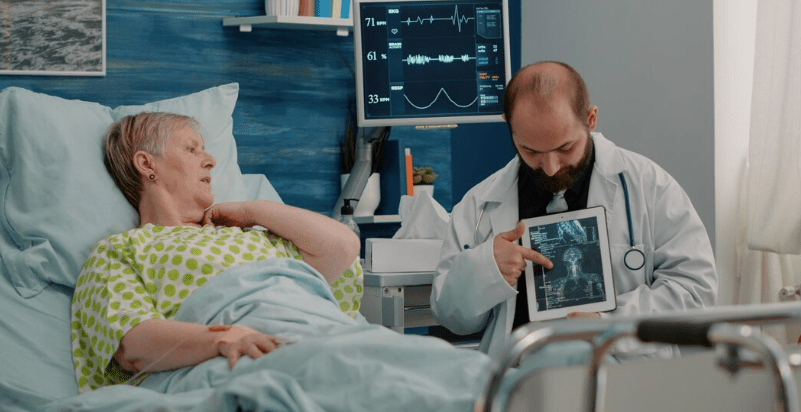
The numbers are difficult to ignore, and the pressure causing this change has been building for years. Over 15 million people in England alone suffer from a chronic illness that necessitates continuous care. Approximately 35% of adults over 50 are expected to be managing at least one chronic condition by 2035. Currently, chronic diseases account for 50% of GP appointments and 70% of hospital beds. In 2024, the NHS provided a record 370 million GP appointments, a 4.5% increase from the previous year. In the meantime, the workforce needed to meet this demand isn’t keeping up with it due to a global shortage of healthcare workers, which is expected to reach 10 million by 2030. Ambulance wait times are increasing, hospital wards are full, and the system is structurally at capacity.
That issue is not resolved by virtual wards. However, they shift the issue. Virtual wards free up physical beds for patients who truly cannot be anywhere else by allowing patients with complicated but stable or improving conditions to receive care at home, such as respiratory infections, frailty management, or post-acute recovery. In order to make room for the emergency admission that arrives six hours later, the patient with a severe but controllable respiratory infection who would have previously occupied a bed for four days goes home with a monitoring device. Even in healthcare systems that are not usually inclined toward efficiency metrics, NICE research has found savings of up to £9,081 per patient in some virtual ward implementations. The math is not glamorous, but it works.
In its most basic form, the technology that keeps everything together is not particularly unique. wearable sensors that monitor blood pressure, oxygen saturation, skin temperature, heart rate, and movement. A tablet that has its own connectivity and doesn’t require the patient to have internet at home. A command center where medical personnel keep an eye on several patients at once, get updated vital signs every three minutes, and report any readings that deviate from normal ranges.
The intricacy lies in the integration, which makes all those data streams consistent, useful, and trustworthy enough for a nurse viewing a screen to be certain they are seeing an accurate picture of a patient’s condition rather than a deceptive snapshot. This is where artificial intelligence (AI) and data analytics come into play, combining and analyzing the constant stream of patient data in ways that previous remote monitoring models were unable to handle.
It would be a mistake to ignore the actual limitations that exist here. Not every patient is a good fit for virtual wards. People with cognitive disorders that make self-monitoring challenging, those who live alone without dependable support systems, or those who lack digital confidence may not benefit, and in certain situations, putting them in a virtual ward setting may be truly inappropriate. The human component of in-person clinical care—the type of evaluation that takes place when a physician actually sits across from a patient and notices details that a sensor cannot record—remains indispensable. The NHS is adamant that while in-person visits are less common, they still coexist with remote monitoring and that virtual wards enhance rather than replace current care.
As this model spreads throughout the UK and similar initiatives emerge in Australia, parts of Europe, and increasingly North America, there’s a sense that something truly important is taking place—quietly, in living rooms, spare bedrooms, and comfortable armchairs where patients are recovering more quickly, more comfortably, and occasionally more safely than they would have on a hospital ward, rather than loudly, with the fanfare that usually accompanies major medical announcements. The ward shifted. Additionally, the patient usually benefits from it.
London Bilingualism's content on health, medicine, and weight loss is solely meant for general educational and informational purposes. This website does not offer any diagnosis, treatment recommendations, or medical advice.
We consistently compile and disseminate the most recent information, findings, and advancements from the medical, health, and weight loss sectors. When content contains opinions, commentary, or viewpoints from professionals, industry leaders, or other people, it is published exactly as it is and reflects those people's opinions rather than London Bilingualism's editorial stance.
We strongly advise all readers to consult a qualified medical professional before acting on any medical, health, dietary, or pharmaceutical information found on this website. Since every person's health situation is different, only a qualified healthcare provider who is familiar with your medical history can offer you advice that is suitable for you.
In a similar vein, any legal, regulatory, or compliance-related information found on this platform is provided solely for informational purposes and should not be used without first obtaining independent legal counsel from a licensed attorney.
You understand and agree that London Bilingualism, its editors, contributors, and affiliated parties are not responsible for any decisions made using the information on this website.
