

A man named Pancho tried to say words he hadn’t been able to say out loud since his early twenties while sitting in front of a screen in a research lab at the University of California, San Francisco. Decades ago, he had a severe stroke that left him paralyzed and unable to speak either the English he had learned later in life or the language he had grown up speaking. He could only grunt and groan. Then, in 2019, doctors covered his brain’s speech and motor centers with a thin grid of about 120 electrodes. Years of labor ensued. His intended words appeared on a screen nearly as quickly as he could think them, and by 2024 he was having spontaneous conversations in both Spanish and English, switching between them according to preference.
The brain-computer interface, a neuroprosthesis that sits on the surface of the brain instead of inside it and intercepts electrical signals that would typically go to the tongue, jaw, lips, and vocal cords, is the key component of this. Even though Pancho is unable to speak, his neurons continue to fire as if he is trying. These signals are captured by the electrodes and sent to a neural network that has been specifically trained on his bilingual brain activity. With the help of the PyTorch framework and NVIDIA’s GPU infrastructure, that network can translate input into text or a synthesized voice at a rate of about 120 words per minute. That is sufficiently similar to a natural conversation to be significant. At first, it was roughly 75% accurate; as the model continued to learn from Pancho’s neural patterns, this percentage increased.
The bilingual aspect of this study is particularly noteworthy because it provides insight into how language functions in the brain. For many years, neuroscience was predicated on the idea that bilingual people’s brains used different neural pathways for each language, processing Spanish and English in different areas. That was reversed by this study. Researchers discovered that regardless of the language Pancho intended to use, the same cortical regions were active when they examined his brain activity in both languages. It was the patterns, not the location, that differed. In addition to being intriguing from a scientific standpoint, this is what allowed for the creation of a bilingual decoder. The UCSF team was able to train a single model using data from one language to speed up learning in the other, instead of creating two distinct systems. The technical advantage came from the shared architecture of the brain.
UCSF Bilingual Brain Implant — Key Facts & Research Details
| Research Institution | University of California, San Francisco (UCSF) — Center for Neural Engineering and Prostheses |
| Lead Researcher | Dr. Edward Chang, neurosurgeon and co-director of the Center for Neural Engineering and Prostheses |
| Lead Study Author | Alexander Silva |
| Published In | Nature Biomedical Engineering (May 20, 2024) |
| Patient | “Pancho” — suffered a severe stroke in his early 20s in the early 2000s; native Spanish speaker who learned English as an adult |
| Implant Date | February 2019 (neural implant placed on brain surface) |
| Device | Brain-computer interface (BCI) / neuroprosthesis — ultra-thin grid of ~120 electrodes placed over speech and motor cortex |
| Electrode Placement | On the surface of, not inside, the brain |
| How It Works | Electrodes intercept neural signals intended to control tongue, jaw, lips, and vocal cords; AI decodes intended speech into text or synthesized voice |
| AI Framework | Large neural network model trained using NVIDIA cuDNN-accelerated PyTorch framework on NVIDIA V100 GPUs |
| Decoding Accuracy | 75% accuracy after initial training |
| Speed | Up to 120 words per minute — near-conversational speed |
| Language Selection | User selects preferred language via interface; AI adapts vocabulary and syntax accordingly |
| Key Scientific Discovery | Both languages are processed in the same brain regions — overturning prior neurological assumptions about separate language pathways |
| Transfer Learning | Data from one language significantly accelerated decoder training in the second language |
| Milestone (2021) | Earlier version of same technology restored English-only communication for Pancho |
| Breakthrough (2022–2024) | Bilingual decoder developed; Pancho able to hold unscripted conversations, switching between Spanish and English by preference |
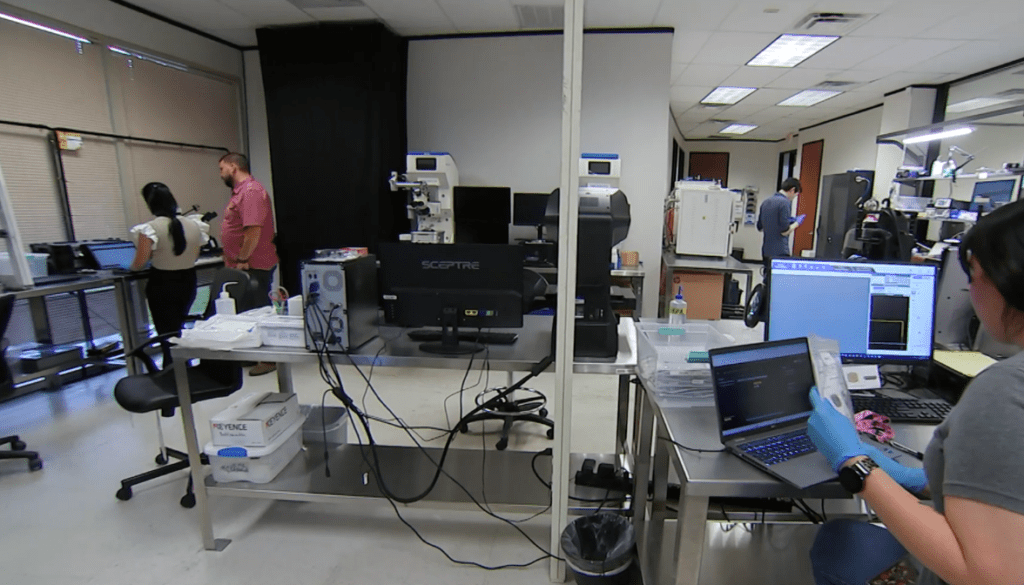
The first successful unscripted sentence caused everyone in the room to just smile for a few minutes, according to Alexander Silva, the study’s lead author. It lands, even though it’s a minor detail. After years of focusing on electrode data and training models, these researchers noticed a shift when it turned into a dialogue rather than a demonstration or controlled trial. When a technology moves from promise to reality, a certain kind of silence most likely descends upon a laboratory.
It is truly hard to reconcile the rate of advancement in this field of study with how recently it all seemed like conjecture. The same group accomplished English-only decoding for Pancho in 2021, which was regarded as a noteworthy accomplishment in and of itself. After more than five years of operation, the same implant was still able to handle bilingual conversations by 2024. The device’s longevity is its own discovery. The UCSF data demonstrates what brain-computer interfaces are already doing in a patient who has been living with the implant through several iterations of the research, whereas brain-computer interfaces are frequently discussed in terms of what they might eventually do.
It is difficult to overstate the implications for stroke survivors and others with severe speech impairments, who are described in clinical literature as “locked in,” cut off from verbal communication despite retained cognitive function. Language is more than just a means of communication. Regaining the ability to switch between two languages and two cultures is not a technical detail for someone like Pancho, whose identity encompasses both. It’s the distinction between being heard and just existing. The speed at which this technology will advance toward broader clinical use is still unknown; neuroprosthetics research is typically slow due to logistical and regulatory requirements. However, one spontaneous discussion at a time, the scientific case is being constructed.
London Bilingualism's content on health, medicine, and weight loss is solely meant for general educational and informational purposes. This website does not offer any diagnosis, treatment recommendations, or medical advice.
We consistently compile and disseminate the most recent information, findings, and advancements from the medical, health, and weight loss sectors. When content contains opinions, commentary, or viewpoints from professionals, industry leaders, or other people, it is published exactly as it is and reflects those people's opinions rather than London Bilingualism's editorial stance.
We strongly advise all readers to consult a qualified medical professional before acting on any medical, health, dietary, or pharmaceutical information found on this website. Since every person's health situation is different, only a qualified healthcare provider who is familiar with your medical history can offer you advice that is suitable for you.
In a similar vein, any legal, regulatory, or compliance-related information found on this platform is provided solely for informational purposes and should not be used without first obtaining independent legal counsel from a licensed attorney.
You understand and agree that London Bilingualism, its editors, contributors, and affiliated parties are not responsible for any decisions made using the information on this website.
