

When something goes wrong and no one wants to speak out about it, a certain kind of silence descends upon institutions. It’s the type found in passive voice-heavy press releases, such as “routine review” and “coming weeks.” Whether or not the timing was intentional, public health experts nationwide were amused by the CDC’s April 1st announcement.
The organization declared that diagnostic testing for over two dozen infectious diseases would be temporarily suspended. Rabies is on the list. Mpox is part of it. It contains a few viruses and parasites that the majority of people are unaware of, but state and local health departments covertly rely on federal laboratories to identify. The CDC needed time to perform a quality review of its laboratory systems, according to the official explanation. When the bureaucratic buffer is removed, it indicates that the labs aren’t operating as they ought to. The government is cautious not to state it directly, but the most obvious explanation is that the individuals who oversaw those labs have left.
| Field | Details |
|---|---|
| Agency | Centers for Disease Control and Prevention (CDC) |
| Announcement date | April 1, 2026 |
| Tests paused | More than two dozen, including rabies, mpox, adenovirus, varicella zoster, human herpesvirus 6 & 7, cysticercosis, schistosomiasis, and “sloth fever” virus |
| Stated reason (official) | Routine review to ensure high-quality laboratory testing standards |
| Staff reduction | Approximately 20%–25% overall; pox virus and rabies labs lost roughly half their prior staff |
| Mpox cases (through March 2026) | ~370 confirmed U.S. cases (~100/month) |
| Expected duration | Temporary — some tests expected back online “within weeks” per HHS spokesperson Andrew Nixon |
| Who can fill the gap | State labs in New York and California have capacity; most other states do not |
| Key concern (rabies) | Delay in identifying infected animals in the wild; humans should receive treatment before diagnosis regardless |
| Oversight body comment | Scott Becker, CEO, Association of Public Health Laboratories: “This is more kinds of tests than ever before” |
Over the past year, the CDC has lost between 20 and 25 percent of its staff. Because they are aggregate figures, they often mask the events that took place in particular locations. The National Public Health Coalition, a group composed of current and former CDC employees, claims that the pox virus and rabies laboratories lost about half of their previous staff. Half. It’s not an administrative change. That’s the kind of depletion that alters a lab’s daily physical capabilities.
It’s difficult to ignore the fact that this is taking place at a time when mpox hasn’t exactly stopped. Through the end of March, there were about 370 confirmed cases of mpox in the United States, or roughly 100 cases per month. That is a persistent, simmering presence, but it’s not an emergency on the scale of 2022. When it comes to mpox, diagnosis is crucial because those who test positive are usually in charge of alerting anyone who might have been exposed. When that chain is broken, the virus has more space to spread. Even a brief testing gap produces the kind of uncertainty that is the foundation of outbreaks.
The head of the Association of Public Health Laboratories, Scott Becker, stated it more succinctly but clearly: more types of tests have been halted than he has ever witnessed. He also admitted that there might be factors other than quality review, such as staffing shortages. Since 2024, the CDC has been evaluating its testing programs internally, so the quality argument is not made up. It did not, however, appear in a vacuum. Before any review even started, the labs were already under pressure.
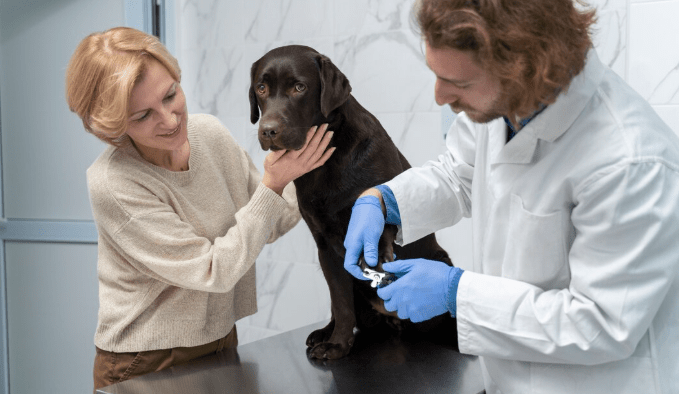
It’s important to be cautious about how the panic is calibrated here because rabies is a slightly different story. Since the virus is almost always fatal once symptoms manifest, the clinical protocol for suspected human rabies exposure remains unchanged: anyone who may have been bitten or scratched by a potentially rabid animal should receive post-exposure prophylaxis before any lab results come back. That advice remains unchanged if federal testing is halted. The backend is impacted, which includes tracking the virus’s spread, identifying which animals in which areas are infected, and updating the maps that wildlife and animal control officials use to make decisions. What’s really in danger is that slower, less dramatic layer of surveillance. And most people don’t realize how important it is.
Some of this can be absorbed by states with advanced public health infrastructure, such as California and New York. The majority of states don’t. One of the enduring structural issues in American public health is the disparity between what is feasible in a small number of well-funded labs and what is found everywhere else. Until something like this happens, it usually goes unnoticed.
Speaking with people in this area gives me the impression that what’s going on is more than just a brief annoyance being handled in a systematic manner. Current and former CDC employees felt that something significant was being dismantled without enough public recognition, which led to the formation of the National Public Health Coalition. They point out that the malaria branch was cut even more drastically than the virus labs. After its COVID-19 laboratory failures, the agency took two years to regain credibility; today, it manages those rebuilt labs with half the staff.
The Department of Health and Human Services is prepared to assist state and local partners, according to Andrew Nixon, who stated that some tests will be back online in a few weeks. That might be precisely correct. It’s also possible that “weeks” is an aspiration and that the information that is subtly removed from the restored list will provide a more comprehensive picture than what was stated in the announcement. In any case, there was a pause. The tests are now in progress. Additionally, a sample is sitting somewhere in a rural county without a cutting-edge public health lab, waiting for answers that haven’t arrived yet.
London Bilingualism's content on health, medicine, and weight loss is solely meant for general educational and informational purposes. This website does not offer any diagnosis, treatment recommendations, or medical advice.
We consistently compile and disseminate the most recent information, findings, and advancements from the medical, health, and weight loss sectors. When content contains opinions, commentary, or viewpoints from professionals, industry leaders, or other people, it is published exactly as it is and reflects those people's opinions rather than London Bilingualism's editorial stance.
We strongly advise all readers to consult a qualified medical professional before acting on any medical, health, dietary, or pharmaceutical information found on this website. Since every person's health situation is different, only a qualified healthcare provider who is familiar with your medical history can offer you advice that is suitable for you.
In a similar vein, any legal, regulatory, or compliance-related information found on this platform is provided solely for informational purposes and should not be used without first obtaining independent legal counsel from a licensed attorney.
You understand and agree that London Bilingualism, its editors, contributors, and affiliated parties are not responsible for any decisions made using the information on this website.
