

If you stroll down Green Lanes on a Saturday morning, you’ll still come across coffee shops where, if you stay long enough, you’ll hear it. It’s a mix of Greek and English that doesn’t quite belong to either language, spoken by older men and women in a way that sounds both entirely natural and slightly different from anything you’d hear in Nicosia or Athens. A bus turns into a páson. The store sells fish and chips. With its consonants softened and reshaped to conform to a phonological system never intended for English place names, Finsbury Park becomes Físpouri Ppak. The first Greek Cypriot immigrants came to Camden Town in the early 1900s to work in the West End’s kitchens and hotels, and the town became known as “Captain Tow,” a small linguistic joke.
It’s called Grenglish. A language that no one created and no one fully owns. It widened the divide between the English required to thrive in London’s service sector and the Cypriot Greek brought by economic migrants from the villages of Pafos and Karpasia. The language of the bus drivers, dressmakers, and catering families who relocated northward along what was popularly associated with route 29—through Finsbury Park, past Green Lanes, Turnpike Lane, and Wood Green—changed as a result of their new surroundings.
| Community | London’s Greek Cypriot Diaspora (κυπριακή παροικία) |
|---|---|
| Key Research Project | The Grenglish Project (launched May 2019) |
| Lead Researchers | Dr. Petros Karatsareas and Dr. Anna Charalambidou, University of Westminster and Middlesex University |
| Estimated UK Cypriot Population | 150,000–300,000 (depending on methodology) |
| Main Migration Waves | Post-1955 (EOKA conflict), 1960–1963 (independence era), 1974 (Turkish invasion aftermath) |
| Key London Areas | Camden Town, Soho, Fitzrovia (early); Islington, Haringey, Finsbury Park, Green Lanes, Wood Green, Enfield, Barnet (later) |
| The Language | British Cypriot Greek / “Grenglish” — a distinct hybrid of Cypriot Greek and English |
| Project Website | grenglish.org — 495 community submissions, 2,004 lexical items catalogued |
| Most Submitted Word | πάσον /páson/ — ‘bus’ (submitted 44 times) |
| Key Threat | Language shift to English within two to three generations; stigma against Cypriot Greek as “inferior” to Standard Greek |
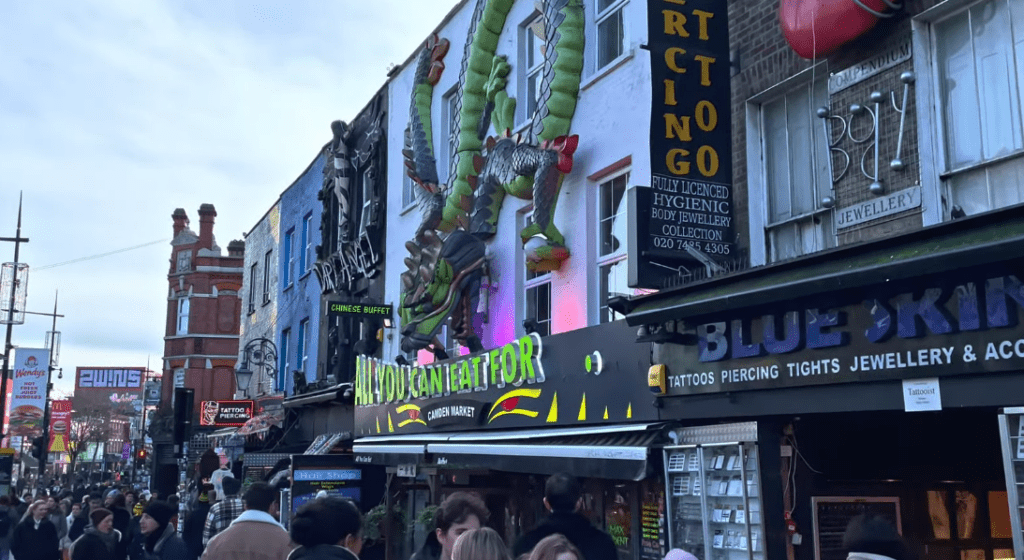
The Grenglish Project, a public engagement project, was started in 2019 by researchers Petros Karatsareas and Anna Charalambidou at the University of Westminster. Through a special website, community members were invited to submit words, images, memories, and anecdotes. They were surprised by the size of the response. 495 submissions totaling 2,004 distinct lexical items had been received by September 2020. The word that was submitted the most frequently was πάσοv, or bus, which was offered forty-four times by various contributors with slightly different spellings, all of which revolved around the same sound. There were thirty-two appearances of the fish and chip shop. Police, ambulance, sausages, and chicken. The morphological system that had subtly absorbed English words and fitted them with Cypriot Greek grammatical endings, as if the language were digesting them, preserved the everyday texture of a migrant life.
The study found a dialect that is truly unique, not just poor English or a corruption of Standard Greek, but a third entity with its own set of rules and internal logic. Greek inflectional suffixes that indicate gender, case, and number were added after the English stem was phonologically modified to fit Cypriot Greek sound patterns to create words like páson. The bus driver turned into a passéris. a bus driver. Completely grammaticalized, with morphological processes identical to those of inherited Cypriot Greek words. When communities need languages to function in new environments, the language was doing just that.
The project did not receive a unanimously positive response from the community. The idea of recording and honoring what they saw as corrupted speech—the creations of illiterate immigrants who didn’t speak Greek or English correctly—unnerved some of the older members. The submissions, according to a Twitter user, were “silly word creations.” Greek schools in the UK had put a lot of effort into teaching proper Greek, according to an email the researchers received, and encouraging Grenglish would confuse kids. Beneath these criticisms is a well-known social hierarchy: Standard Modern Greek at the top, Cypriot Greek below, and British Cypriot Greek at the bottom—all of which are seen as slang, village speech, and something embarrassing rather than something that should be preserved.
The scholarly literature backs up the researchers’ alternative viewpoint. With stable forms, consistent phonological and morphological processes, and a community of speakers who acknowledge its unique vocabulary as an indexical of their heritage, British Cypriot Greek is, by any reasonable linguistic measure, a variety unto itself. This recognition might endure longer than the language itself. English is dominated by the third and fourth generations, who were raised and educated in Britain. Instead of the hybrid forms their grandparents spoke at home, the Cypriot Greek they are familiar with is typically the standard variety taught in complementary schools. Observing this change in real time gives the impression that the Grenglish Project came at the perfect time—not quite in time to preserve the language, but in time to preserve its memory.
London Bilingualism's content on health, medicine, and weight loss is solely meant for general educational and informational purposes. This website does not offer any diagnosis, treatment recommendations, or medical advice.
We consistently compile and disseminate the most recent information, findings, and advancements from the medical, health, and weight loss sectors. When content contains opinions, commentary, or viewpoints from professionals, industry leaders, or other people, it is published exactly as it is and reflects those people's opinions rather than London Bilingualism's editorial stance.
We strongly advise all readers to consult a qualified medical professional before acting on any medical, health, dietary, or pharmaceutical information found on this website. Since every person's health situation is different, only a qualified healthcare provider who is familiar with your medical history can offer you advice that is suitable for you.
In a similar vein, any legal, regulatory, or compliance-related information found on this platform is provided solely for informational purposes and should not be used without first obtaining independent legal counsel from a licensed attorney.
You understand and agree that London Bilingualism, its editors, contributors, and affiliated parties are not responsible for any decisions made using the information on this website.
