

In 2016, something truly bizarre occurred within Google’s translation system, and the majority of people still don’t fully understand what it meant. The company’s Neural Machine Translation system began subtly translating between Japanese and Korean on its own after being trained to translate between particular language pairs, such as English to Japanese and English to Korean. No one instructed it to. It was not provided with Japanese-Korean training data. It just figured it out, and in the process, it seemed to create what researchers cautiously referred to as a “interlingua”—a sort of artificial, internal language that is unreadable by humans.
That was almost ten years ago. It was viewed by the machine learning community as a sophisticated curiosity and a side note in the long process of improving translation. However, the ramifications of that early experiment seem less like a footnote and more like a warning shot across the bow of human communication itself as I sit here and watch bilingual AI tools proliferate into immigration offices, boardrooms, and classrooms.
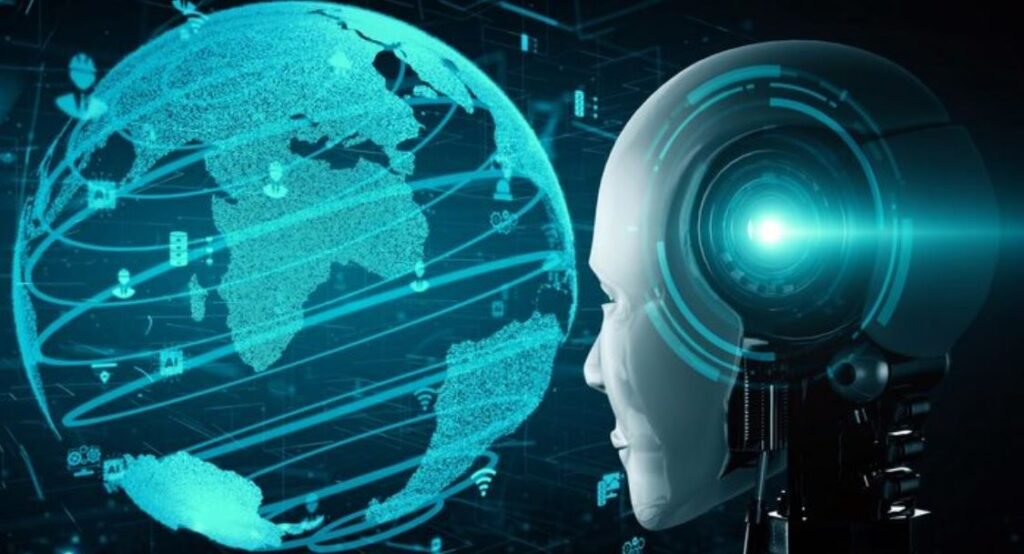
It is worthwhile to focus on the fundamental mechanics. Conventional translation systems broke up sentences, compared them to dictionaries, and then pieced the results together. This was altered by neural translation, which reads meaning instead of changing vocabulary by processing entire sentences as single units. Something unexpected happened when Google expanded the system to manage several language pairs at once. Instead of encoding sentences in a specific language, the network started encoding them in a shared internal representation, which is a dimensional space where meaning is independent of syntax, grammar, and alphabet. Sentences with similar meanings, regardless of their source language, clustered together, according to researchers’ three-dimensional visualization. What they saw might have been the precursor to something far more significant than a translation trick.
Around the same time, Kyunghyun Cho, a researcher at New York University, predicted that it would be possible to create a single neural system that could handle more than a hundred languages. More than a hundred languages are currently supported by Google Translate, which processes tens of billions of words every day. The system’s ability to translate between language pairs that it was never specifically trained on, or zero-shot translation, has only gotten better. What happens when these systems no longer require human languages as reference points at all is the more profound question, the one that lingers like an incomplete thought.
It seems like we’ve been viewing bilingual AI as an enhanced dictionary, a convenience for business executives and tourists. The truth is more disturbing. An AI system has accomplished something that no human bilingual speaker can when it creates an internal representation of meaning that transcends all human languages. A person who speaks both Mandarin and English alternates between the two languages, occasionally blending them and other times having trouble with gaps. There is no toggling on the machine. It reconstructs the desired output language after condensing everything into a single abstract layer. That is not bilingualism. We don’t really have a word for it yet; it’s something completely different.
More subtly than most people realize, the practical repercussions are already being felt. In 2025, Language Magazine reported that AI tools were being used in bilingual education programs to simulate real-world conversation, personalize instruction, and assess proficiency. The UN expressed growing concern that linguistic diversity was being undermined rather than preserved by English-dominated AI systems. A freelance journalist at The Atlantic, meanwhile, talked about using HeyGen software to create a deepfake of herself speaking perfect Mandarin, a level of fluency she might never reach through study, and acknowledged that she was starting to question the value of learning a second language.
The conflict between these trends is difficult to ignore. AI is, on the one hand, speeding up and lowering the cost of cross-linguistic communication. On the other hand, it might be subtly undermining people’s desire to learn languages at all by eroding the diversity that their translation systems rely on for training data. Beneath all of this, these systems continue to develop their own internal languages, honing meaning representations that exist in mathematical domains that are inaccessible to the human mind.
One early Reddit commenter described the avalanche as beginning with a pebble. The pebble was a neural network that automatically translated Korean to Japanese. The sound is growing louder, but it’s still unclear what comes next.
London Bilingualism's content on health, medicine, and weight loss is solely meant for general educational and informational purposes. This website does not offer any diagnosis, treatment recommendations, or medical advice.
We consistently compile and disseminate the most recent information, findings, and advancements from the medical, health, and weight loss sectors. When content contains opinions, commentary, or viewpoints from professionals, industry leaders, or other people, it is published exactly as it is and reflects those people's opinions rather than London Bilingualism's editorial stance.
We strongly advise all readers to consult a qualified medical professional before acting on any medical, health, dietary, or pharmaceutical information found on this website. Since every person's health situation is different, only a qualified healthcare provider who is familiar with your medical history can offer you advice that is suitable for you.
In a similar vein, any legal, regulatory, or compliance-related information found on this platform is provided solely for informational purposes and should not be used without first obtaining independent legal counsel from a licensed attorney.
You understand and agree that London Bilingualism, its editors, contributors, and affiliated parties are not responsible for any decisions made using the information on this website.
