

A specific type of anxiety emerged during the COVID-19 pandemic and has persisted ever since. A new variant name appears every few months. A fresh booster discussion. There was a nagging feeling that medicine was always one chemical step behind the virus. It turns out that a small group of scientists in Oxford, Boston, and a few other locations have quietly chosen to address that lag. Not by developing more effective vaccines against known viruses. by preparing them for future iterations of those viruses.
At first glance, the concept seems like science fiction dressed in a lab coat. However, most people outside of virology don’t seem to realize that the work is actual, published, and progressing more quickly. An AI model known as EVE-Vax has been developed by a team at Harvard Medical School under the direction of Debora Marks and her former graduate student Noor Youssef. The tool, which was published in Immunity last May, analyzes a virus’s evolutionary patterns and forecasts, protein by protein, what the virus might look like in a year or two. When they tested their designed proteins on SARS-CoV-2 in the lab, they discovered that these “designer” spikes elicited immune responses that were almost exactly the same as the actual variants that had surfaced during the pandemic. Really uncanny.
| Topic Detail | Information |
|---|---|
| Research Focus | Predictive vaccine design beyond mRNA platforms |
| Leading Institutions | University of Oxford, Harvard Medical School, MassCPR |
| Key AI Model | EVE-Vax, developed at Harvard Medical School |
| Publication | Immunity journal, May 8, 2025 |
| First Author of EVE-Vax Study | Noor Youssef, Marks Lab, HMS |
| Senior Researcher | Debora Marks, Professor of Systems Biology, Blavatnik Institute |
| Earlier Oxford Work | ChAdOx chimpanzee adenovirus platform vaccine |
| mRNA Pandemic Efficacy | Pfizer-BioNTech and Moderna showed over 90% efficacy in Phase 3 trials |
| Related Project | EAVI2020, Oxford-led HIV vaccine research consortium |
| Core Scientific Goal | Designing proteins for future viral variants before they emerge |
The ChAdOx platform, the chimpanzee adenovirus vector that generated the AstraZeneca vaccine in 2020, is the foundation of Oxford’s contribution to this larger movement. The mRNA entries from Pfizer and Moderna overshadowed the vaccine’s difficult public reception, but the underlying technology proved to be remarkably adaptable. Today, Oxford groups working on everything from universal flu concepts to HIV under the EAVI2020 consortium have been subtly honing the same general principle, teaching the body to identify characteristics shared by multiple viral strains rather than just the one currently in circulation.
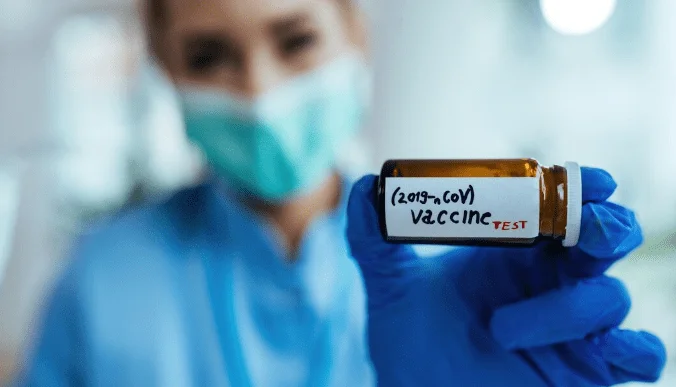
It’s worth stopping to consider how peculiar this is in terms of history. The script was reactive for the majority of the history of modern vaccines. A virus emerges, people die all over the world, scientists identify the pathogen, and eventually a vaccine is developed. It took centuries for smallpox to spread. It took decades for polio to spread. It felt miraculous that COVID took months. A completely different idea is put forth by EVE-Vax and its cousins: a vaccine that was created prior to the outbreak and is currently awaiting its release. The ethics of that concept are more ambiguous than anyone wants to acknowledge, but the economics are intriguing. Who pays for a treatment for a pathogen that might never manifest? If it does, who distributes it?
There is still a great deal of uncertainty in the field, and even the scientists themselves appear to be carrying it. The biology actually doesn’t always cooperate, so forecasting viral evolution isn’t the same as forecasting stock prices. In her public remarks, Marks has exercised caution, stating that the model provides “clues” and “valuable information,” but not assurances. Even the most sophisticated science is influenced by politics and budgetary constraints, as the Harvard article announcing the work pointed out, rather bluntly, that federal funding freezes now pose a threat to the research’s continuation.
There’s a sense that we’re seeing the early stages of something truly novel in medicine, more akin to weather forecasting than conventional drug discovery. It might not go as planned. Over the years, many promising platforms have quietly declined without any press releases. However, it is difficult to ignore the ambition. a vaccine against an unidentified virus. The scientists working to construct it appear to think it is possible, at least for the time being.
London Bilingualism's content on health, medicine, and weight loss is solely meant for general educational and informational purposes. This website does not offer any diagnosis, treatment recommendations, or medical advice.
We consistently compile and disseminate the most recent information, findings, and advancements from the medical, health, and weight loss sectors. When content contains opinions, commentary, or viewpoints from professionals, industry leaders, or other people, it is published exactly as it is and reflects those people's opinions rather than London Bilingualism's editorial stance.
We strongly advise all readers to consult a qualified medical professional before acting on any medical, health, dietary, or pharmaceutical information found on this website. Since every person's health situation is different, only a qualified healthcare provider who is familiar with your medical history can offer you advice that is suitable for you.
In a similar vein, any legal, regulatory, or compliance-related information found on this platform is provided solely for informational purposes and should not be used without first obtaining independent legal counsel from a licensed attorney.
You understand and agree that London Bilingualism, its editors, contributors, and affiliated parties are not responsible for any decisions made using the information on this website.
