

It takes a moment to realize what’s different when you walk into Hatching Dragons on a weekday morning. A plastic slide, a soft play area, and tiny hands smearing paint on paper are all present. typical chaos in the nursery. However, the toddler, who may be eighteen months old and still unsteady on her feet, reacts when a staff member crouches next to her and says something that doesn’t sound like English. Lanterns made of paper dangle from the ceiling. Noodles are on the lunch menu. Additionally, a shadow puppetry session is being prepared somewhere in the background. Depending on your point of view, this is either London’s most costly experiment in parental anxiety or the most progressive nursery in the nation.
For full-time positions, the annual fees are around £40,000, which is the kind of sum that puts an end to a discussion. After going through the nursery search for his own son, Cennydd John founded Hatching Dragons, so he is familiar with the response. His argument is straightforward, if not exactly inexpensive: shouldn’t children receive something in return for the money that the majority of London parents already spend on daycare? He decided on Mandarin, which was taught through immersion rather than lessons or flashcards. Throughout the day, staff members spoke about equally in Mandarin and English. The kids don’t really study the language; instead, they just absorb it, just like any child before the age of five absorbs everything around them.
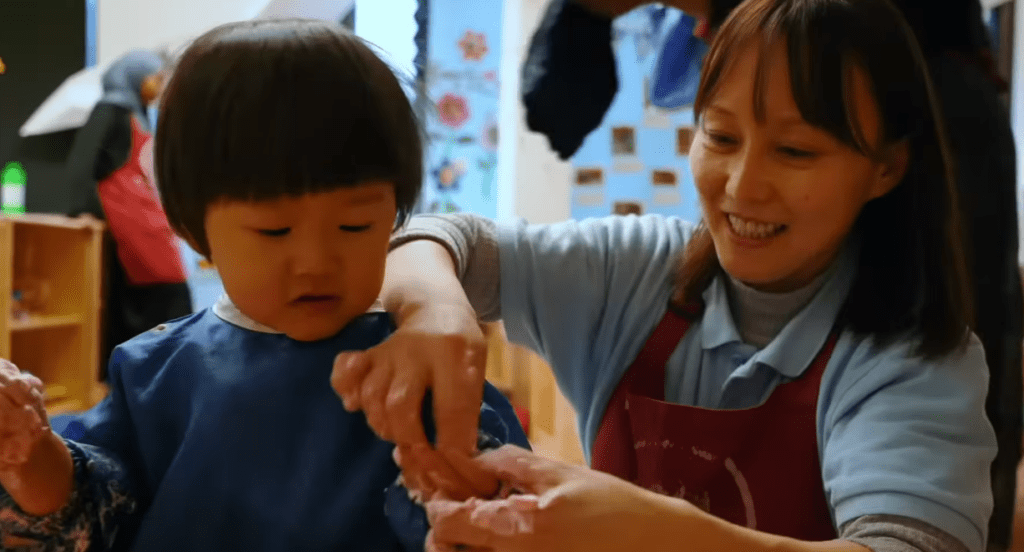
Even if you have doubts about all of this, you may still find it difficult to reject the underlying reasoning. For years, neuroscientists have observed that the brain’s sensitivity to tonal pitch peaks in the first few years of life and then diminishes, indicating that the window for learning tonal languages closes surprisingly early. For adult learners, Mandarin, with its four distinct tones, is infamously challenging because that sensitivity is no longer present. Li Jing, a nursery staff member, put it simply: Chinese speakers react with genuine astonishment when they witness a foreigner correctly navigate the tones because it seems impossible. Apparently, it isn’t for a two-year-old.
The parents of Hatching Dragons are typically multinational in some capacity; they are lawyers, designers, and digital experts who travel between cities and have a realistic understanding of the direction of influence and trade. Though the underlying thinking is present, few of them explicitly frame it in terms of geopolitics. During a multimillion-pound deal, a mother who works as a digital project manager described the professional embarrassment of witnessing a Chinese factory team handle all translation because nobody on the British side could handle even basic communication. Another, a Hong Kong-born designer, already had a Mandarin-speaking nanny at home and traveled 45 minutes each way to the nursery. These families feel as though they’ve done the math and reached a level that the rest of the nation hasn’t yet reached.
It’s genuinely unclear whether the kids will still speak Mandarin at fifteen, and the more astute parents appear to be aware of this. One mother, who works as a lawyer, stated that she is more interested in the cognitive flexibility that results from juggling two languages than fluency. It would be incredibly fluid. “Maybe the real point is the mental toolkit,” she said. It’s a fair hedge, and most likely an honest one.
What’s already taking place in the rooms is more difficult to ignore. Three-year-old Mandarin counting to ten. A one-year-old uses nüge hảo to greet the family dogs. A preschooler is sitting quietly while pointing at characters in a Chinese picture book. These aren’t shows put on for visiting reporters. They’re just a Tuesday afternoon at a nursery in London, which could be remarkable or completely unremarkable depending on how the next ten years play out. It’s the kind of thing that parents will eventually question why they waited so long to try.
London Bilingualism's content on health, medicine, and weight loss is solely meant for general educational and informational purposes. This website does not offer any diagnosis, treatment recommendations, or medical advice.
We consistently compile and disseminate the most recent information, findings, and advancements from the medical, health, and weight loss sectors. When content contains opinions, commentary, or viewpoints from professionals, industry leaders, or other people, it is published exactly as it is and reflects those people's opinions rather than London Bilingualism's editorial stance.
We strongly advise all readers to consult a qualified medical professional before acting on any medical, health, dietary, or pharmaceutical information found on this website. Since every person's health situation is different, only a qualified healthcare provider who is familiar with your medical history can offer you advice that is suitable for you.
In a similar vein, any legal, regulatory, or compliance-related information found on this platform is provided solely for informational purposes and should not be used without first obtaining independent legal counsel from a licensed attorney.
You understand and agree that London Bilingualism, its editors, contributors, and affiliated parties are not responsible for any decisions made using the information on this website.
