

The first time I watched someone use a fentanyl test strip, it was in the back corner of a community center parking lot in a mid-sized American city, the kind of place where the lighting flickers and the vending machine eats more dollars than it returns. A man who appeared exhausted in a manner unrelated to sleep was given a small piece of paper by a volunteer, who may have been twenty-six. He ripped open a plastic bag, added water from a gas station bottle, tapped a small amount of powder into a bottle cap, and waited. It took roughly four minutes to complete. There was just one line. Then another, faintly. He let out a breath.
That quiet moment is happening thousands of times a day across North America now, in alleys, needle exchanges, church basements, and college dorms. Fentanyl test strips, small pieces of paper originally designed to check urine samples in clinical settings, have been repurposed into something their inventors never quite imagined: a grassroots defense against what has become the deadliest drug crisis in modern American history. The crisis is not resolved by the strips. In harm reduction, nobody acts as though they do. But they’ve managed something rarer in public health, which is earning trust from the people most likely to die.
| Topic Detail | Information |
|---|---|
| Subject | Fentanyl Test Strips (FTS) as a harm reduction tool |
| Primary Function | Detect presence of fentanyl in pills, powders, and injectables |
| Minimum Sample Size | At least 10 mg of substance |
| Processing Time | 15 seconds absorption, 2–5 minutes reading |
| Federal Funding Approved | April 2021 (CDC and SAMHSA announcement) |
| Overdose Deaths from Synthetic Opioids (2021) | 70,601 deaths recorded in North America |
| Research Review (2024) | 91 articles analyzed in a peer-reviewed scoping review |
| Key Limitation | Cannot reliably detect all analogs like carfentanil |
| National Helpline | 800-662-HELP (4357), operated by SAMHSA |
| Accuracy Caveat | May produce false readings with large amounts of methamphetamine or MDMA |
For years, the legality of these strips existed in a gray zone. Many states classified them as drug paraphernalia, the same category as pipes and needles, meaning a person caught carrying one could theoretically face charges. It was absurd, really, a paper strip designed to prevent death being treated like contraband. When the CDC and SAMHSA announced in 2021 that federal grant funds could be used to buy them, that started to change. A number of states then revised their laws pertaining to paraphernalia. However, the changes have been uneven, and in some regions of the nation, the strips are distributed almost apologetically, as if the volunteers anticipate a protest.
The science itself is both comforting and unsettling. Strong evidence that the strips are sensitive and specific—that is, they consistently detect fentanyl when it is present—was discovered in a 2024 scoping review that compiled 91 studies. The more recent analogs are what they are unable to accurately capture. Elephant tranquilizers like carfentanil get through. Some of the new compounds that have emerged in the supply over the past year also do. There’s a sense, among researchers I’ve read, that the technology is already behind the chemistry.
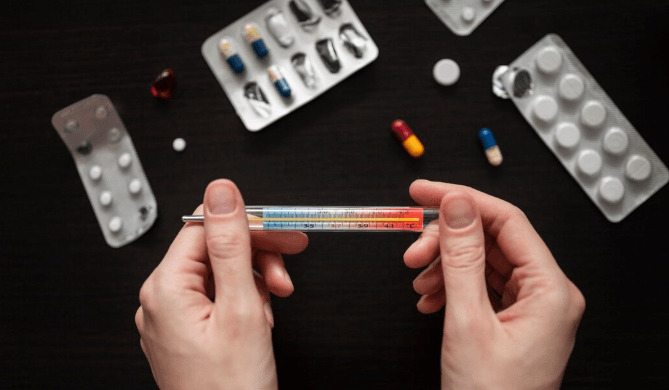
What makes the fentanyl test strip movement interesting isn’t really the strip. It’s the people. Former users now running distribution networks from rented storefronts. Nurses buying strips on their own credit cards. College harm reduction clubs mailing them in unmarked envelopes to students in states where they’re still murky legally. It’s a patchwork, uneven, occasionally chaotic, and somehow holding together. As you watch it happen, it seems like the official response is at least ten years behind the underground one.
Beneath all of this, the CDC refers to it as the “chocolate chip cookie problem.” Fentanyl may be present in one portion of a batch. It might not come from the same bag. It cannot be seen, smelled, or tasted. It’s important to note that a strip provides information rather than safety. People continue to pass away. Perhaps fewer of them than otherwise. It’s difficult to ignore the fact that harm reduction has always been measured in absences rather than victories.
London Bilingualism's content on health, medicine, and weight loss is solely meant for general educational and informational purposes. This website does not offer any diagnosis, treatment recommendations, or medical advice.
We consistently compile and disseminate the most recent information, findings, and advancements from the medical, health, and weight loss sectors. When content contains opinions, commentary, or viewpoints from professionals, industry leaders, or other people, it is published exactly as it is and reflects those people's opinions rather than London Bilingualism's editorial stance.
We strongly advise all readers to consult a qualified medical professional before acting on any medical, health, dietary, or pharmaceutical information found on this website. Since every person's health situation is different, only a qualified healthcare provider who is familiar with your medical history can offer you advice that is suitable for you.
In a similar vein, any legal, regulatory, or compliance-related information found on this platform is provided solely for informational purposes and should not be used without first obtaining independent legal counsel from a licensed attorney.
You understand and agree that London Bilingualism, its editors, contributors, and affiliated parties are not responsible for any decisions made using the information on this website.
