

Located in the center of Acadiana, a region of south-central Louisiana known for its French Creole ancestry, cuisine, music, and unique way of life that doesn’t always translate well to the metrics used by education researchers in Massachusetts or California, is Lafayette, Louisiana. Therefore, it is noteworthy that the Lafayette Parish School System is outperforming expectations not only within Louisiana but also against school districts nationwide, according to a national academic report created by researchers at Harvard and Stanford universities.
Lafayette Parish students outperform roughly 64 percent of American districts in math achievement and 61 percent in math growth, according to the 2025 Education Scorecard, which compares districts nationwide using data from standardized assessments and long-term performance trends. Similar results are seen in reading, where the district outperforms about two-thirds of all districts nationwide in both academic growth and achievement. More importantly, Lafayette students have now outperformed their pre-pandemic performance levels in both subjects—a standard that is still being pursued by many districts nationwide. The district’s emphasis on effective classroom instruction and consistently high standards was praised by Superintendent Francis Touchet Jr. “Our students are growing, achieving, and proving they can compete with some of the strongest districts in the country,” he stated.
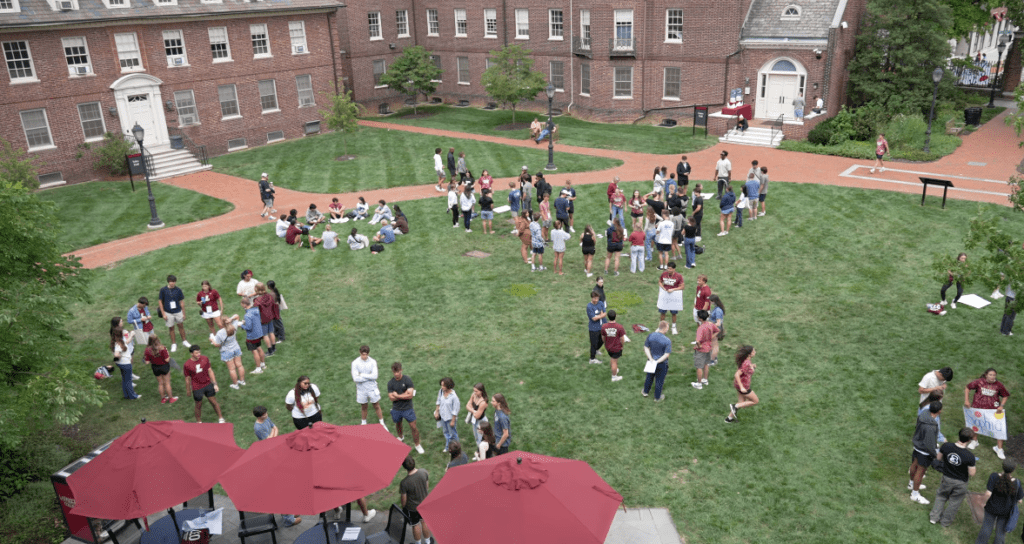
It’s worth stopping to consider that sentence. Of the approximately 30,000 students served by Lafayette Parish, 60% are members of minority groups and over 43% are considered economically disadvantaged. The state routinely ranks near the bottom of national comparisons, and the politics surrounding school choice, vouchers, and charter schools have been especially divisive here for years. As a result, the national narrative about public education in Louisiana tends to be pessimistic. In light of this, it is truly noteworthy for a district of this size and demographic complexity to report those figures. It’s probably too soon to tell if it will alter the general perception of Louisiana schools.
Additionally, the district has been overseeing its own internal changes. Two leadership appointments that LPSS announced this week provide some insight into the district’s priorities. After serving as Judice Middle School’s principal for the previous five years, Pamela-Rae Hovey was appointed Director of Construction, Facilities, and Maintenance. This position reflects the realities of managing 44 school buildings, which includes everything from major construction projects to leaky roofs. She has twenty years of experience in education, eleven of those years spent in administration. Dr. Brandon Bonner, who recently earned his PhD, will take over as principal of Judice Middle. Prior to leading Charles Burke Elementary, he was an assistant principal at Judice Middle. It seems that his familiarity with the school community was taken into consideration.
The district is not operating without hiccups. Ovey Comeaux High School’s future has been the focus of a protracted legal and administrative battle. The school board is under pressure to keep the school open while also seeming to be moving in the direction of removing students. The result is still genuinely uncertain. Additionally, three students were disciplined after marijuana edibles were discovered at Milton Middle School earlier this week. This is the kind of news that tends to land differently in a community that has otherwise been absorbing positive reports about academic performance.
Reading through the many threads that currently run through Lafayette Parish education gives the impression that the district is simultaneously bearing the burden of its difficulties and the momentum of tangible outcomes. That is arguably the best way to describe any public school system attempting to carry out this task on a large scale. The Comeaux situation, budgetary constraints, and the challenge of retaining qualified teachers in a market where compensation is still a problem won’t be resolved by the Harvard and Stanford data. However, it does provide insight into what’s going on in the 44 schools that serve this community as well as in classrooms along Rue Iberville. The figures indicate that something is functioning. As usual, the question is whether it can hold.
London Bilingualism's content on health, medicine, and weight loss is solely meant for general educational and informational purposes. This website does not offer any diagnosis, treatment recommendations, or medical advice.
We consistently compile and disseminate the most recent information, findings, and advancements from the medical, health, and weight loss sectors. When content contains opinions, commentary, or viewpoints from professionals, industry leaders, or other people, it is published exactly as it is and reflects those people's opinions rather than London Bilingualism's editorial stance.
We strongly advise all readers to consult a qualified medical professional before acting on any medical, health, dietary, or pharmaceutical information found on this website. Since every person's health situation is different, only a qualified healthcare provider who is familiar with your medical history can offer you advice that is suitable for you.
In a similar vein, any legal, regulatory, or compliance-related information found on this platform is provided solely for informational purposes and should not be used without first obtaining independent legal counsel from a licensed attorney.
You understand and agree that London Bilingualism, its editors, contributors, and affiliated parties are not responsible for any decisions made using the information on this website.
