

When you walk into the Albuquerque Bilingual Academy on a Tuesday morning, you’ll hear something that still astounds guests: a room full of second graders switching between Spanish and English mid-sentence, mid-thought, mid-story—not because they’re confused, but because they’re fluent. In theory, the school’s 50/50 dual-language approach, which divides instruction equally between the two languages starting in the early grades, is not new. However, it still seems worthwhile to pay attention to when you see it genuinely work, with the kind of consistency that fills a waiting list year after year.
The only state in the union with a state constitution that guarantees the right to learn Spanish is New Mexico. That is a significant fact. It indicates that something has continuously gone wrong for decades somewhere between that constitutional guarantee and the reality of thousands of classrooms throughout the state. Legislative analysts have noted that multicultural programs are gradually disappearing from the public school system, there is insufficient oversight, and participation is declining. The Hispanic students and English language learners who would most benefit from the dual language programs, of which there are currently over 130, are frequently left out.
In stark contrast to that pattern is the Albuquerque Bilingual Academy, a state public charter school serving students in Pre-K through eighth grade. It was founded on a fairly straightforward premise: students from diverse cultural and linguistic backgrounds don’t require remediation; instead, they require an environment where their academic identities align with their personal identities. Despite its apparent simplicity, this concept is still extremely uncommon in real life.
Speaking with families associated with the school gives me the impression that it’s not just the language model that appeals to people. It’s the impression that the school genuinely cares. When she noted how difficult it is to even locate a dual language program, much less get a child into one, Mary Baldwin, a mother quoted in regional education coverage, captured something genuine. For working families, the lottery, the research, and the absence of busing are significant obstacles. She added that the cultural stigma that occasionally surrounds the Spanish language itself is on top of all of that. The idea that bilingualism is a liability has been ingrained in families. For years, the Albuquerque Bilingual Academy has quietly argued against this.
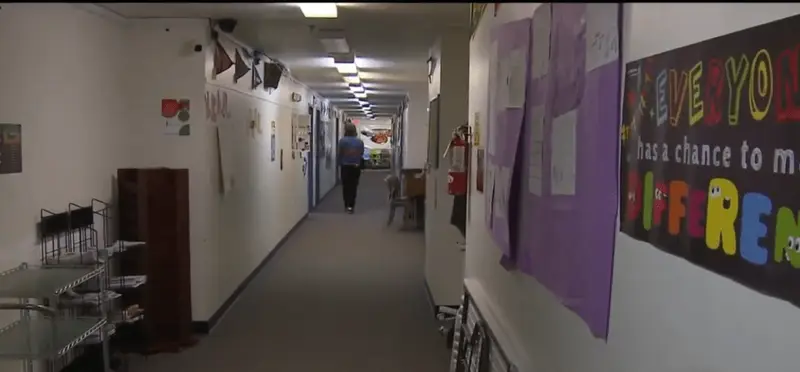
The stakes are difficult to overlook given New Mexico’s educational statistics. In recent years, the state has placed close to the bottom of the country in both math and reading on the National Assessment of Educational Progress, coming in at 46th and 48th, respectively. In light of this, schools that consistently achieve academic success while catering to economically disadvantaged, majority-minority student populations are not anomalies. They serve as proof of something. The question of whether the larger system is prepared to consider that evidence is another, and it has not had a promising recent history.
It’s important to understand what the 50/50 model really requires of both teachers and students. It differs from the traditional sink-or-swim immersion method, in which kids are thrown into a language and expected to adjust. In order to develop true literacy and academic proficiency in both languages at the same time, the school day is divided into two parts: half in Spanish and half in English. That distinction is important. As recently as 2018, research from New Mexico courts revealed that effective dual language programs are the most effective teaching strategy for English language learners. The key phrase is “well-run.” Most attempts end there.
It is more difficult to pinpoint exactly what makes the Albuquerque Bilingual Academy’s version of this work. It’s possible that the school’s stability—its well-defined mission, community focus, and family-centered model—creates a consistency that most public schools are unable to sustain due to financial constraints and administrative turnover. Despite achieving academic results that are 20 to 30 percentage points above state and district averages, schools such as Mission Achievement and Success, another high-performing charter school in Albuquerque that serves 90% minority students, have encountered bureaucratic resistance. In New Mexico, it appears that high-achieving schools that serve low-income communities are rewarded with regulatory battles rather than support for expansion.
At institutions like the Bilingual Academy, it’s difficult to ignore the growing waiting list each year and experience a mixture of admiration and frustration. There is a model. There are the outcomes. There is a demand. However, the growth of effective bilingual education continues to be excruciatingly slow due to funding shortages, political inertia, and a school system that is still unsure whether Spanish is a problem to be solved or an asset worth developing.
That debate must seem a bit abstract to the kids sitting in those classrooms, switching between languages as easily as turning a page. They speak two languages already. They already have the upper hand. The school discovered that language, culture, and academic success are not conflicting priorities—a conclusion that the larger system keeps circling around without coming to. They are identical at the Albuquerque Bilingual Academy.⁖※
London Bilingualism's content on health, medicine, and weight loss is solely meant for general educational and informational purposes. This website does not offer any diagnosis, treatment recommendations, or medical advice.
We consistently compile and disseminate the most recent information, findings, and advancements from the medical, health, and weight loss sectors. When content contains opinions, commentary, or viewpoints from professionals, industry leaders, or other people, it is published exactly as it is and reflects those people's opinions rather than London Bilingualism's editorial stance.
We strongly advise all readers to consult a qualified medical professional before acting on any medical, health, dietary, or pharmaceutical information found on this website. Since every person's health situation is different, only a qualified healthcare provider who is familiar with your medical history can offer you advice that is suitable for you.
In a similar vein, any legal, regulatory, or compliance-related information found on this platform is provided solely for informational purposes and should not be used without first obtaining independent legal counsel from a licensed attorney.
You understand and agree that London Bilingualism, its editors, contributors, and affiliated parties are not responsible for any decisions made using the information on this website.
