

Early in nearly every papal visit, the pope is seen on camera leaning into a microphone and attempting a phrase in a language that is obviously not his native tongue. There are moments when the accent is off. There are moments when the grammar falters. Nevertheless, the audience responds as though they have been given something personal. It is too frequent to be a coincidence. It seems that the contemporary papacy has realized, whether consciously or unconsciously, that words in a person’s mother tongue have a significance that translation is unable to fully capture.
The Catholic Church relied on Latin for the majority of its existence, much like a diplomat relies on a passport. universal, formal, and a little aloof. That all changed about 60 years ago, around the time of the Second Vatican Council, when Rome quietly acknowledged what missionaries had known for centuries: speaking to people in their dream language causes them to listen differently. These days, the Vatican website is available in over sixty languages—a number you don’t just happen to come across. Somewhere, someone decided that reach was more important than custom.
A pattern emerges when you look at the recent line of popes. While serving as a Vatican diplomat in locations that the majority of Italians of his generation never visited, John XXIII learned six languages, including Bulgarian and Turkish. Paul VI was also able to work comfortably across six. Then came John Paul II, whose multilingualism (more than ten languages, including Polish, Russian, and Portuguese) seemed almost theatrical when he turned to face a foreign crowd and started responding to them. It’s difficult to ignore how frequently footage of his travels lingers on viewers’ faces as soon as they recognize what he’s doing.
Benedict XVI introduced the same talent in an academic setting. German came first, followed by Italian, Latin, French, English, Spanish, ancient Greek, and Hebrew. His foreign-language sermons sounded precise rather than friendly, like a scholar’s meticulous translation. Once more, Francis was different. Naturally, he spoke Spanish, but he also spoke Italian, German, English, French, Portuguese, and Latin. He frequently switched between these languages in the middle of a sentence or during a conversation, which felt more like a café in Buenos Aires than a basilica.
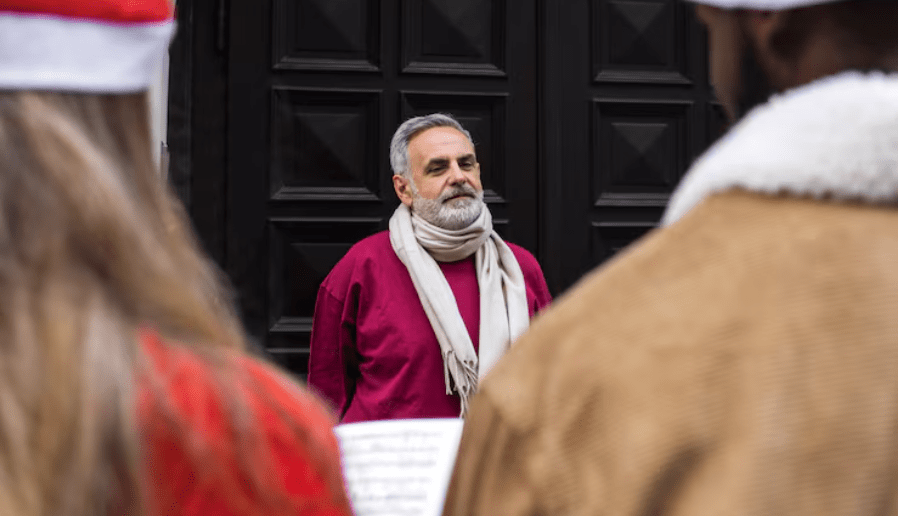
The current occupant of the position, Pope Leo XIV, fits the contemporary mold but falls short of John Paul II’s almost legendary range. proficient in French, Portuguese, Spanish, Italian, and English. He has acknowledged that he is still working on speaking German and Latin, but he can read both languages. That admission has a subtle honesty to it. The fact that he does so makes the languages he does know feel earned rather than performed. Popes seldom acknowledge a deficiency in their skills.
The Lebanon incident demonstrated the significance of this. He is not fluent in Arabic. During his visit, he offered the phrase “Peace be with you,” which he had learned. It was a minor issue. A couple of sounds. However, the reaction on Lebanese social media indicated that a much more significant exchange had taken place. Perhaps that’s the main idea. Although fluency is a gift, intention might be a more useful tool. A flawless statement read by an interpreter never quite manages to be heard in the same way as a pope who makes a visible, imperfect, and sincere effort.
It is genuinely unclear if the upcoming generation of cardinals will uphold this linguistic tradition. Though global doesn’t always equate to multilingual, the pool of candidates is more diverse than before, which should be beneficial. However, given that the pattern has persisted for a century, it is tempting to think that Rome has internalized something that most institutions still find difficult: the idea that being understood in one’s own language is a form of theology in and of itself.
London Bilingualism's content on health, medicine, and weight loss is solely meant for general educational and informational purposes. This website does not offer any diagnosis, treatment recommendations, or medical advice.
We consistently compile and disseminate the most recent information, findings, and advancements from the medical, health, and weight loss sectors. When content contains opinions, commentary, or viewpoints from professionals, industry leaders, or other people, it is published exactly as it is and reflects those people's opinions rather than London Bilingualism's editorial stance.
We strongly advise all readers to consult a qualified medical professional before acting on any medical, health, dietary, or pharmaceutical information found on this website. Since every person's health situation is different, only a qualified healthcare provider who is familiar with your medical history can offer you advice that is suitable for you.
In a similar vein, any legal, regulatory, or compliance-related information found on this platform is provided solely for informational purposes and should not be used without first obtaining independent legal counsel from a licensed attorney.
You understand and agree that London Bilingualism, its editors, contributors, and affiliated parties are not responsible for any decisions made using the information on this website.
