

One afternoon, an 82-year-old woman in Toledo, Ohio, answered her phone and heard her grandson pleading for assistance. He informed her that he had been arrested, that he needed eight thousand dollars to be released on bond, and that she shouldn’t tell his parents. She almost grabbed her handbag. It turned out that the grandson had been eating lunch in his mother’s kitchen the entire time, completely oblivious to the fact that a machine had used his voice to call his grandmother in a fictitious emergency. When she said she didn’t have the money, the phone clicked dead. Somehow, the most humane aspect of the entire conversation was that click.
Narratives such as hers have been proliferating throughout North America, but what hasn’t received enough attention is how convincingly these artificial voices now function in multiple languages. Specifically, bilingual AI voice technology has started to transcend linguistic and cultural boundaries that even skilled ears find difficult to discern. English voice cloning was impressive but limited a few years ago. Another issue was getting a machine to mimic the warmth a Dominican grandmother adds to “mijo” or the cadence of Mexican Spanish or Argentine inflection. It’s no longer an issue. Nowadays, businesses like ElevenLabs provide bilingual voice generation in over 20 languages, resulting in speech that conveys more than just words but also something more akin to personality. There are breaths in between sentences. A weary parent’s slight vocal fry. The increasing melodic quality of a Spanglish question.
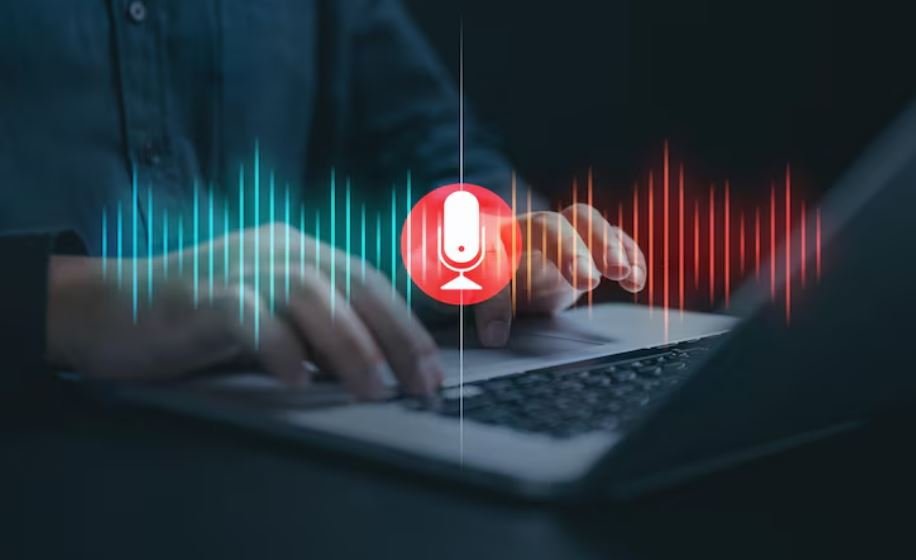
Cultural factors are what make the bilingual aspect so unsettling. A family member’s voice is very important in many Hispanic households. When a grandmother hears her grandson’s voice, she processes more than just sound; it’s decades of relationship, identity, and trust condensed into a few syllables. Long before AI entered the picture, con artists were aware of this and used variations of the so-called “grandparent scam” for years. However, the previous version needed a caller who could improvise, act, and possibly mispronounce an unfamiliar name or accent. The accent is now taken straight from an Instagram reel, or a voicemail greeting, and the performance is automated. According to cybersecurity consultant Dave Hatter, training a voice clone with just a public recording can take as little as fifteen minutes. Posting a TikTok in two languages might be the riskiest thing a bilingual teen can do these days.
All of this is tinged with an odd irony. Bilingual communities battled for recognition for decades, demanding that voice assistants understand their accents and that Spanish-language customer service not feel like an afterthought. Fraud is one of the first widespread uses of AI now that it can speak their languages accurately. Recently, Instagram introduced an auto-translation feature that shocked users by changing their lip movements and dubbing their voices into Spanish. In a reel she had recorded in English, one fitness creator reported seeing herself appear to speak Spanish fluently. She noted that the entire thing was implemented almost without warning, as casually as a filter update.
The acceptable applications are not insignificant. Through text-to-speech software, voice-banking services now allow patients who are losing their voices due to ALS or throat cancer to continue speaking as themselves. Film dubbing has significantly improved, and politicians have addressed multilingual audiences using this technology. However, there’s a sense that commercial enthusiasm is outpacing any serious consideration of what happens when trust in a familiar voice—the most intimate form of identification most people have—becomes unreliable, as scam reports mount alongside product launches. In a 2024 report, the Federal Crimes Enforcement Network specifically called attention to the family emergency scheme and warned about deepfakes that fabricate events in which an individual did not participate.
As of yet, no one has a clear response. Hanging up and returning calls from a known number is advised by experts. The idea that you would need a password to verify that your own grandson is actually your grandson is both sensible and slightly ridiculous. Some families have begun to use code words. The stakes feel especially personal to bilingual families because the voice is more than just a voice. Language, culture, and the feel of home are all carried by it. Losing trust in that sound means losing something more difficult to identify than cash.
London Bilingualism's content on health, medicine, and weight loss is solely meant for general educational and informational purposes. This website does not offer any diagnosis, treatment recommendations, or medical advice.
We consistently compile and disseminate the most recent information, findings, and advancements from the medical, health, and weight loss sectors. When content contains opinions, commentary, or viewpoints from professionals, industry leaders, or other people, it is published exactly as it is and reflects those people's opinions rather than London Bilingualism's editorial stance.
We strongly advise all readers to consult a qualified medical professional before acting on any medical, health, dietary, or pharmaceutical information found on this website. Since every person's health situation is different, only a qualified healthcare provider who is familiar with your medical history can offer you advice that is suitable for you.
In a similar vein, any legal, regulatory, or compliance-related information found on this platform is provided solely for informational purposes and should not be used without first obtaining independent legal counsel from a licensed attorney.
You understand and agree that London Bilingualism, its editors, contributors, and affiliated parties are not responsible for any decisions made using the information on this website.
