

In a tiny Queens kitchen, a grandmother converses with her Echo Dot in Spanish while her son responds in English. The gadget, which is positioned between a fruit bowl and a partially consumed cup of coffee, manages to keep up with both. That conversation would have ended in frustration a year ago when someone struggled to change the default language on the Alexa app. Now, it just functions, essentially, and the entire purpose of what Amazon has been developing is that subtle change.
The Multilingual Mode is not an eye-catching feature. It doesn’t glow, it doesn’t animate, and it doesn’t declare itself. However, it addresses a genuine issue that has been present in millions of homes for years: the issue of households where two languages collide during breakfast and bedtime. The idea behind Amazon’s solution is nearly unyieldingly straightforward: load two language models, keep both available, and allow the device to determine which one is being spoken to in real time. Naturally, the underlying engineering is much more complex, which is likely why it took so long.
The pattern of which languages were added and when is what makes the rollout intriguing. Before Amazon made a significant push into the Indian market, Hindi was introduced. Around the time the company began promoting Echo devices in Brazil, Portuguese arrived. The same reasoning is used in the most recent expansion, which pairs English with German, French, Italian, Spanish, and Japanese. It is difficult to ignore the fact that Alexa picks up the languages of the regions where Amazon hopes to increase box sales. Yes, it is useful. Probably not a coincidence.
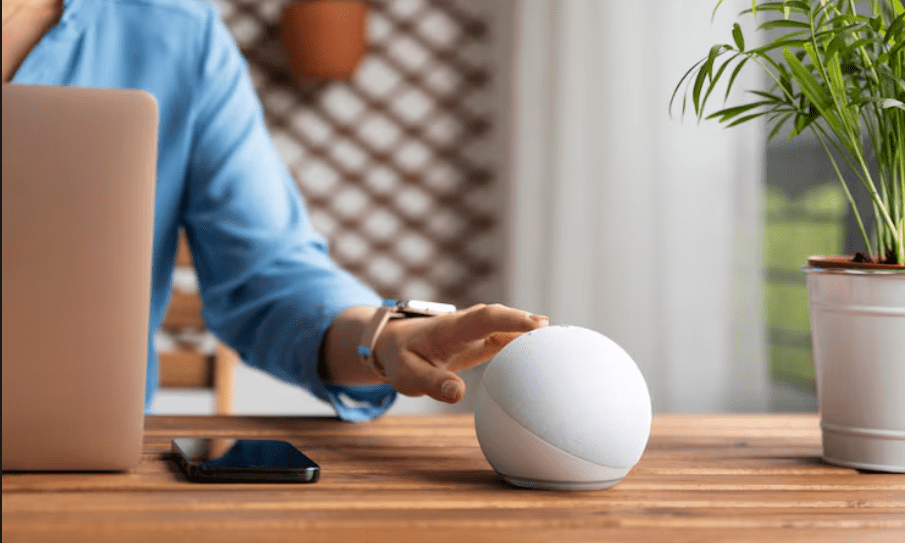
Even though Amazon would never describe it that way, there is a feeling that it is catching up in this situation. Since about 2018, Google Assistant has been able to switch between any two of its supported languages, and Meta researchers have already shown speech recognition models that were trained on 51 languages from over 16,000 hours of audio. Alexa’s eight or so pairings seem insignificant by that standard. However, being modest does not equate to being wrong. The majority of bilingual households only require two languages, not fifty, and the transition between them must be seamless. It is more difficult to be invisible than broad.
It’s really simple to set up, which is important. Say “Hey Alexa, speak English and Spanish,” and the gadget will take care of the rest. Alternatively, you can open the app, select a pair from the bilingual menu, scroll to Language, and tap through to your Echo. The dual-model method is quicker than the previous manual switching, and once it’s turned on, the Echo just listens and determines what’s going on. One peculiarity that users typically notice on an Echo Show before they notice anything else is that the wake word and on-screen text remain locked to the primary locale.
Multilingual Mode is still limited in many ways. In homes where Tagalog, English, and Spanish are all spoken at dinner, its inability to support three languages is a significant limitation. Greek, Serbian, Icelandic, and dozens of other languages with obvious demand and no product are not yet covered. Furthermore, it’s still unclear if Amazon will continue to add pairs one expansion market at a time or pursue the kind of universal multilingual model Meta has alluded to.
As you watch this develop, you get the impression that voice assistants are finally being influenced by people’s real lives rather than the assumptions engineers made about them. The Queens grandmother doesn’t give a damn which model loaded first. When she asks, she wants the lights to turn on. That is the true purpose of the algorithm, more so than any specification sheet.
London Bilingualism's content on health, medicine, and weight loss is solely meant for general educational and informational purposes. This website does not offer any diagnosis, treatment recommendations, or medical advice.
We consistently compile and disseminate the most recent information, findings, and advancements from the medical, health, and weight loss sectors. When content contains opinions, commentary, or viewpoints from professionals, industry leaders, or other people, it is published exactly as it is and reflects those people's opinions rather than London Bilingualism's editorial stance.
We strongly advise all readers to consult a qualified medical professional before acting on any medical, health, dietary, or pharmaceutical information found on this website. Since every person's health situation is different, only a qualified healthcare provider who is familiar with your medical history can offer you advice that is suitable for you.
In a similar vein, any legal, regulatory, or compliance-related information found on this platform is provided solely for informational purposes and should not be used without first obtaining independent legal counsel from a licensed attorney.
You understand and agree that London Bilingualism, its editors, contributors, and affiliated parties are not responsible for any decisions made using the information on this website.
