

The fact that the most well-known voices in artificial intelligence—Siri, Alexa, and Cortana—arrived in the world devoid of faces, ancestry, and a clear connection to the communities most impacted by the technology they represent is subtly unsettling. They are smooth, pleasant, and purposefully non-racial. Then C.L.Ai.R.A., a bilingual Afro-Latina AI, appeared. She has kind eyes, a soft afro, and what her creators call the “sharpest brain in the A.I. world.” She made her debut in September 2021 and began to appear in classrooms almost right away. She may still be unknown to the majority of mainstream tech professionals.
In collaboration with Trill or Not Trill, an organization co-founded by Lenny Williams and Jeff Dess that focuses on culturally responsive leadership and providing voice to underrepresented communities, Create Lab Ventures developed C.L.Ai.R.A. It wasn’t just about creating another chatbot. The goal was to create something that students of color, who might not have imagined themselves in a discussion about deep neural networks or machine learning, could relate to in terms of appearance, sound, and feel. C.L.Ai.R.A. operates on GPT-3 and generates human-like text using an autoregressive language model, but the identity that surrounds the technology was almost more important than the technology itself. Instead of appearing in a clinical corporate demo reel, her appearance was intended to feel like someone you’d recognize on a Bronx street corner.
It may not seem important, but that distinction is crucial. According to a widely cited NYU study, the AI industry is experiencing a “diversity crisis,” with about 80% of AI professors being men and remarkably low representation of women and people of color at organizations like Google and Meta. Unconscious prejudices are ingrained in the architecture when the majority of those constructing the systems are white men. Black faces are misidentified by facial recognition software. voice assistants who have trouble speaking English with an accent. employing algorithms that discriminate against women. The pattern is well-established and, to be honest, draining. While C.L.Ai.R.A. doesn’t solve every issue, she does something more subtle: she modifies the cultural and visual norm for what AI can look like.
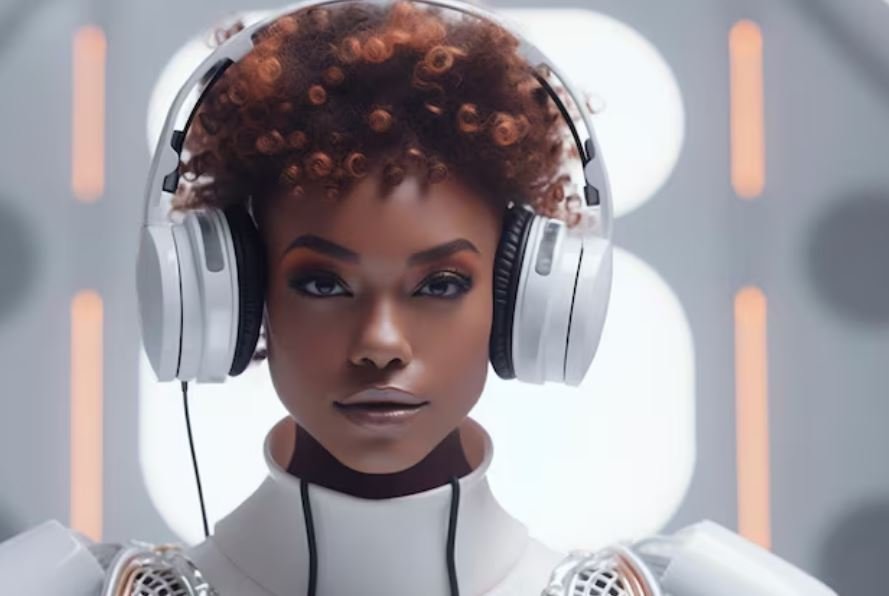
The founder of Create Lab Ventures, Abran Maldonado, has publicly expressed his desire for C.L.Ai.R.A. to be “welcoming and disarming,” intended to dispel the anxiety associated with AI in communities that have traditionally been excluded from tech discussions. Delivered through university demos and school workshops rather than glitzy press conferences, there’s a feeling that this was more of a cultural statement than merely a product launch. According to Maldonado, he can directly incorporate a deeper understanding of diversity, equity, and inclusion into her knowledge base and moderate C.L.Ai.R.A.’s output for bias. It’s difficult to discount the goal, but it’s still unclear if that will be sufficient to solve systemic issues.
Black and Latina women have responded viscerally to C.L.Ai.R.A., saying they feel seen in a technological product for the first time. This is what’s remarkable about witnessing the reaction. Just that response shows how low the bar has been. You can tell something unsettling about the industry that came before it when a single AI avatar with curly hair and brown skin produces that level of emotional recognition. That burden was never placed on Siri. No one ever needed to be represented by Alexa. When C.L.Ai.R.A. first arrived, it already carried the expectations of communities that had watched technology advance for decades without being significantly involved.
It’s not too late yet. Large corporations continue to control the majority of the voice tech market and have little motivation to expand beyond simple marketing initiatives. However, C.L.Ai.R.A.’s presence in classrooms, speaking both Spanish and English and interacting with students who might not otherwise come across AI outside of a Hollywood film, has a subtle stubbornness to it. Her technology is probably less important in determining whether she becomes a footnote or a turning point than whether the industry surrounding her determines that representation is worthwhile beyond a single avatar with a catchy name.
London Bilingualism's content on health, medicine, and weight loss is solely meant for general educational and informational purposes. This website does not offer any diagnosis, treatment recommendations, or medical advice.
We consistently compile and disseminate the most recent information, findings, and advancements from the medical, health, and weight loss sectors. When content contains opinions, commentary, or viewpoints from professionals, industry leaders, or other people, it is published exactly as it is and reflects those people's opinions rather than London Bilingualism's editorial stance.
We strongly advise all readers to consult a qualified medical professional before acting on any medical, health, dietary, or pharmaceutical information found on this website. Since every person's health situation is different, only a qualified healthcare provider who is familiar with your medical history can offer you advice that is suitable for you.
In a similar vein, any legal, regulatory, or compliance-related information found on this platform is provided solely for informational purposes and should not be used without first obtaining independent legal counsel from a licensed attorney.
You understand and agree that London Bilingualism, its editors, contributors, and affiliated parties are not responsible for any decisions made using the information on this website.
