

In Kentwood, Michigan, there is a structure on Breton Road SE that doesn’t appear to be a school to most people. When it first opened in 2025, it catered to kids who were still years away from learning how to do long division or read chapter books. However, the very fact that it exists at all—it is state-of-the-art, purpose-built, and staffed by a full administrative team that includes a director, an assistant principal, and a dean—says something about how at least one Midwest school district has chosen to approach the early years.
The Hamilton Early Childhood Center is Kentwood Public Schools’ second location devoted solely to early childhood education in as many years. Nearly 300 young students were reportedly served by the first, which debuted in 2024. In 2025, Hamilton followed. Located at 3303 Breton Road SE, it has its own phone line, leadership structure, and Monday through Thursday operating calendar. This schedule already indicates that it is not an afterthought to a larger elementary school.
The center provides a combination of two different programs: Early Childhood Special Education services, which span from birth to age five and into the elementary grades, and the Great Start Readiness Program, Michigan’s state-funded preschool initiative for four-year-olds from lower-income households. Both programs are offered Monday through Thursday, with half-day ECSE sessions split into morning and afternoon blocks and full-day GSRP classes. It’s a logistical setup that mirrors the multifaceted, intricate reality of early childhood services; rather than being one-size-fits-all, it’s based on what various children and families truly require.
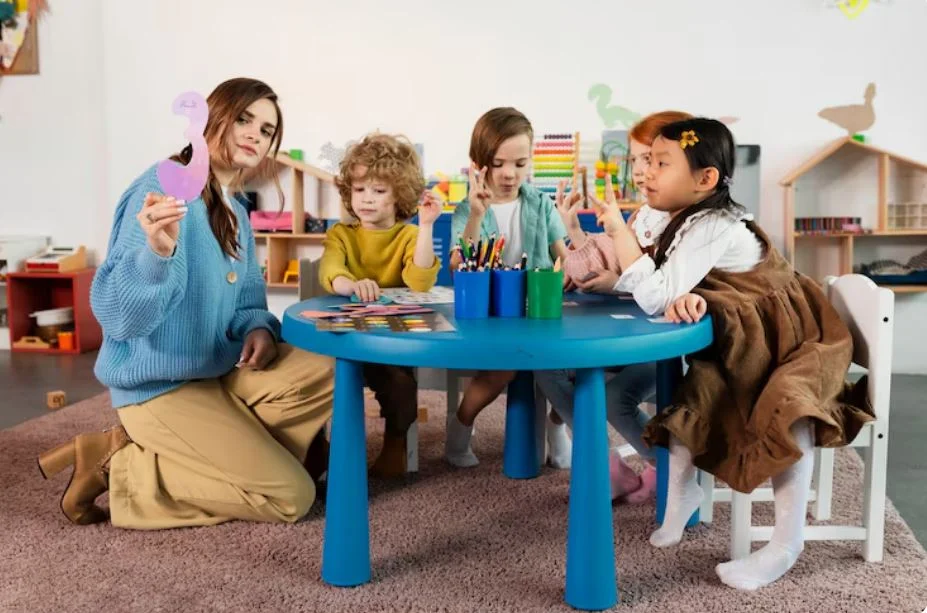
The way Kentwood has presented all of this gives the impression that the district is sincerely attempting to go above and beyond the call of duty. Director of Early Childhood Teressa Gatza’s welcome message reads more like someone who has actually thought about what a three- or four-year-old needs from a school building than institutional boilerplate. The emphasis on belonging, play-based learning, and the notion that social-emotional development is just as important as early literacy keeps coming up. Anyone who has seen a nervous four-year-old on their first day of school will find this emphasis to be honest rather than idealistic.
Although early childhood researchers have been promoting play-based, child-centered learning for decades, it is still easier to articulate as a philosophy than to implement within a publicly funded program that is subject to accountability metrics. This is the framing that KPS employs. Only families who are currently enrolled at Hamilton can truly speak to whether the school is able to maintain that balance. The center is too new to have the kind of longitudinal data that would provide the complete picture, and the reviews are too few to be very insightful.
It is evident that Kentwood is placing a structural wager. A district that has determined early learning is infrastructure—not supplemental, not optional, and not something to be discreetly folded into a kindergarten wing—is indicated by the opening of two dedicated early childhood sites in consecutive years, the hiring of administrative leadership specifically for those programs, and the ongoing expansion of enrollment capacity. This might be the result of more widespread pressure from Michigan’s continuous efforts to increase early childhood access throughout the state. It might also be a reflection of something more local: a community whose growth patterns and demographics are making the demand so obvious that the district is unable to ignore it.
The history of Hamilton Early Childhood Center is not particularly noteworthy. No viral social media moment, no celebrity endorsements. It is a roadside school for young children in Kentwood that is open to families in need four days a week. That’s a big deal. It’s simply simple to ignore, which is one of the reasons it’s worth noting.
London Bilingualism's content on health, medicine, and weight loss is solely meant for general educational and informational purposes. This website does not offer any diagnosis, treatment recommendations, or medical advice.
We consistently compile and disseminate the most recent information, findings, and advancements from the medical, health, and weight loss sectors. When content contains opinions, commentary, or viewpoints from professionals, industry leaders, or other people, it is published exactly as it is and reflects those people's opinions rather than London Bilingualism's editorial stance.
We strongly advise all readers to consult a qualified medical professional before acting on any medical, health, dietary, or pharmaceutical information found on this website. Since every person's health situation is different, only a qualified healthcare provider who is familiar with your medical history can offer you advice that is suitable for you.
In a similar vein, any legal, regulatory, or compliance-related information found on this platform is provided solely for informational purposes and should not be used without first obtaining independent legal counsel from a licensed attorney.
You understand and agree that London Bilingualism, its editors, contributors, and affiliated parties are not responsible for any decisions made using the information on this website.
