

When Juliet starts responding to Romeo in Welsh for the first time in the second act of this play, the atmosphere in the Globe seems to change. Almost subtly, the varied and focused audience leans forward. Something has changed. It’s not a gimmick or a trick. Shakespeare may have always meant for the play to tell the tale of two people who shouldn’t be able to communicate with one another but are attempting to do so.
Theatr Cymru’s multilingual Welsh-English production of Romeo and Juliet, directed by Steffan Donnelly, attempts something subtly radical by splitting the rival families according to language rather than stage location or wardrobe. English is spoken by the Capulets. Welsh is spoken by the Montagues. All of the tragedy’s mechanisms abruptly shift into a new mode.
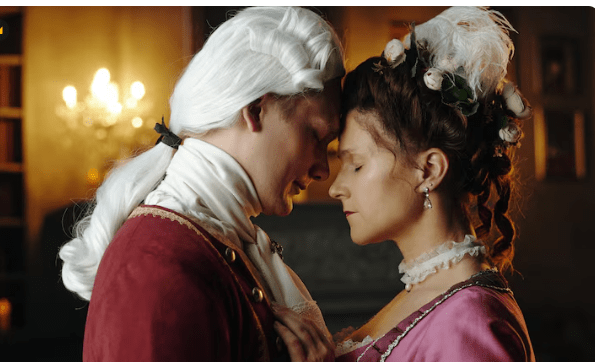
The fact that this isn’t a conceptual gimmick placed on top of the play is what makes it clever, and it’s something that is missed in the early reviews that mostly concentrate on the novelty. It’s the play. Shakespeare penned a tale about two young individuals who are unable to break free from inherited allegiances.
Making those allegiances audible in every conversation externalizes what the literature has always hinted at but never fully demonstrated. Romeo and Juliet’s romance is more than just charming when they manage to communicate despite the language barrier. It has an air of defiance. The stakes become tangible, instantaneous, and present in the space. When that shift occurs, it’s difficult to avoid feeling its weight.
The production makes use of the JT Jones 1983 Welsh translation, which is an amazing work in and of itself. It preserves the original Shakespearean meter and rhyme schemes in a language that sounds archaic even when performed by young performers dressed in contemporary attire. Welsh possesses that trait. It has a certain formal weight that comes with it and doesn’t require performance.
Juliet’s storyline is especially well-written: she speaks only English at first, feeling at ease and contained in her family’s environment, but as she gets more involved with Romeo, her speech gradually shifts to Welsh. She is speaking a language that her own family can hardly understand by the time disaster strikes. By alone, that detail conveys more about the price of love than most five-act musicals can.
Does the play make greater sense in this way? This is a legitimate question. Probably not in terms of storyline; linguistic theory is not necessary to understand the tale of two teenagers, two rival families, and a series of awful choices. Sense, however, is more than just plot.
The work brings up a fresh kind of understanding that seems particularly pertinent to modern Wales, where the negotiation between English and Welsh is ongoing rather than historical and is experienced on a daily basis in family kitchens, road signs, schools, and radio stations. The quarrel is reframed as something less medieval and more recognizable by placing Shakespeare’s most well-known dispute inside that negotiation. This version’s brutality isn’t abstract. It’s the violence of a society that hasn’t finished deciding who it is.
It’s uncertain if this strategy would work successfully on a stage without the Globe’s unique closeness. In contrast to a sitting proscenium house, the outdoor yard, the standing groundlings, and the afternoon light all contribute to a setting where dramatic experimentation tend to breathe more freely.
Nevertheless, the production convincingly argues that working in two languages simultaneously does not weaken the play and that Shakespeare’s language has always been both the subject and the medium. It concentrates it. It turns out that the experiment is more about what was there all along than it is about translation.
London Bilingualism's content on health, medicine, and weight loss is solely meant for general educational and informational purposes. This website does not offer any diagnosis, treatment recommendations, or medical advice.
We consistently compile and disseminate the most recent information, findings, and advancements from the medical, health, and weight loss sectors. When content contains opinions, commentary, or viewpoints from professionals, industry leaders, or other people, it is published exactly as it is and reflects those people's opinions rather than London Bilingualism's editorial stance.
We strongly advise all readers to consult a qualified medical professional before acting on any medical, health, dietary, or pharmaceutical information found on this website. Since every person's health situation is different, only a qualified healthcare provider who is familiar with your medical history can offer you advice that is suitable for you.
In a similar vein, any legal, regulatory, or compliance-related information found on this platform is provided solely for informational purposes and should not be used without first obtaining independent legal counsel from a licensed attorney.
You understand and agree that London Bilingualism, its editors, contributors, and affiliated parties are not responsible for any decisions made using the information on this website.
