

When you drive from Houston to College Station on a game day, the flat Central Texas countryside gives way to maroon everywhere, on cars, flags, and the shirts of individuals who traveled four hours for this. The volume of it reaches you before the stadium does. With over 79,000 students enrolled across its system, Texas A&M is one of the biggest universities in the country. Its main campus in College Station has a density and collective identity that makes it feel less like a university and more like a small city that just so happens to be organized around a degree.
Established in 1876 as the first public university in Texas, it has amassed over the past 150 years not only students and funding for research, but also a distinctive culture that its alumni carry with them and, notably, continue to engage with long after they have left.
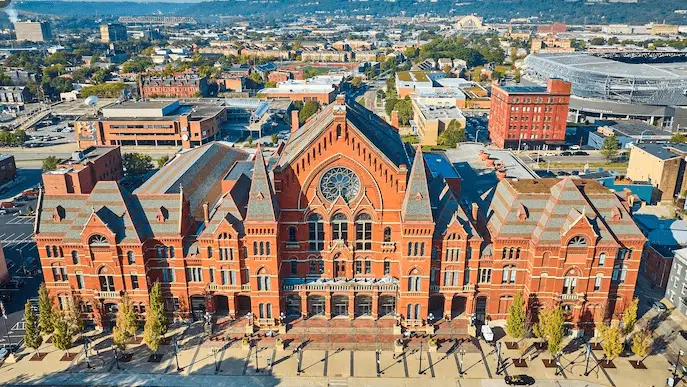
Although the two are rarely discussed separately at A&M, the intellectual profile is strong enough to stand alone from the cultural identity. According to U.S. News, the university is ranked #21 among public schools and #51 among National Universities, a ranking that reflects actual research output rather than just size. A&M has an R1 designation, which denotes doctoral universities with extremely high research activity, and it receives billions in endowment and research funding that supports programs in the sciences, engineering, agriculture, and veterinary medicine.
Among research colleges of this caliber, in-state tuition is about $12,928 annually, making it one of the more affordable options. The agricultural and veterinary sciences maintain a depth that clearly relates to the land-grant mandate under which the institution was created, while the engineering and business programs in particular have established reputations that attract students from throughout the state and beyond.
The most distinguishing feature that sets Texas A&M apart from other large public research colleges is its Aggie traditions, which call for a more detailed explanation than “school spirit.” Tens of thousands of students flock to Kyle Field far into midnight for organized shouts directed by elected Yell Leaders at Midnight Yell Practice, which takes place the night before home football games. Every year on April 21, the date of the Battle of San Jacinto, Aggie Muster is celebrated anywhere Aggies congregate worldwide to honor former students who have passed away in the previous year.
A roll is called, and someone in the room responds “here” for each name. The precision military flair of the Fightin’ Texas Aggie Band’s halftime performance is unmatched by any other American college marching band. These are more than just occasions. They are upheld with a level of institutional seriousness that implies they have significance for the participants that goes beyond merely demonstrating school allegiance.
Even for students who are not members of the Corps of Cadets, the group that most prominently upholds the tradition, the military background permeates the university and shapes the campus. When Reveille, the Corps’ mascot collie, decides to bark during a lecture while attending class with a cadet handler, the class is meant to be dismissed. Reveille is the highest-ranking member of the Corps. The fact that this tradition exists and is preserved as institutional mythology speaks volumes about how seriously A&M takes the nature of the place it has created, even though it may be observed more in the telling than in practice.
From the outside, Texas A&M seems to have accomplished something truly unique: it is a major research university with a top-20 public school ranking and a strong enough cultural identity that its graduates continue to actively and permanently associate with the institution in ways that most universities can only dream of. It is unclear if that culture will endure at the size A&M has reached, with 79,000 system students and growing. College Station’s campus is still growing. The money for research continues to increase. The cries at midnight continue. Thus far, it appears that the identity is keeping up with the enrollment.
London Bilingualism's content on health, medicine, and weight loss is solely meant for general educational and informational purposes. This website does not offer any diagnosis, treatment recommendations, or medical advice.
We consistently compile and disseminate the most recent information, findings, and advancements from the medical, health, and weight loss sectors. When content contains opinions, commentary, or viewpoints from professionals, industry leaders, or other people, it is published exactly as it is and reflects those people's opinions rather than London Bilingualism's editorial stance.
We strongly advise all readers to consult a qualified medical professional before acting on any medical, health, dietary, or pharmaceutical information found on this website. Since every person's health situation is different, only a qualified healthcare provider who is familiar with your medical history can offer you advice that is suitable for you.
In a similar vein, any legal, regulatory, or compliance-related information found on this platform is provided solely for informational purposes and should not be used without first obtaining independent legal counsel from a licensed attorney.
You understand and agree that London Bilingualism, its editors, contributors, and affiliated parties are not responsible for any decisions made using the information on this website.
