

Round Rock, Texas, is one of those places that had to develop infrastructure to keep up with its rapid growth. When the Williamson County government signed the documents creating Round Rock ISD in 1913, there were just two schools in the district. It now employs about 6,340 people, covers about 110 square miles, serves about 47,000 students across 60 campuses, and runs on a budget of almost half a billion dollars. Over the course of a century, the district changed from being a two-school rural area to one of the biggest in Texas, but the majority of the weight came in the last 25 years as families were driven north along I-35 by Austin’s tech economy into neighborhoods like Round Rock, Cedar Park, and the surrounding suburbs.
The Class of 2026 recently graduated 3,851 students from seven high schools, earning 7,769 industry certifications and more than $44 million in scholarship money. These figures would be impressive for any district, but they are especially noteworthy for a public school system that serves communities that are still going through a demographic transition. Currently, 19.8% of students are considered economically disadvantaged, and 70% of students are classified as minority enrollees. This profile differs significantly from the district’s past demographics and influences almost all of the administration’s decisions, including curriculum development, enrollment forecasts, and the ongoing discussion about the goals of a public school in the twenty-first century.
Dr. Hafedh Azaiez, the superintendent, has been handling this complexity with a tactic that appears to entail providing more options rather than fewer. International Baccalaureate programs are offered by Round Rock ISD on several campuses at the Primary, Secondary, and Diploma levels. Before graduating, students can complete up to 60 college credit hours toward a bachelor’s degree through its Early College High School. It offers Schools of Choice that focus on STEM education, leadership academies, project-based learning, and arts integration. From video production to agriculture, there are 28 Career and Technical Education programs. This district has been purposefully building a parallel system of options to both genuinely serve students whose needs fall outside of the standard curriculum and prevent families who could leave for private schools from doing so.
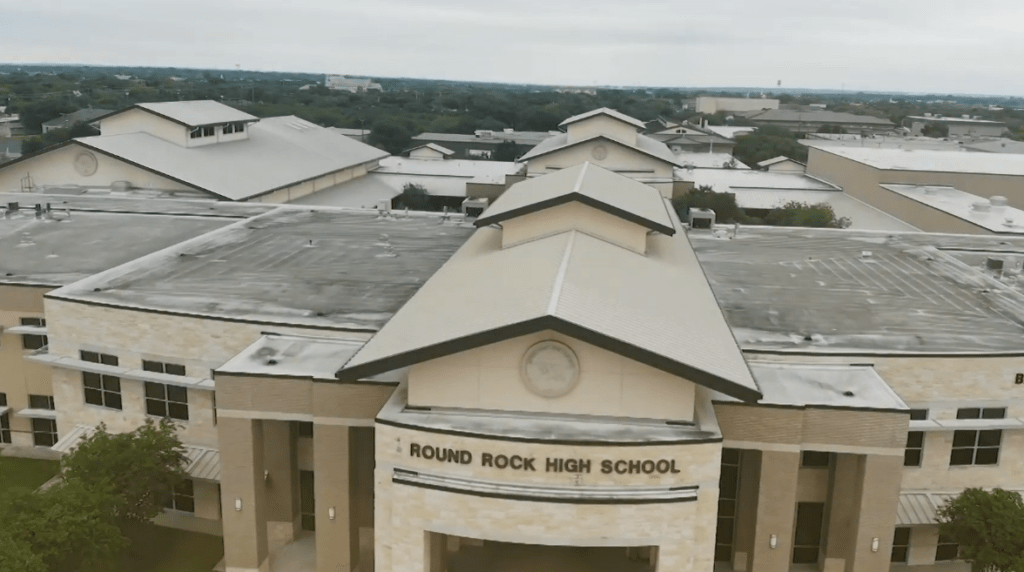
This tactic creates complexity, and complexity leads to discussions. The most recent one that was made public concerned the 2027–2028 academic calendar, specifically whether to start the school year earlier, add an October break, or pursue a third option that resulted from community feedback and turned out to be different from either of the initial proposals. After conducting a community survey, presenting two options, and hearing concerns from both parties regarding childcare and transportation, the district produced a third calendar with a start date of August 18 and a final day of classes prior to Memorial Day. Although it’s a minor incident in the life of a major organization, the procedure shows something sincere about how Round Rock ISD attempts to function: asking for feedback, making necessary adjustments, and presenting the outcome for board approval.
The seven members of the district’s Board of Trustees serve staggered four-year terms, and the current board reflects the political and demographic changes that have altered Williamson County in the last ten years. Board President Tiffanie Harrison is in charge of an organization that has been managing the well-known conflict that suburban Texas school districts face: striking a balance between budgetary restraint and the true cost of teaching a student body that is expanding, diverse, and becoming more complex.
When you watch Round Rock ISD at the end of the school year, with graduation ceremonies packing the Raymond E. Hartfield Performing Arts Center and families flocking to campuses for early learning days, FIRST Robotics recaps, and Teacher of the Year announcements, you get the impression that the district is taking on a challenging task with sincere dedication. It is truly unclear if its budget can support the aspirations it has established. The operating budget of half a billion dollars is substantial, but so are the expectations that have grown around the term “Destination District.” As of right now, those expectations and the outcomes appear to be reasonably aligned. It’s worth keeping a close eye on how long that lasts.
London Bilingualism's content on health, medicine, and weight loss is solely meant for general educational and informational purposes. This website does not offer any diagnosis, treatment recommendations, or medical advice.
We consistently compile and disseminate the most recent information, findings, and advancements from the medical, health, and weight loss sectors. When content contains opinions, commentary, or viewpoints from professionals, industry leaders, or other people, it is published exactly as it is and reflects those people's opinions rather than London Bilingualism's editorial stance.
We strongly advise all readers to consult a qualified medical professional before acting on any medical, health, dietary, or pharmaceutical information found on this website. Since every person's health situation is different, only a qualified healthcare provider who is familiar with your medical history can offer you advice that is suitable for you.
In a similar vein, any legal, regulatory, or compliance-related information found on this platform is provided solely for informational purposes and should not be used without first obtaining independent legal counsel from a licensed attorney.
You understand and agree that London Bilingualism, its editors, contributors, and affiliated parties are not responsible for any decisions made using the information on this website.
