

On a Thursday night, as you pass the London Welsh Centre, you’ll hear something that has no right to sound so familiar in Bloomsbury.
Welsh—laughed over pints, half-shouted, and sung. There’s a learners’ class downstairs, a choir rehearsal upstairs, and an argument about rugby in the hallway most of the time. It doesn’t feel staged. Week after week, it simply takes place in a city that doesn’t really need to host it.
| Topic | The Welsh Language in London |
|---|---|
| Estimated Welsh speakers in London | Around 8,000–10,000 |
| Oldest active Welsh society | London Welsh Society, founded 1873 |
| Notable cultural hub | London Welsh Centre, Gray’s Inn Road |
| Welsh-language church services | Held weekly at Eglwys Jewin and Welsh Chapel, Charing Cross |
| Annual flagship event | Gŵyl Gymraeg Llundain (London Welsh Festival) |
| Welsh-language schools / classes | Cylch Meithrin Llundain, plus adult learner courses |
| Wider UK Welsh speakers (2022 survey) | About 899,500 people, roughly 29.7% of Wales |
| Daily Welsh use across Wales | Just under 15% |
| Welsh government 2050 target | One million speakers, daily use doubled |
That is the peculiarity of Cymraeg in London. London’s Welsh-speaking community is quietly holding its shape, despite reports from Gwynedd and Ceredigion describing a language tipping toward erosion—coastal villages hollowed out by second homes, council tax premiums rising to 300%, post-Brexit economic strain drawing young Welsh speakers away. not expanding significantly. Not collapsing either. Simply persevering, in a manner that, when compared to the headlines from home, seems almost defiant.
The individuals in charge of these establishments believe that London Welsh cannot replace the heartlands. Gray’s Inn Road is not pretended to be Bala. However, for more than 150 years, the city has served as a sort of release valve, where Welsh speakers go to work but obstinately refuse to fully integrate. The London Welsh Society was founded in 1873. Even older are the chapels.
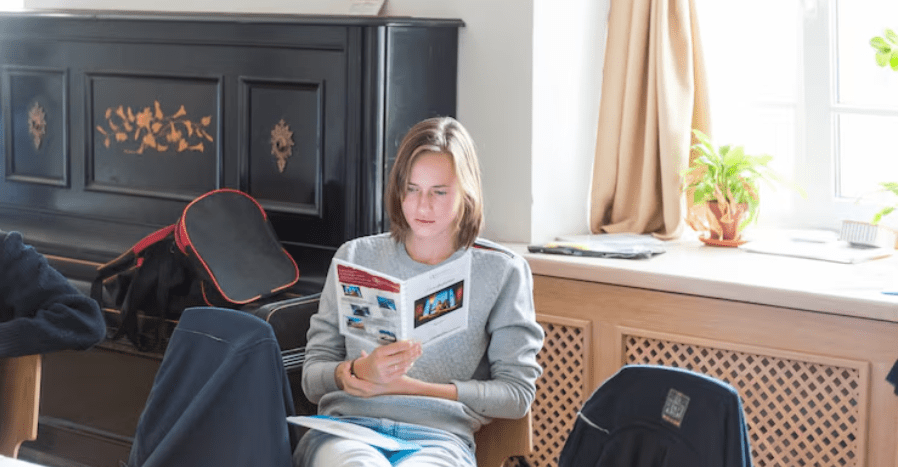
A few of the younger faces in the pews aren’t even from Wales; they married in, picked up the language, and continued to attend. Some of the regulars at Eglwys Jewin have been going to the same Welsh-language services since the 1970s.
Who is arriving has changed recently. Following the pandemic, there has been a discernible influx of Welsh-speaking professionals into the current networks, including tech workers, doctors at Guy’s, producers at the BBC, and civil servants. They bring kids. The kids go to the Welsh-medium playgroup Cylch Meithrin, and all of a sudden, toddlers in Hackney are conjugating verbs that their grandparents stopped using on a daily basis decades ago. It’s a minor issue. However, as Simon Brooks of the Commission for Welsh-speaking Communities has noted, community languages depend on minor details, such as whether they are used to order coffee, reprimand a child, or gossip about a neighbor.
Nobody is blind to the irony. In London, a determined minority is experiencing the opposite effects of the same dynamics—mobility, money, and demographic shifts—that are anglicizing villages along the London Peninsula. Here, speakers must select Welsh. They must pay the membership fee, enroll in the class, and travel across town for the choir. In contrast to the accidental community of a Welsh-majority village that is currently moving toward 50% second homes, that effort creates a kind of intentional community that can occasionally feel more resilient.
This could be exaggerated. Welsh is a tiny language in London. In some places, it’s getting older. The chapels are concerned about the thinning of their pews. Furthermore, no city diaspora can replace the loss of a language like yr iaith bob dydd, which is the common tongue of a real geographic location. Brooks is correct to refer to that as the deeper crisis.
Even so. You begin to wonder if the future of the language might be stranger and more dispersed than anyone anticipated when you watch a group of twenty-somethings spill out of the London Welsh Centre on a rainy Tuesday, carelessly switching between Welsh and English in the middle of sentences. Not only in Snowdonia. Not only Cardiff Bay. Somehow, a side street close to King’s Cross as well.
London Bilingualism's content on health, medicine, and weight loss is solely meant for general educational and informational purposes. This website does not offer any diagnosis, treatment recommendations, or medical advice.
We consistently compile and disseminate the most recent information, findings, and advancements from the medical, health, and weight loss sectors. When content contains opinions, commentary, or viewpoints from professionals, industry leaders, or other people, it is published exactly as it is and reflects those people's opinions rather than London Bilingualism's editorial stance.
We strongly advise all readers to consult a qualified medical professional before acting on any medical, health, dietary, or pharmaceutical information found on this website. Since every person's health situation is different, only a qualified healthcare provider who is familiar with your medical history can offer you advice that is suitable for you.
In a similar vein, any legal, regulatory, or compliance-related information found on this platform is provided solely for informational purposes and should not be used without first obtaining independent legal counsel from a licensed attorney.
You understand and agree that London Bilingualism, its editors, contributors, and affiliated parties are not responsible for any decisions made using the information on this website.
