

On a Saturday morning, if you drive through nearly any major American suburb, the soundscape tells the story before any statistics do. Two doors down from a barbershop with Spanish-language sports talk on the radio is a Korean bakery. Three scripts are used by the dry cleaner to post hours.
In the Trader Joe’s lot, a child interprets a parking sign for his grandmother. Suburbia used to look like none of this. It’s the picture now, quietly.
| Subject | The bilingual transformation of American suburbs |
| Geographic Focus | Atlanta metro, Orlando metro, Dallas–Fort Worth, Northern Virginia, suburban New Jersey |
| Demographic Shift | Suburban populations of color rose from 20% in 1990 to roughly 45% by 2020 |
| Languages Most Common (after English) | Spanish, Mandarin, Vietnamese, Tagalog, Korean, Arabic |
| Notable Counties Tracked | Fayette County, GA · Cobb County, GA · Seminole County, FL |
| Foreign-Born Population in Tracked Suburbs | Climbing 3–5 percentage points in under a decade |
| Political Pattern | Once-reliable Republican suburbs trending purple or competitive |
| Driver | Migration, remote work, urban displacement, generational change |
| Key Voter Bloc | Bilingual second-generation voters, ages 25–44 |
| Tracking Period | 2012 elections to present |
The shift’s numbers have been accumulating for some time, but when you stand in them, they have a different impact. By 2020, the percentage of people of color living in suburban areas had increased from roughly a fifth in 1990 to almost half. It’s not a trend. It’s a remaking. Additionally, the political ramifications that once seemed to be something that demographers cautioned about in conferences are now evident in elections for school boards, sheriff’s offices, and the kind of zoning disputes that determine whether a duplex is constructed on Maple Street.
It’s intriguing how unevenly everything is developing. It can seem like two different countries when two suburbs are fifteen minutes apart. One has a life expectancy that is comparable to that of Switzerland, while the other is closer to that of Bangladesh. One has flipped twice in ten years, while the other votes red out of instinct. Speaking with local organizers, it seems like the term “suburban voter” has lost much of its meaning. Which suburb? Whose suburb? What time of day is it?
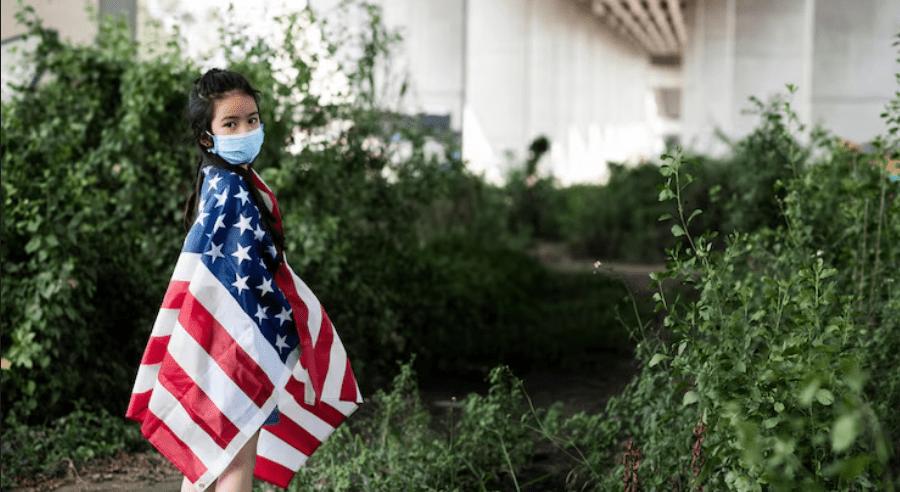
A good example is Fayette County, which is located just south of Atlanta. In 2012, Romney defeated Obama there by over thirty points. The Republican lead in the 2018 gubernatorial contest had shrunk to thirteen. The percentage of locals who do not speak English as their first language has surpassed fifteen percent. On the opposite side of the metro, Cobb County had already made the transition; Romney had won it in 2012, Clinton had flipped it in 2016, and Democrats had increased the margin two years later. In Seminole County, Florida, where Trump’s 2016 lead was only a point and a half before the county went the other way in the subsequent significant election, the pattern is repeated.
Reading all of this as a simple migration narrative would be tempting, but it would miss the nuance. These locations are changing in many ways due to generational differences. In their thirties, the children who were raised bilingually in immigrant homes during the 2000s are now raising their own children, serving on planning commissions, and running for city council. During Lunar New Year celebrations and quinceañeras, they register voters. They send the ballot in two languages to their parents via text. As this develops, it’s difficult to ignore how carelessly the work is done and how much it adds up.
Local politicians have discovered this more quickly than their national counterparts. Nowadays, school board candidates in suburban Texas print mailers in Vietnamese and Spanish without complaining. Recently, a suburban New Jersey mayor told a reporter that her team translates the agenda of every town meeting into four languages because the alternative only governs a portion of the town. Ignoring this usually results in campaigns losing quietly by margins that surprise consultants.
There are still many unanswered questions. The bilingual suburbs are most affected by restrictive zoning, growing suburban poverty, and the ongoing housing shortage, all of which have not been resolved. The older residents, who recall a more tranquil cul-de-sac, are at odds with the newer residents who are constructing something different on top of it. Each group casts a ballot. They both appear. Once thought to be a place where nothing changed, the American suburb is now one of the few places where practically everything is.
London Bilingualism's content on health, medicine, and weight loss is solely meant for general educational and informational purposes. This website does not offer any diagnosis, treatment recommendations, or medical advice.
We consistently compile and disseminate the most recent information, findings, and advancements from the medical, health, and weight loss sectors. When content contains opinions, commentary, or viewpoints from professionals, industry leaders, or other people, it is published exactly as it is and reflects those people's opinions rather than London Bilingualism's editorial stance.
We strongly advise all readers to consult a qualified medical professional before acting on any medical, health, dietary, or pharmaceutical information found on this website. Since every person's health situation is different, only a qualified healthcare provider who is familiar with your medical history can offer you advice that is suitable for you.
In a similar vein, any legal, regulatory, or compliance-related information found on this platform is provided solely for informational purposes and should not be used without first obtaining independent legal counsel from a licensed attorney.
You understand and agree that London Bilingualism, its editors, contributors, and affiliated parties are not responsible for any decisions made using the information on this website.
