

The atmosphere in any American high school hallway at 7:15 a.m. reveals everything that researchers have been saying for the past 20 years. With their eyes half closed, hoods pulled up, and coffee cups that were undoubtedly not their first, children slouched against lockers. Teachers were walking around them with the tired patience of those who had long since come to terms with the fact that the first-period class would essentially be a form of group sleepwalking. This is nothing new. What’s new is that we now have enough data to confidently state that the children aren’t the issue. The clock is what it is.
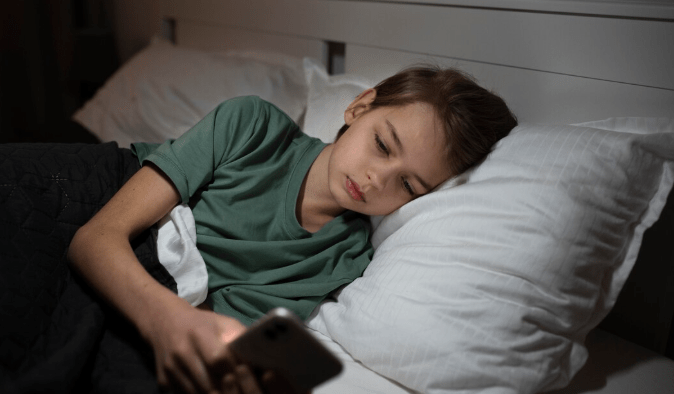
The American Academy of Sleep Medicine states that teenagers require eight to ten hours of sleep every night. The percentage of American high school students who failed that test increased from 69 to 77 percent between 2009 and 2021. Over 80% of students are running on empty by the time they reach the twelfth grade. To be honest, the figures ought to be shocking. Rather, they have turned into background noise, the kind of statistic that appears on a slide during a school board meeting and is acknowledged before the bus budget is discussed.
| Topic Detail | Information |
|---|---|
| Focus of Study | Adolescent sleep and early school start times |
| Recommended Sleep for Teens (13–18) | 8 to 10 hours per night |
| Recommended Start Time | No earlier than 8:30 a.m. (American Academy of Pediatrics) |
| High School Students Not Getting Enough Sleep (2021) | Nearly 77% of teens nationally |
| U.S. School Districts That Shifted Start Times | Over 500 in the past 25 years |
| California Law Enacted | 2022, mandating secondary schools start after 8:30 a.m. |
| Florida Bill Passed | 2023 |
| Key Health Risks | Depression, anxiety, motor vehicle crashes, poor academic performance |
| Study Reference | URMC 197-student study published in Sleep Health |
| Lead Expert Cited | Dr. Heidi V. Connolly, Chief of Pediatric Sleep Medicine, URMC |
However, the story becomes more difficult to refute when it comes to biology. Natural sleep times are pushed later during puberty due to a change in the circadian clock. It’s not dramatic for a teenager to tell you they can’t sleep at ten. They are genuinely prevented from doing so by their body. Therefore, you’re effectively asking a child whose brain believes it is 4 a.m. to solve for x when the first bell rings at 7:20, as it still does in most of the country. The University of Rochester’s Dr. Heidi Connolly has made this point in study after study, and her quotes have a subtle frustration that comes from a scientist who has been stating the obvious for a long time.
At last, it appears that the mental health article is advancing the discussion. Even when their sleep hygiene was otherwise good, students who started school before 8:30 a.m. reported higher daily symptoms of anxiety and depression, according to a URMC study published in Sleep Health that followed 197 teenagers. It’s difficult not to wonder how much of the teenage mental health crisis we continue to attribute to phones may, at least in part, be due to fatigue when you look at the numbers over time. Not all of it, of course. However, some of it—possibly more than we’ve been prepared to acknowledge.
Reluctantly, policy has begun to catch up. In 2022, California passed its 8:30 a.m. law. In 2023, Florida came next. Since the late 1990s, more than 500 districts have changed their schedules. However, the opposition is surprisingly unyielding, frequently coming from parents concerned about their own morning commute, bus coordinators concerned about routes, and sports coaches concerned about practice schedules. Dr. Lisa Meltzer told the APA that change is difficult. It’s a peculiar form of resistance because it’s more logistical than ideological, which makes it more difficult to overcome.
Speaking with educators who have experienced the change, there’s a feeling that it seems unachievable until it occurs, and then it becomes apparent afterwards. There is an increase in attendance. There is a decrease in tardiness. First-period grades get better. Surprisingly, teens stop acting like medicated ghosts and start acting like teenagers once more. It’s still unclear whether the rest of the nation advances more quickly or continues at its current rate. However, the evidence continues to mount, and at this moment, a child is pressing snooze for the fourth time while it is still dark outside.
London Bilingualism's content on health, medicine, and weight loss is solely meant for general educational and informational purposes. This website does not offer any diagnosis, treatment recommendations, or medical advice.
We consistently compile and disseminate the most recent information, findings, and advancements from the medical, health, and weight loss sectors. When content contains opinions, commentary, or viewpoints from professionals, industry leaders, or other people, it is published exactly as it is and reflects those people's opinions rather than London Bilingualism's editorial stance.
We strongly advise all readers to consult a qualified medical professional before acting on any medical, health, dietary, or pharmaceutical information found on this website. Since every person's health situation is different, only a qualified healthcare provider who is familiar with your medical history can offer you advice that is suitable for you.
In a similar vein, any legal, regulatory, or compliance-related information found on this platform is provided solely for informational purposes and should not be used without first obtaining independent legal counsel from a licensed attorney.
You understand and agree that London Bilingualism, its editors, contributors, and affiliated parties are not responsible for any decisions made using the information on this website.
