

Since March 2022, the Whitechapel Station sign has been in place. It was funded by the Tower Hamlets Council. It was installed by TfL. For around three and a half years, it stood on the roundel poles above the station entrance, showing “Whitechapel” in both Bengali and English, mostly without incident. The Bangladesh High Commissioner attended the installation, which was requested by the then-Mayor of Tower Hamlets.
Then, in November 2025, someone took a picture of the Bengali section alone, cutting out the English sign next to it, and uploaded it on X with the caption, “It says Whitechapel Station.” Apparently. And the nation did what it does today with these things: it went completely off course for roughly a week, revealing more about the status of Britain than anyone attempting a methodical examination of London’s transportation system most likely wanted to.
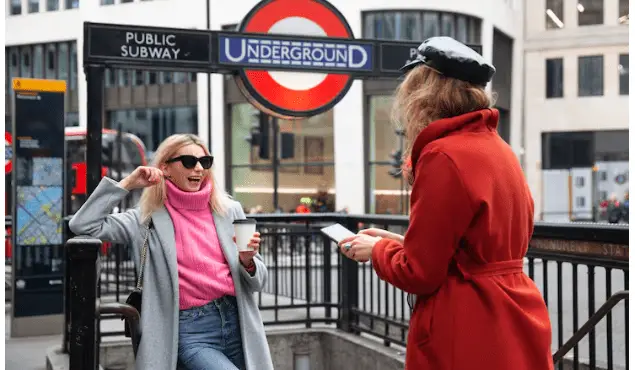
The original sign’s facts are rather simple. With 34.6 percent of the borough’s population identifying as Bangladeshi in the 2021 census, and 38 percent in Whitechapel ward specifically, Tower Hamlets boasts the largest Bangladeshi community in England and Wales. Similar to the bilingual English and Punjabi signage that have been at Southall station since the mid-1990s, the sign was put up to recognize that fact and to highlight a community that has shaped this specific area of East London for decades.
It is worthwhile to adhere to the Southall precedent because, despite the signs’ existence for about thirty years, Whitechapel has not received nearly the same level of outrage. It’s not the signage that have changed during that time.
It wasn’t a picture of a bilingual sign that went viral in November 2025. It was an image of a Bengali sign that had been purposefully cropped to eliminate the English lettering that was positioned two feet away. Rupert Lowe, a Reform UK MP, shared the picture along with a need for signage that is solely in English. The owner of the platform where this was taking place, Elon Musk, said, “Yes.”
After comparing a counter-protest in Whitechapel earlier that year to a “foreign invasion,” Nigel Farage offered his own assessment. Susan Hall, a former Conservative mayoral candidate, described the sign as “unacceptable” and advised locals to “learn the language and dare I say ‘integrate’.A correction was released by Full Fact. The cycle continued despite all of this. Seldom does it.
In retrospect, what stands out is a detail that multiple commenters saw in real time: the popular snapshot also had a homeless man begging in the station entrance’s background. It’s not a subtle issue, but it’s appropriate to note the contrast between the amount of fury thrown at the multilingual sign and the almost complete lack of remark regarding the man sleeping rough outside one of the stations in one of the richest cities on the planet. In the current British public discourse, it’s difficult to ignore what is deemed a crisis and what is deemed wallpaper.
The Whitechapel sign photo actually reveals a lot about contemporary Britain: the nation is experiencing ongoing anxiety about immigration, identity, and the meaning of “integration.” In this context, practically any physical symbol of demographic change can become a flashpoint for a culture war if it is photographed from the correct angle. It’s a true sign.
There is a Bengali community in Tower Hamlets. A modest, specific, and unprecedented gesture, the choice to recognize that community with a sign on a tube station roundel is already mandated in Wales by the UK without any issue. The November 2025 incident involving that sign had nothing to do with a sign. It told the story of a nation debating its aspirations in 280 characters at a time.
London Bilingualism's content on health, medicine, and weight loss is solely meant for general educational and informational purposes. This website does not offer any diagnosis, treatment recommendations, or medical advice.
We consistently compile and disseminate the most recent information, findings, and advancements from the medical, health, and weight loss sectors. When content contains opinions, commentary, or viewpoints from professionals, industry leaders, or other people, it is published exactly as it is and reflects those people's opinions rather than London Bilingualism's editorial stance.
We strongly advise all readers to consult a qualified medical professional before acting on any medical, health, dietary, or pharmaceutical information found on this website. Since every person's health situation is different, only a qualified healthcare provider who is familiar with your medical history can offer you advice that is suitable for you.
In a similar vein, any legal, regulatory, or compliance-related information found on this platform is provided solely for informational purposes and should not be used without first obtaining independent legal counsel from a licensed attorney.
You understand and agree that London Bilingualism, its editors, contributors, and affiliated parties are not responsible for any decisions made using the information on this website.
