

Harmonious Bilingual Experienc
There’s a moment, often around the kitchen table, when a bilingual family quietly reveals its inner workings. A mother asks a question in Cantonese. The child responds in English. The father, half-listening, switches mid-sentence between the two without realising. It looks effortless.
It rarely is. Researchers studying this everyday choreography have started arguing that we’ve been measuring the wrong things for decades, focusing on vocabulary scores and cognitive flexibility while overlooking something quieter and arguably more important — whether the child actually feels okay inside the experience.
| Concept Profile | Details |
|---|---|
| Framework Name | Harmonious Bilingual Experience (HBE) |
| Conceptual Origin | Derived from Harmonious Bilingual Development (De Houwer, 2015) |
| Primary Focus Area | Child social-emotional wellbeing and dual-language environments |
| Core Components | Language use, literacy exposure, bilingual proficiency |
| Key Stakeholders | Parents, peers, teachers, community members |
| Structural Design | Four-tiered conceptual model |
| Relevant Research Base | Halle et al., Grosjean, Han, Farver et al., De Houwer |
| Field of Study | Developmental psychology, applied linguistics |
| Practical Application | Home language planning, early childhood education policy |
| Year of Renewed Interest | 2024–2026 |
That shift in focus is what the Harmonious Bilingual Experience framework, building on De Houwer’s earlier work, is trying to formalise. It’s not a new language-learning method. It’s closer to a worldview, suggesting that bilingual childhood should be examined as a lived emotional reality, not just a linguistic outcome. The framework asks an unfashionable question: what if a child speaks two languages well but feels torn between them? Is that still a success?
The literature has long acknowledged that bilingual children navigate two sets of cultural expectations, often with distinct goals for behaviour, emotional expression, and social conduct. Grosjean wrote about this years ago, and it still rings true. A child raised between, say, a Mandarin-speaking grandmother and an English-speaking schoolyard is constantly recalibrating — when to be deferential, when to be assertive, when to laugh, when to stay quiet. It’s a kind of invisible labour, and it begins remarkably early.
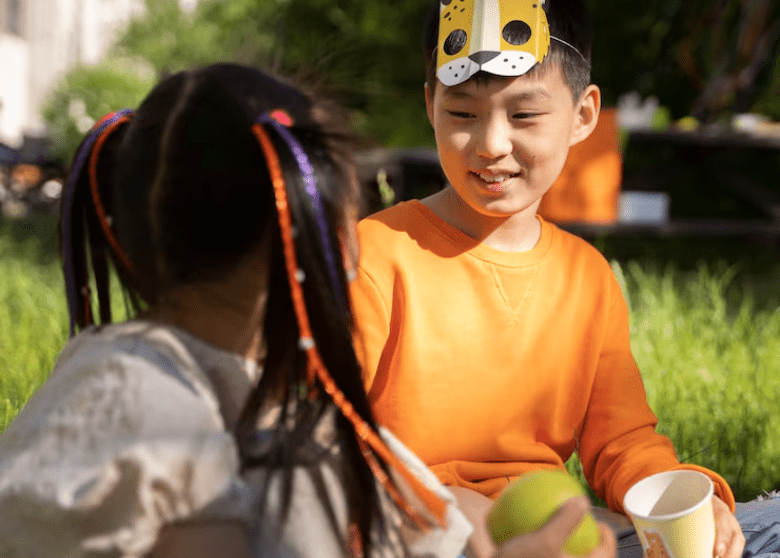
Parents sit at the centre of this, whether they realise it or not. Farver and colleagues argued that socio-emotional skills originate in the home environment, which sounds obvious until you consider how much of bilingual parenting happens by accident. A father might switch to English because he’s tired. A mother might insist on the heritage language because her own mother is visiting. Each small decision feeds into the child’s sense of which language belongs where, and which version of themselves is welcome in which room.
There’s a sense, watching families navigate this, that the older models of bilingualism missed the texture of it. The HBE framework tries to bring three threads together: how parents perceive their own bilingualism, how that perception shapes their actual language use at home, and how all of that ripples into the child’s literacy habits, language proficiency, and emotional steadiness. It’s still unclear exactly how the threads weigh against each other — early adopters of the framework admit as much — but the attempt to look at the whole picture feels overdue.
What’s striking is how much of the existing research focused almost entirely on cognitive outcomes. The bilingual brain became something of a celebrity in the 2010s, praised for executive function, delayed dementia, and so on. Meanwhile, the question of whether bilingual children felt understood at home received comparatively little attention. Halle and colleagues noticed the gap. The HBE framework is, in part, a response to it.
It’s hard not to notice that the families who seem to thrive aren’t necessarily the ones with the most perfectly balanced language input. They’re the ones where the child senses that both languages, and both cultures, are held with warmth rather than anxiety. Whether researchers can capture that in a four-tiered model remains to be seen. But the effort itself signals something worth paying attention to — a turn, finally, toward the child’s inner life.
London Bilingualism's content on health, medicine, and weight loss is solely meant for general educational and informational purposes. This website does not offer any diagnosis, treatment recommendations, or medical advice.
We consistently compile and disseminate the most recent information, findings, and advancements from the medical, health, and weight loss sectors. When content contains opinions, commentary, or viewpoints from professionals, industry leaders, or other people, it is published exactly as it is and reflects those people's opinions rather than London Bilingualism's editorial stance.
We strongly advise all readers to consult a qualified medical professional before acting on any medical, health, dietary, or pharmaceutical information found on this website. Since every person's health situation is different, only a qualified healthcare provider who is familiar with your medical history can offer you advice that is suitable for you.
In a similar vein, any legal, regulatory, or compliance-related information found on this platform is provided solely for informational purposes and should not be used without first obtaining independent legal counsel from a licensed attorney.
You understand and agree that London Bilingualism, its editors, contributors, and affiliated parties are not responsible for any decisions made using the information on this website.
