

When you stroll through South Kensington on a Tuesday morning, you soon notice something. Among the groups of parents waiting after drop-off outside the Lycée Franço Charles de Gaulle, you’ll notice that many of them speak French with an accent or, strangely, none at all. accents from America. baseball caps. occasionally a tote bag from UNC or Duke. It’s not exactly what you’d expect outside of one of London’s most illustrious French institutions, but here they are, an increasing number of American families who have traveled across the ocean to live in Britain and then, somewhat perplexingly to outsiders, have chosen to teach their kids in the language of a third country.
Although exact figures are difficult to determine, discussions with expat communities and school admission consultants indicate that the trend has been developing for a number of years. American families sent to London by tech companies, finance firms, and multinational corporations are increasingly choosing French-curriculum schools over the obvious options, such as the British private school system and the American School in London. Although the reasons vary, there is a trend that reveals an intriguing aspect of how globally mobile families are beginning to view early childhood education.
One aspect of it is cost, but not quite as you might anticipate. The annual tuition at the French Lycée in London can reach £10,000, which seems excessive when you consider what these same families were paying at home. Private school tuition frequently reaches $30,000 to $35,000 per year in places like New York, San Francisco, or even mid-sized American cities. A demanding, internationally recognized education for £10,000 begins to appear less like a premium option and more like a relative bargain when compared to that baseline. Families who have already experienced the financial shock of London rentals and are mentally calculating every significant line item will find that framing important.
However, the urgency cannot be explained by cost alone. Another factor is at play, a type of strategic anxiety that appears to be especially severe among American parents at the moment. Families who have made the decision to live abroad frequently do so because they want their kids to have more options than what the American system typically offers. French education provides a credential that travels well because of its emphasis on strong academic foundations and the Baccalauréat as an exit qualification. A child can enroll in universities in France, Belgium, Switzerland, and other countries if they successfully complete the Bac. That flexibility is really helpful for families who aren’t sure they’ll move back to the United States permanently—not in a theoretical sense, but in a very practical, what-happens-in-five-years kind of way.
| Category | Details |
|---|---|
| Topic | American expat families enrolling children in French schools while based in London |
| Key Institution | Lycée Français Charles de Gaulle, London (South Kensington) |
| Founded | 1915 |
| Type | French state school abroad, regulated by the French Ministry of Education |
| Annual Tuition (approx.) | From £10,000+, rising through secondary years |
| Location | South Kensington, London SW7 |
| Language of Instruction | French (core curriculum); English taught as additional subject |
| Curriculum | French national curriculum; leads to Baccalauréat |
| Student Demographic | French nationals, international students, expat families |
| Key Appeal for Americans | Bilingual outcomes, academic rigour, European social environment, post-Brexit international mobility |
| Comparable US Private School Costs | Up to $35,000 per year in cities like Richmond, VA |
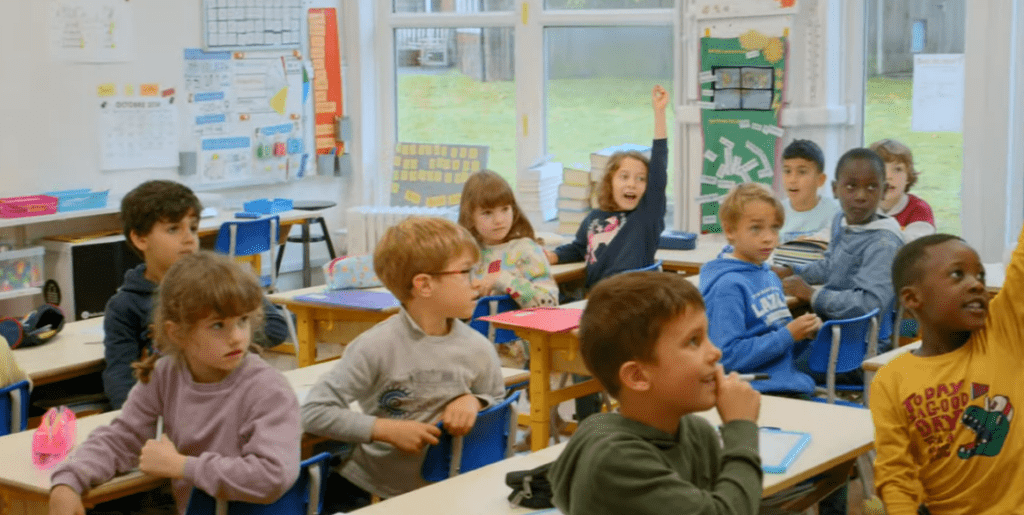
Additionally, families discuss bilingualism with an almost evangelical fervor. American parents who either experienced or witnessed their children’s French schooling frequently comment on how quickly the language is picked up. In just a few months, children who come with no prior knowledge will be able to navigate the playground in French. It’s functional, socially embedded French that sticks in a way that twice-weekly language classes never quite manage, but it’s not perfect French—no one pretends otherwise. After the family moved to Bordeaux, one mother enrolled her son in a French private school. Within a year, she saw him go from almost nothing to conducting an end-of-year parent conference that was conducted entirely in French. Such an outcome usually spreads swiftly through networks of expatriates.
Perhaps some of this enthusiasm ignores the more difficult aspects of the French system. Like most French schools, the Lycée in London has a rigorous academic program that gets harder over time. The early years, which are comparable to elementary school, are frequently characterized as cozy, controllable, and even joyful. The middle and senior years are not the same. Longer days, significant homework loads, and a grading culture that doesn’t soften its feedback. When their children reach the upper grades, families who initially anticipate the lighter touch of early primary school may need to adjust. For most people, it won’t be a deal-breaker, but it’s important to know before you sign the admissions paperwork.
Observing this from the outside gives the impression that the decision to attend a French school is also partially an identity statement. Families who opt for the Lycée rather than the American School in London frequently do so on purpose to avoid replicating the American bubble overseas. They want their kids to interact with French families, learn how to navigate a new social environment, and develop a level of cultural fluency that transcends language proficiency. That instinct is genuine, and it frequently works out just as planned. However, there are drawbacks as well, such as parent communities that are more difficult to access, French-language school communications that necessitate Google Translate, and field trips and events that presume a cultural context that the kids are still learning. Families that approach those conflicts as an opportunity rather than a problem are more likely to succeed.
The length of time that London continues to be the preferred location for American professionals who travel abroad, as well as the ability of institutions like the Lycée to increase their capacity to accommodate the demand, will probably determine whether this trend persists. Waitlists exist today, and placement is not assured. However, the families who succeed in gaining entry and who genuinely dedicate themselves to the experience rather than doing so with a lack of enthusiasm typically describe it as one of the better choices they made during their time overseas. That’s a recommendation that spreads, and word gets around quickly in close-knit expat communities.
London Bilingualism's content on health, medicine, and weight loss is solely meant for general educational and informational purposes. This website does not offer any diagnosis, treatment recommendations, or medical advice.
We consistently compile and disseminate the most recent information, findings, and advancements from the medical, health, and weight loss sectors. When content contains opinions, commentary, or viewpoints from professionals, industry leaders, or other people, it is published exactly as it is and reflects those people's opinions rather than London Bilingualism's editorial stance.
We strongly advise all readers to consult a qualified medical professional before acting on any medical, health, dietary, or pharmaceutical information found on this website. Since every person's health situation is different, only a qualified healthcare provider who is familiar with your medical history can offer you advice that is suitable for you.
In a similar vein, any legal, regulatory, or compliance-related information found on this platform is provided solely for informational purposes and should not be used without first obtaining independent legal counsel from a licensed attorney.
You understand and agree that London Bilingualism, its editors, contributors, and affiliated parties are not responsible for any decisions made using the information on this website.
