

I first became aware of it when I was watching an actor transition from Castilian Spanish to something looser, flatter, and more London while standing in the Globe’s yard with a paper cup of warm wine. The crowd surrounding me, which included a few elderly men wearing pressed shirts, tourists, and students, hardly winced.
Before the surtitle caught up, someone laughed behind me. The half-second difference between the Spanish punchline and the English translation that was hovering over the stage told me that something had changed in British theater that no one had yet to identify.
| Subject | The New Wave of Multilingual British Theatre |
| Cultural Origin | Globe to Globe Festival, 2012 |
| Host Venue | Shakespeare’s Globe, Bankside, London |
| Parent Initiative | World Shakespeare Festival / London 2012 Cultural Olympiad |
| Plays Performed | All 37 Shakespeare plays in 37 different languages |
| Festival Duration | Six weeks, beginning 21 April |
| Languages Featured | Spanglish (Castilian, Mexican, Argentinean Spanish), Urdu, Mandarin, Yoruba, Shona, Hebrew, BSL, Hip Hop, and more |
| Companion Events | RSC season at the Roundhouse, British Museum exhibition, Romeo and Juliet in Baghdad |
| Travel & Tourism Info | London hosts overlapping events including the Queen’s Diamond Jubilee weekend |
| Lasting Influence | Reshaped how UK theatres approach language, casting, and cultural authorship |
The Globe to Globe season of 2012, when the theater presented all 37 of Shakespeare’s plays in 37 different languages over the course of six weeks, is a tempting place to start. In fact, that was the first time that audiences in London were asked to watch The Tempest in Bangla or Henry VI in Serbian and treat it as normal. Naturally, some of them were unable to. People left. However, a large number of people stayed, and those who did appear to have returned with something that is only now fully emerging in the larger theater culture.
These days, translation isn’t really what you see in smaller venues like the Arcola, the Bush, and the Yard in Hackney Wick. It’s a messier situation. In order to mimic how bilingual families actually converse over dinner, actors switch between English and Spanish mid-monologue and occasionally mid-line. Directors seem to be viewing second languages as load-bearing instead of exotic flourishes. It’s not a ploy for Romeo to beg Juliet in Spanish before cursing at Tybalt in English. He simply lives in London.
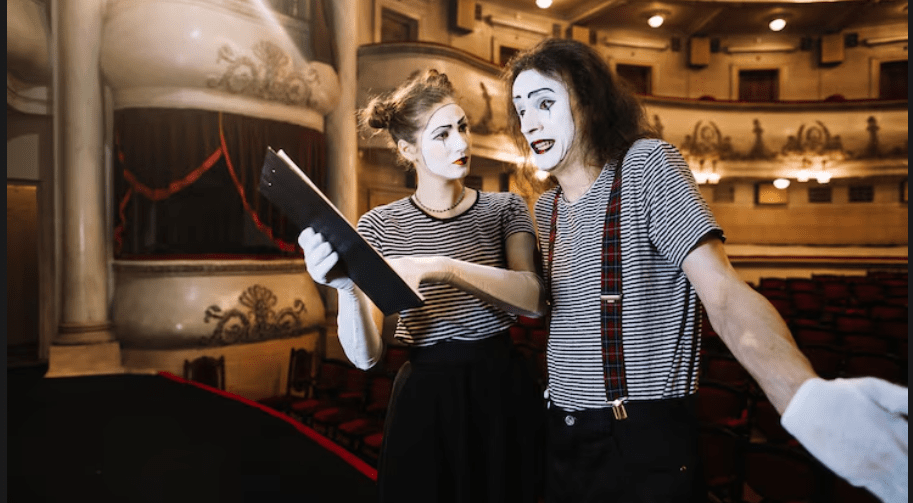
It’s still unclear if this qualifies as a moment or a movement. Some of the writing surrounding it heavily relies on scholarly terminology about transnational flows and cultural hybridity, which is a form of distancing in and of itself, and critics have been cautious. Seldom do the companies themselves speak in such a manner. More bluntly, a director I overheard at a post-show drink in Dalston stated that it would have felt dishonest to write a play in just one of the three languages spoken by her cast.
It’s difficult to overlook the cultural context of all of this. For the better part of a decade, Britain has been debating what it means to be British, and theater, being theater, has taken up the debate and begun staging it. Because Shakespeare has been used so frequently as a sort of national emblem, Spanglish productions are awkwardly positioned within the Shakespeare canon. You begin to question whether the canon was ever as monolingual as we had been told when you see Lady Macbeth switch to Mexican Spanish when she’s scared.
All of this might fade. New theater movements frequently do. The surtitle screens flicker more frequently than anyone would like, the audiences are still smaller than the West End machine prefers, and the funding is unstable. However, none of the actors I’ve talked to seem concerned. They’ve been code-switching since childhood. For them, putting it on stage is more of a long-overdue admission than a stylistic experiment. As this develops, it’s difficult to ignore the possibility that British theater’s language is finally catching up to that of the country.
London Bilingualism's content on health, medicine, and weight loss is solely meant for general educational and informational purposes. This website does not offer any diagnosis, treatment recommendations, or medical advice.
We consistently compile and disseminate the most recent information, findings, and advancements from the medical, health, and weight loss sectors. When content contains opinions, commentary, or viewpoints from professionals, industry leaders, or other people, it is published exactly as it is and reflects those people's opinions rather than London Bilingualism's editorial stance.
We strongly advise all readers to consult a qualified medical professional before acting on any medical, health, dietary, or pharmaceutical information found on this website. Since every person's health situation is different, only a qualified healthcare provider who is familiar with your medical history can offer you advice that is suitable for you.
In a similar vein, any legal, regulatory, or compliance-related information found on this platform is provided solely for informational purposes and should not be used without first obtaining independent legal counsel from a licensed attorney.
You understand and agree that London Bilingualism, its editors, contributors, and affiliated parties are not responsible for any decisions made using the information on this website.
