

Imagine a Tuesday afternoon therapy session at Johns Hopkins University. A table covered with graph paper maps, tiny painted figurines, and polyhedral dice is occupied by six students. Behind a folding cardboard screen, a psychologist describes a dimly lit tavern, a suspicious innkeeper, and a missing merchant whose disappearance may or may not be related to a cult that operates out of the eastern docks. No one directly discusses their anxiety for the next ninety minutes. No one is forced to recount a painful memory or explain their worst fear.
They bargain, debate tactics, roll dice, and sometimes make awful choices that their characters will have to deal with until the next session. Once the monsters have been vanquished and the adventurers have set up camp for the night, the screen disappears, and the group spends thirty minutes discussing what transpired and what it brought to mind from their real lives.
| Game / Intervention | Dungeons & Dragons (D&D) — tabletop role-playing game (TTRPG) created by Gary Gygax and Dave Arneson in 1974; estimated 50 million players worldwide |
|---|---|
| Clinical Application | Integrated into cognitive behavioural therapy (CBT), narrative therapy, and group psychotherapy as a complementary intervention for depression, anxiety, trauma, and neurodevelopmental conditions including ASD |
| Notable Clinical Program | “Social Skills Quest” — D&D therapy group run by staff psychologist William Nation at Johns Hopkins University’s Mental Health Services; launched spring 2020; uses a two-hour session format combining gameplay with structured reflection |
| Key Research (2025) | Pilot study by Joël Billieux et al., published in PMC; 10-week structured TTRPG programme across 4 groups of 5 socially anxious gamers; found reduction in social anxiety and problematic gaming symptoms; 18 of 20 participants completed the full programme |
| Conditions Targeted | Social anxiety disorder, gaming disorder, depression, trauma, isolation, autism spectrum disorder (ASD), low self-esteem, and neurodivergent social skill development |
| Therapeutic Mechanism | “Psychological distance” — players explore real-life emotional challenges through characters, allowing engagement with difficult themes without direct confrontation; narrative safety enables desensitisation and resilience-building |
| Community (Non-Clinical) Benefits | Research published in the Games for Health Journal (2024) found community TTRPG participants reported reduced anxiety, improved social competence, and increased creative expression after playing |
| Practitioner Examples | South Australian counsellor James Paget runs fortnightly D&D group sessions for teens aged 15–17 targeting confidence and social skill-building; Melbourne support teacher Daniel Machuca runs D&D groups for neurodivergent teens since 2020; Manda Kirk (ACA-registered) uses telehealth TTRPG for trauma desensitisation |
| Evidence Base Status | Emerging but not yet fully consolidated; researchers note more robust clinical trials needed before mainstream adoption; current evidence is promising but largely from pilot and community studies |
| Cultural Context | D&D’s mainstream resurgence driven partly by Stranger Things, Critical Role, and podcast culture; increased visibility has reduced stigma around the game and opened doors to clinical and educational applications |
This Johns Hopkins therapy group for William Nation has been in operation since 2020. Ten years ago, Nation’s dual roles as a staff psychologist and a skilled dungeon master would have seemed almost comical. It no longer does. The 50-year-old tabletop fantasy game created by Gary Gygax and Dave Arneson in a Wisconsin basement in 1974, Dungeons & Dragons, is being subtly promoted as a valid, empirically supported psychological intervention by clinicians and researchers in the US, Australia, Switzerland, and other countries. Not a substitute for conventional therapy. an addition to it. For those who find the traditional therapy room to be either unapproachable or overly direct, Nation describes it as a way in.
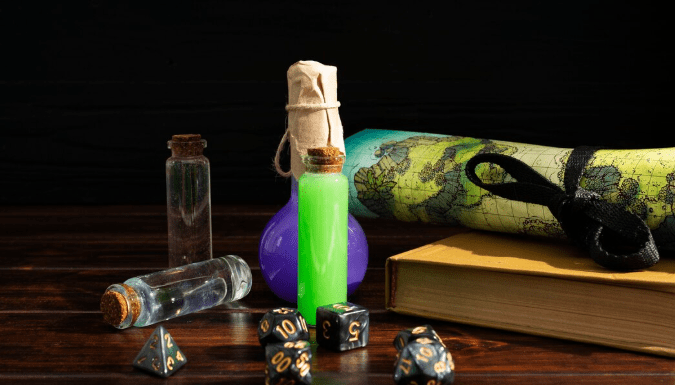
The foundation of the therapeutic reasoning is what Nation refers to as “psychological distance.” The stakes belong to their character, not to them, but when a player navigates a tense negotiation with a suspicious city guard, they are honing real social skills—reading a situation, controlling frustration, and carefully choosing words. Even though it may seem insignificant, that distance is crucial for those whose anxiety makes dealing directly with challenging emotions seem risky. According to Nation, the game is a sandbox where you can experiment. Through a fictional half-elf ranger, a student who finds it difficult to assert themselves in a seminar can practice assertiveness without experiencing real-life consequences. This is best illustrated by an anecdote from Nation’s sessions: a student dealing with religious trauma found it almost impossible to talk about it openly. They spent weeks lamenting that imaginary loss after creating a D&D character, a druid whose god had died. The sorrow was genuine. It was survivable because of the distance.
James Paget, a private counselor from South Australia, conducts D&D sessions every two weeks for teenagers aged fifteen to seventeen. His specific objectives are to increase self-assurance, lessen social anxiety, and cultivate effective communication abilities. During his sessions, a group of five might have to bribe a nervous ferryman, negotiate entry through a guarded city gate, or persuade a merchant that they are reliable enough to be hired. According to Paget, players who initially favor direct, frequently violent solutions—what the D&D community lovingly refers to as “murder hobo” playstyle—tend to change as they grow more emotionally invested in the narrative and in one another. When you care about the world you live in, violence no longer seems like the quickest path. In a therapeutic setting, that observation is not insignificant. It implies that social reasoning, not just social practice, is actively shaped by the game.
Since 2020, D&D social skills groups for neurodivergent teenagers have been led by Melbourne specialist support teacher Daniel Machuca. His description of the game as “consequence-free, while providing a framework for consequences” encapsulates something genuinely helpful about why it succeeds in situations where more traditional group activities fail. Except in the context of a story, there is no right or wrong way to roleplay, and even poor decisions provide the group with something to work through. According to Machuca, it is structured repetition of social cooperation in a relaxed setting, much like drills are for sports. The story’s dragon is enormous, terrifying, and made up. The tactics employed to deal with it are neither.
Researcher Joël Billieux conducted a structured ten-week TTRPG program for socially anxious gamers who were also having trouble with excessive online gaming in a 2025 pilot study that was published in PMC. By any clinical measure, 18 out of 20 participants finished the entire program, and the majority demonstrated significant improvements in their symptoms of problematic gaming and social anxiety. Because the study was a pilot and clinical-scale trials are required before D&D therapy can be regarded as mainstream practice, the researchers were cautious in their conclusions. That’s reasonable. Although the evidence base is solid, it is still in its early stages, and more thorough research is needed before clinicians can confidently recommend it.
Timing plays a role in how Dungeons & Dragons turned into the decade’s most surprising mental health intervention. Stranger Things’ mention of the game, the live-play series Critical Role’s millions of viewers, and the pandemic-era surge of people seeking organized social interaction all contributed to the game’s mainstream comeback, which attracted therapists and researchers who recognized something familiar in what they saw. community. cooperation. story. safe investigation of emotions. These therapeutic ideas are not new. D&D provided them with a delivery system that people genuinely desired to attend. And it turns out to be very important in mental health, where involvement is half the battle.
