

On the morning of May 24, 2024, a South African diplomat by the name of Precious Matsoso looked out at the representatives of 194 countries in a conference room somewhere inside the Palais des Nations in Geneva and said something that fell somewhere between concession and consolation. “Every one of you tried to make this work,” she said to the delegates in attendance. It was the kind of comment you make when your attempt to make something work has failed. The chairs of the WHO’s Intergovernmental Negotiation Body acknowledged they had nothing to show for more than two years of negotiations meant to make sure the world would be better prepared for the next pandemic.
Although the language used to describe it was much more diplomatic, this was, by any honest accounting, a failure. Since the World Health Assembly convened its second-ever special session in December 2021 to start drafting what was being called a historic international agreement on pandemic preparedness, the negotiators have been at work. According to official estimates, the COVID-19 pandemic killed about seven million people, overwhelmed health systems on every continent, and vividly demonstrated how unprepared and unfair the world’s response to a significant outbreak could be. Vaccines had been hoarded by wealthy nations. Pharmaceutical firms had declined to exchange technology. While wealthier countries repeatedly vaccinated their populations, low- and middle-income countries stood in the back of the line. Supporters claimed that the new treaty would ensure that it never occurred again.
In retrospect, what actually transpired over the course of nine official negotiating sessions and one frantic final week of protracted discussions seemed almost inevitable. The same conflicts that led to the unfair COVID-19 response—between wealthy nations defending their pharmaceutical industries and developing countries seeking equitable access to the products of their own pathogen data—appeared in the negotiations and persisted. The most controversial part was a clause known as the Pathogen Access and Benefit Sharing system, or PABS, which mandated that producers who used genetic data from pathogens gathered in developing nations distribute some of the resulting vaccines and diagnostics to those nations through the WHO. A 20% guarantee was requested by the African Group. The pharmaceutical industries in the US and the EU retaliated. The language became weaker with each draft. Lower-income countries were outraged—and rightfully so—when a draft from April 2024 essentially deferred the entire PABS question to a future working group, reducing it to a set of general principles.
| Topic | WHO Pandemic Agreement — Negotiations, Collapse, Adoption, and Limitations |
|---|---|
| Formal Process Started | December 2021 — WHO World Health Assembly Special Session |
| Negotiating Body | WHO Intergovernmental Negotiation Body (WHO INB) |
| Initial Deadline Missed | May 10, 2024 — negotiations failed to produce a final draft |
| First Major Failure | May 24, 2024 — INB chairs conceded no agreement could be reached for the 77th WHA |
| Agreement Finally Adopted | May 20, 2025 — World Health Assembly (124 votes in favor, 0 objections, 11 abstentions) |
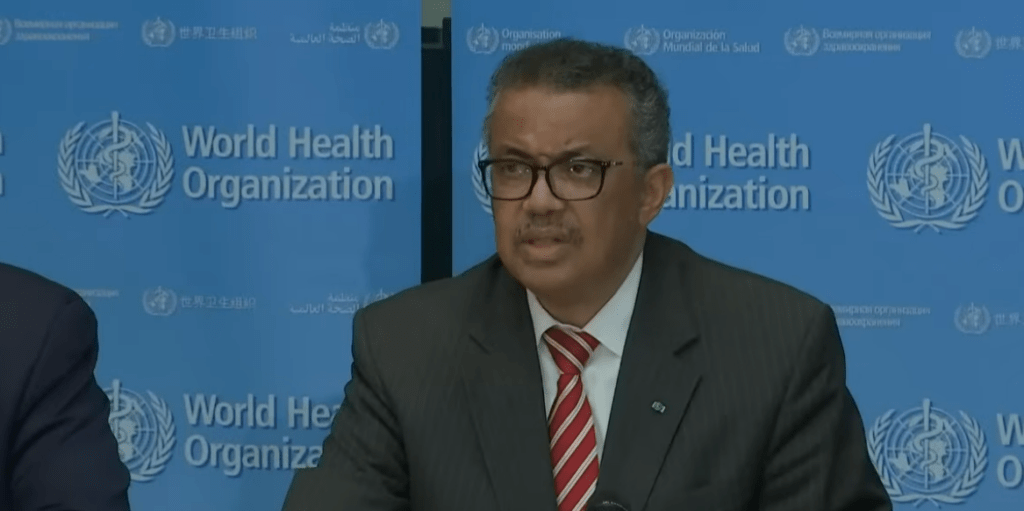
| WHO Director-General | Tedros Adhanom Ghebreyesus |
| United States Position | Withdrew from WHO; RFK Jr. publicly encouraged other nations to abandon the agency |
| Key Unresolved Issue | Pathogen Access and Benefit Sharing (PABS) System — deferred to future negotiations |
| Critical Criticism | The Lancet called the 20% vaccine-sharing commitment “shameful, unjust, and inequitable” |
| Entry Into Force Requirement | Ratification by at least 60 governments; PABS annex must still be negotiated |
| No Enforcement Mechanism | Agreement contains no accountability mechanism and no binding financial obligations |
| Reference Links | Human Rights Watch – WHO New Pandemic Treaty a Landmark, but Flawed / Think Global Health – Why Pandemic Agreement Negotiations Failed to Land |
Throughout, the sovereignty debate persisted, intensifying in ways that would have been more difficult to anticipate at the beginning of the process. 49 Senate Republicans in the US signed a letter calling for the Biden administration to stop supporting the deal, citing it as an unacceptable violation of national sovereignty. Claims that the treaty would give the WHO the authority to enforce lockdowns, mandate vaccinations, and overrule domestic law had been circulated on social media for two years. These claims were untrue, but they all influenced public opposition in ways that limited governments’ ability to negotiate. Even when the false information is completely unrelated to what the text actually says, it is difficult to ignore how successfully it can serve as a negotiating tool.
In May 2025, a version of the treaty was finally approved with 124 votes in favor, 0 objections, 11 abstentions, and no participation from the United States. In a video address to the Assembly, Robert F. Kennedy Jr., the current U.S. Secretary of Health and Human Services, accused the WHO of locking in all the dysfunction of its pandemic response and declared that the United States would not take part. When the adoption eventually occurred, there was a joyous atmosphere that seemed both sincere and relieved. Tedros Adhanom Ghebreyesus, Director-General of WHO, described it as a triumph for multilateral action and public health.
However, the final version was not the original draft of the treaty. There is no enforcement mechanism in it. There are no legally enforceable financial obligations. The PABS system, which most directly addresses the vaccine disparity that characterized the COVID-19 response, was postponed to a later round of negotiations. Before the full agreement can even be made available for signature, it must be finished and taken into consideration at the World Health Assembly the following year. The accord, according to Human Rights Watch, was a positive move that had “kicked important cans down the road.” The proposed 20% vaccine-sharing commitment was already deemed shameful by The Lancet. The final product, according to academics who had closely examined the process, was largely watered down from its original goals, with the provisions most meant to assist low- and middle-income countries gradually becoming weaker over the course of subsequent drafts.
Observing this entire sequence from a distance gives the impression that the pandemic treaty debate has exposed an unsettling aspect of the global health governance architecture that will take time to resolve through negotiation. The WHO has the technical know-how to spearhead a global health response and the legitimacy of almost universal membership. The power to force any member state to do anything it doesn’t want to do is what it lacks and has always lacked. During COVID-19, it was noted that the 1969 International Health Regulations, which were meant to regulate cross-border medical emergencies, were both inadequate and mainly disregarded. That is the actual basis upon which the new agreement is being constructed, and it remains to be seen if the addition of an additional layer of voluntary commitments above it will alter the basic calculus of how nations act when a new pathogen appears and the instinct for national self-preservation takes over.
It is a question of when, not if, the next pandemic will occur. That is epidemiology, not alarmism. Negotiations that have not yet been completed, ratifications that have not yet taken place, and promises made by governments whose political environments may have completely changed by the time they are asked to follow through will determine whether the agreement reached in Geneva in May 2025 will be worth anything when that time comes. It is a foundation, at the very least. It is truly unknown if it proves to be more than that.
London Bilingualism's content on health, medicine, and weight loss is solely meant for general educational and informational purposes. This website does not offer any diagnosis, treatment recommendations, or medical advice.
We consistently compile and disseminate the most recent information, findings, and advancements from the medical, health, and weight loss sectors. When content contains opinions, commentary, or viewpoints from professionals, industry leaders, or other people, it is published exactly as it is and reflects those people's opinions rather than London Bilingualism's editorial stance.
We strongly advise all readers to consult a qualified medical professional before acting on any medical, health, dietary, or pharmaceutical information found on this website. Since every person's health situation is different, only a qualified healthcare provider who is familiar with your medical history can offer you advice that is suitable for you.
In a similar vein, any legal, regulatory, or compliance-related information found on this platform is provided solely for informational purposes and should not be used without first obtaining independent legal counsel from a licensed attorney.
You understand and agree that London Bilingualism, its editors, contributors, and affiliated parties are not responsible for any decisions made using the information on this website.
