

There is a type of patient somewhere in a memory clinic’s files that has quietly disturbed researchers for decades. When their brains are eventually examined more closely, the underlying pathology of Alzheimer’s disease is already considerably advanced, despite the fact that these individuals arrive with comparatively normal cognitive function, sit through their assessments, and perform well enough to leave without alarm. There are the plaques. There are tangles. There is actual structural damage. However, the symptoms are not commensurate with the devastation. This raises an intriguing medical question as well as a pressing one for anyone considering aging: what is that gap made of, and can we create more of it?
Researchers studying cognitive reserve have been mapping this area for years, and bilingualism research is becoming more and more relevant in this area. Simply put, the theory is that specific types of prolonged mental activity over the course of a lifetime produce a kind of neural cushion, a buffer that enables the brain to withstand decline for a longer period of time before it manifests in behavior. This effect has been linked to high levels of education, intellectually challenging jobs, and an active social life. Additionally, a growing body of research over the past 20 years has added lifelong bilingualism to that list—not as a fringe theory, but as a serious, peer-reviewed contender for one of the most readily available non-pharmacological protective factors that we are aware of.
The hypothesis that bilingual patients exhibit dementia symptoms four to five years later than similar monolingual patients with comparable degrees of brain pathology is the most frequently reported finding in this field. That figure is the result of several research teams operating independently across various populations—a clinic in Canada, a hospital in India, a study in Belgium—all of which used various techniques to arrive at essentially the same conclusion. The difference of four to five years is not insignificant. Because the most severe caregiving expenses—financial, emotional, and physical—occur in the later stages of the disease, researchers have calculated that delaying the onset of Alzheimer’s by five years could cut the disease’s overall frequency in half. If that estimate is accurate, the implications are so important that it would take a lot of evidence to refute the bilingualism finding.
| Category | Details |
|---|---|
| Core Concept | Cognitive Reserve — the brain’s capacity for functional compensation during aging or neurodegeneration |
| Key Researchers | Ellen Bialystok (York University); Matthias Berkes; researchers at UCSF, University of Alberta, Cambridge |
| Foundational Finding | Lifelong bilingualism may delay Alzheimer’s symptom onset by 4–5 years vs. monolinguals |
| Published Evidence Base | Multiple studies in journals including Nature Biomedical Engineering, Neuropsychologia, Frontiers in Aging Neuroscience |
| Mechanism | Managing two language systems exercises executive control networks; may improve white matter integrity and hippocampal volume |
| Bilingual Advantage Scope | Delayed symptom onset; better attentional control; more rapid decline once reserve is overcome |
| Key Limitation | Does not prevent underlying neuropathology (plaques/tangles); effect size varies significantly across studies |
| Active Use Requirement | Benefits most pronounced when both languages are actively used regularly — not passive knowledge |
| Global Dementia Context | ~50 million affected worldwide; projected 152 million by 2050; US costs ~$305 billion annually (2020) |
| 2026 Research Focus | Language distance effects; neuroimaging of bilingual brain networks; universal decoders for cognitive reserve |
There is evidence to the contrary, and ignoring it would be dishonest. Bilingualism has no discernible protective effect on the onset of dementia or cognitive decline, according to a number of carefully planned longitudinal studies. There was no discernible difference between bilingual and monolingual groups once other factors were taken into account, according to some research on Welsh-English speakers in Wales, Japanese-American bilingual populations, and Hispanic communities in the US. Many of the positive results come from retrospective analyses with methodological limitations, such as small sample sizes, inconsistent definitions of bilingualism, and failure to account for confounding factors like immigration stress, education, and socioeconomic status, according to researchers who have reviewed this literature with the appropriate skepticism. Though slowly, the field has taken note of these valid criticisms. Whether the bilingual advantage in cognitive reserve is universal, conditional, or dependent on variables that the research hasn’t yet completely identified is still up for debate.
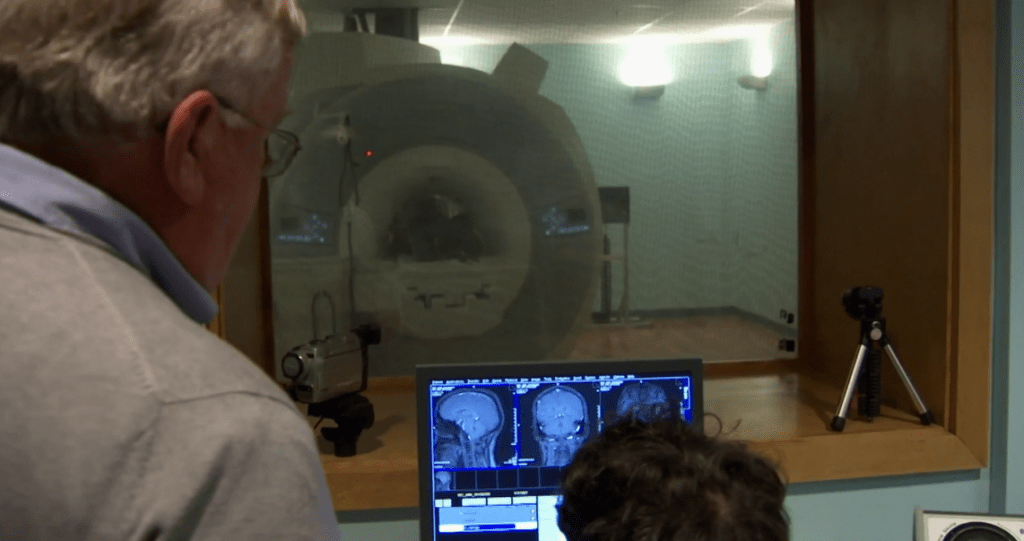
Every year that neuroimaging research advances, it becomes more evident that bilingualism affects the structure and function of the brain in a quantifiable way, regardless of whether this effect consistently delays dementia in every population examined. The integrity of the white matter tracts connecting various brain regions is better in active bilinguals. In regions linked to cognitive control, they exhibit higher grey matter densities. As they age, their hippocampal volumes are typically better preserved. Additionally, individuals who have spent their entire lives managing two language systems concurrently consistently exhibit efficiency advantages in the executive control networks, which are the frontal lobe systems that regulate attention, task-switching, and inhibition. There is more to the brain than passive bilingualism. It is actively and continuously mediating disputes between two opposing linguistic systems, and this mediation seems to reinforce the circuits that are most susceptible to age-related deterioration.
Observing the growing body of research, one gets the impression that neuroscience is gradually focusing on a crucial aspect of how lifestyle contributes to or detracts from neurological resilience. The bilingualism narrative follows a pattern found in other studies on aging: proficiency in music, prolonged intellectual work, and sophisticated social interaction all appear to contribute to the same underlying reserve. The early and widespread nature of bilingualism is what distinguishes it; for those who are raised in two languages, the training starts in childhood and continues daily. It is comparable to a lifetime cognitive workout without the need for a commercial gym, according to one research team. The underlying structural observation remains valid even if the framing is a little too tidy.
The focus of current research is simultaneously shifting in two directions. On the one hand, researchers are attempting to determine whether the protective effect varies depending on the two languages a person speaks; that is, whether learning languages that are structurally very different from one another—for example, Mandarin and English versus Spanish and Italian—produces greater cognitive benefits because of higher switching demands. However, the question of whether adult learners of a second language can still develop significant cognitive reserve through active use is gaining attention. Although the benefit seems to be greater for lifelong bilinguals, the preliminary evidence suggests that consistent engagement is more important than the age at which it started.
It is genuinely unclear what this means practically for people and public health systems dealing with the impending wave of dementia cases. Being bilingual is not a vaccination. It doesn’t stop the underlying pathology from developing. Furthermore, bilingual patients may experience a faster decline than monolingual patients once the reserve is depleted, as if years of resilience suddenly give way. However, the possibility of a freely accessible, widely applicable lifestyle factor that purchases significant time—measured in years of independent living and years of retained identity—is not insignificant for a field that has experienced little success with pharmacological interventions. Uncertainties and all, this is the kind of discovery that merits careful consideration.
London Bilingualism's content on health, medicine, and weight loss is solely meant for general educational and informational purposes. This website does not offer any diagnosis, treatment recommendations, or medical advice.
We consistently compile and disseminate the most recent information, findings, and advancements from the medical, health, and weight loss sectors. When content contains opinions, commentary, or viewpoints from professionals, industry leaders, or other people, it is published exactly as it is and reflects those people's opinions rather than London Bilingualism's editorial stance.
We strongly advise all readers to consult a qualified medical professional before acting on any medical, health, dietary, or pharmaceutical information found on this website. Since every person's health situation is different, only a qualified healthcare provider who is familiar with your medical history can offer you advice that is suitable for you.
In a similar vein, any legal, regulatory, or compliance-related information found on this platform is provided solely for informational purposes and should not be used without first obtaining independent legal counsel from a licensed attorney.
You understand and agree that London Bilingualism, its editors, contributors, and affiliated parties are not responsible for any decisions made using the information on this website.
