

Every time this topic is brought up, a little, hotly debated moment keeps coming up. A two-year-old Princess Charlotte is said to have greeted Spanish dignitaries in their native tongue when she visited Madrid in 2017. People were drawn to the moment because it wasn’t staged, even though it was brief and nearly unremarkable in the way these events usually are when children are involved. It seemed to be just what the kid did. The knowledge she possessed. A two-year-old who is already multilingual at a state event. That would not occur for the majority of British children until at least their mid-teens, if at all.
Maria Teresa Turrion Borrallo, a Spanish-born nanny hired by the Wales household in 2014, just after Prince George was born, is the person responsible for that moment. She is a native Spanish speaker who has been a part of these kids’ everyday lives for more than ten years. She graduated from Norland College, which has been training the nannies of the British upper class for more than a century. She received a Royal Victorian Medal (Silver) in early 2026 as a personal gift from the monarch in recognition of her outstanding service. It was a subtle but clear indication of the family’s seriousness about what she has been doing. You don’t give someone that much credit for just setting up playdates and changing diapers.
This method is noteworthy because it is different from the way language instruction is generally conducted in Britain. The kids aren’t attending official Spanish classes. They are not doing vocabulary worksheets or receiving drills on verb conjugations. The language is arriving the way language always arrives most effectively — through daily conversation, through the person who feeds them and plays with them and reads to them and tells them off, who happens to do all of those things in Spanish. It’s the most organic kind of immersion. It would be instantly recognized by researchers who study bilingual language acquisition. This is how bilingualism truly functions in kids, not how it is typically taught in schools.
In her cautious manner, Princess Catherine has been candid about her own linguistic limitations. Her French is rudimentary, and most people describe her interactions with other languages as courteous rather than fluent. There’s a feeling that she decided her kids would start from a different place after considering her own experience with language learning—the GCSE French that was only partially completed, the years of passive regret about never really getting there. The nanny is not a benefit. She is a tactic. And it seems to be effective.
| Category | Details |
|---|---|
| Subject | Prince George, Princess Charlotte, Prince Louis — children of Prince William and Princess Catherine |
| Parents | Prince William (King’s heir); Catherine, Princess of Wales |
| Key Figure | Maria Teresa Turrion Borrallo — Spanish-born nanny, hired 2014, trained at Norland College |
| Languages Being Learned | Spanish (via nanny, daily immersion); French (school curriculum); Latin (reported school subject) |
| Charlotte’s Language Milestone | Speaking Spanish at age four; observed by Spanish royal family during 2017 visit |
| Kate’s Own Language Skills | Basic French; self-described as limited linguist; has expressed desire for children to exceed her |
| Royal Language Tradition | French historically dominant; Queen Elizabeth II was fluent; King Charles speaks French, Welsh, German, Greek |
| Maria Borrallo’s Recognition | Awarded Royal Victorian Medal (Silver) in early 2026 for over a decade of service |
| Shift from Tradition | First time Spanish has been prioritised over French in a generation of heirs |
| Broader UK Context | Over 1.5 million British children grow up bilingual; most never sit a GCSE in their home language |
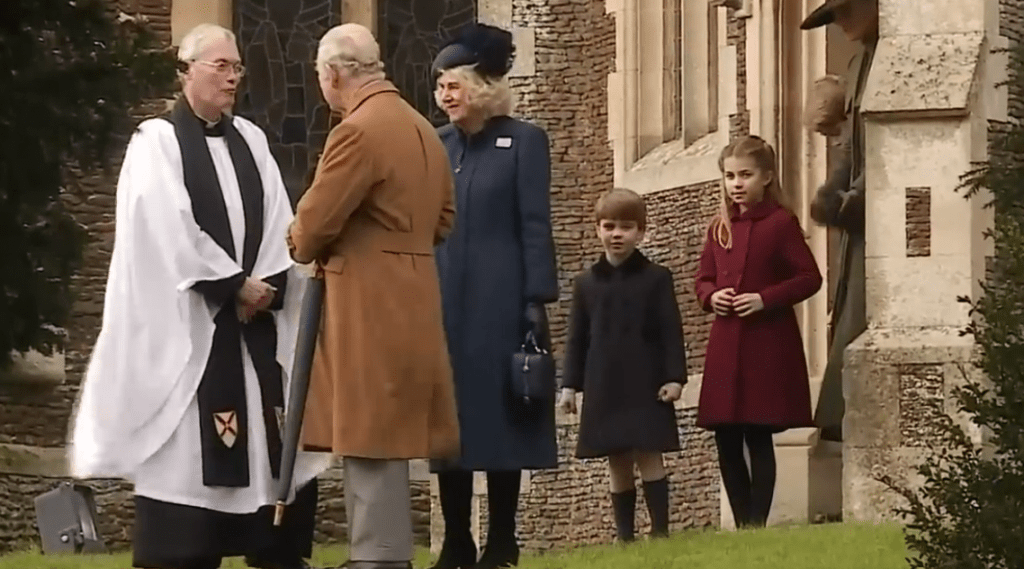
This has a slightly different texture than it might otherwise have because of the larger historical context. Given centuries of European dynastic marriages and diplomatic responsibilities, it would be odd if the British Royal Family had not maintained languages as part of its repertoire. Among other languages, Queen Victoria was renowned for being multilingual, including Urdu. The late Queen Elizabeth II delivered speeches in fluent French on state visits to Paris, declining interpreters with quiet confidence. With differing degrees of proficiency, King Charles speaks French, Welsh, German, and Greek, each of which is associated with a distinct aspect of his identity and function. Prince William has functional French, has spoken Welsh in public, and has utilized Swahili in interactions with Africans. This family has always valued language, even when the rest of Britain was ignoring it.
The shift in emphasis and the methodology behind it are what truly distinguish the current generation. French has long been the royal family’s natural second language; it is the language of European courts, the diplomatic language, and the language that has been assimilated through generations of close cultural contact. On the other hand, Spanish is a more international option. More than 500 million people in Latin America, Spain, and increasingly the United States speak it as their first language. A different approach to planning is suggested by making it a priority through daily immersion as opposed to a formal add-on. It’s difficult to tell from the outside whether that planning was deliberate or just practical—a Spanish nanny was available and very good, and Spanish is helpful. It might have been both.
With over 1.5 million children in Britain growing up bilingual at home and the majority never earning a GCSE in their native tongue, it’s difficult to ignore the subtle irony in all of this. The country has a peculiar attitude toward multilingualism, with monolingual default in institutions and diversity all over the streets. The method used to raise the children in Wales is essentially the same as that used to raise bilingual children in immigrant households throughout London on a daily basis: a trusted adult who speaks and uses a second language from an early age. No technique. There is no curriculum. Just being there.
It remains to be seen if George, Charlotte, and Louis will continue to be truly bilingual as they get older, whether the French taught in their school curriculum takes hold in any meaningful way, and whether Spanish survives into adolescence and into their public roles. Palace schoolrooms are not the streets of Madrid, and language maintenance in children who leave the immersion environment is genuinely uncertain. However, the foundation that is currently being laid is genuine and being laid at the perfect age. The family appears to have fully understood that portion, at least.
London Bilingualism's content on health, medicine, and weight loss is solely meant for general educational and informational purposes. This website does not offer any diagnosis, treatment recommendations, or medical advice.
We consistently compile and disseminate the most recent information, findings, and advancements from the medical, health, and weight loss sectors. When content contains opinions, commentary, or viewpoints from professionals, industry leaders, or other people, it is published exactly as it is and reflects those people's opinions rather than London Bilingualism's editorial stance.
We strongly advise all readers to consult a qualified medical professional before acting on any medical, health, dietary, or pharmaceutical information found on this website. Since every person's health situation is different, only a qualified healthcare provider who is familiar with your medical history can offer you advice that is suitable for you.
In a similar vein, any legal, regulatory, or compliance-related information found on this platform is provided solely for informational purposes and should not be used without first obtaining independent legal counsel from a licensed attorney.
You understand and agree that London Bilingualism, its editors, contributors, and affiliated parties are not responsible for any decisions made using the information on this website.
