

Children who lack the words to express their emotions are surrounded by a specific type of silence. For generations, the Saharawi people have lived in the sun-baked refugee camps in the southwest corner of Algeria, where they have spent more than fifty years. inadequate educational system. restricted access to the outside world. And there was no real way for the majority of kids growing up there to get the kind of education that could make a difference.
That’s where Sandblast Arts, a small, volunteer-run charity in London, has been quietly doing something worthwhile.
Sandblast was established to raise awareness of and support for the native Saharawi people of Western Sahara, a former Spanish colony in northwest Africa whose people have been living in exile for decades since Morocco took over their territory in the middle of the 1970s. The charity is not a big organization with a communications team and a glass-fronted office. It depends on volunteers. Through a program of one-on-one virtual sessions with qualified tutors located anywhere in the world, it has been attempting to accomplish a specific and, to be honest, ambitious goal for the past few years: get refugee children speaking functional English within months, not years.
Children between the ages of ten and sixteen are paired with volunteers for twice-weekly online sessions as part of an initiative known as the Virtual English Speaking Buddy program. The duration of each session ranges from thirty to forty-five minutes. It doesn’t emphasize memorization of words or grammar exercises. The method is conversational; it is loose enough to allow a shy child to speak while still being structured enough to be intentional. The final section is more important than it may seem. It is more than just a language problem to teach a child who has never left a refugee camp to communicate in a second language. It’s a test of confidence.
Volunteers are expected to be ready. Ten to fifteen minutes of preparation are needed for each session; this could include a conversation topic, some new vocabulary, or a quick assignment for the student to complete before the next time. The entire commitment is about two hours per week. The consistency of it—showing up twice a week, consistently, for a child who may have very little stability in their educational life—is probably the point, even though the time commitment is modest. Although the outcomes it can yield over several months are anything but straightforward, there is something almost deceptively straightforward about that model.
| Category | Details |
|---|---|
| Organisation Name | Sandblast Arts |
| Type | Volunteers-led London-based charity |
| Location | London, W12 0SZ (remote delivery) |
| Founded Focus | Awareness and solidarity for indigenous Saharawi people of Western Sahara |
| Key Programme | Desert Voicebox & Virtual English Speaking Buddy Initiative |
| Target Beneficiaries | Saharawi refugee children aged 10–16 in Algerian refugee camps |
| Session Format | 30–45 minute one-on-one virtual sessions, twice per week |
| Volunteer Requirements | 3+ years English teaching experience; TEFL/TESOL preferred |
| Time Commitment | Approx. 2 hours per week per volunteer |
| Programme Goal | Build spoken English confidence; prepare children for education and employment |
| Website/Contact | Via Reach Volunteering platform (Opportunity ref: 1270957) |
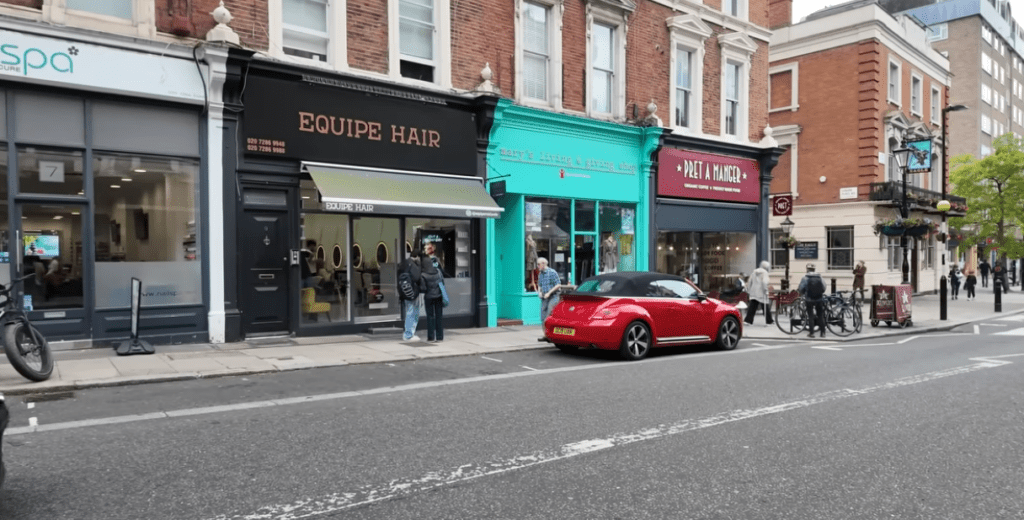
It’s important to comprehend the background these kids are from. Since 1976, the Saharawi have been living in Algerian refugee camps due to a conflict that the majority of the world has mostly forgotten. The camps are harsh, remote, and close to the town of Tindouf. There has never been easy access to high-quality education. English is more than just a foreign language to the kids growing up there. It provides access to a world that would otherwise be virtually unattainable: additional education, internet resources, potential employment, and relationships with people outside the camp’s boundaries.
Saharawi women were trained by Sandblast’s previous Desert Voicebox program to teach music and English to elementary school students in the camps. By reaching kids via screens rather than classrooms and bringing tutors to students rather than the other way around, the Virtual English Speaking Buddy initiative expands that work. It makes sense, and considering how challenging it is to maintain consistency in a remote desert camp, it’s likely a necessary extension.
Sandblast doesn’t seek out casual enthusiasts as volunteers. A TEFL or TESOL certification is highly recommended, and the charity requires at least three years of experience teaching English, ideally one-on-one. That degree of detail captures the essence of what is needed for this work. These are not kids who can be given a worksheet and left to complete it. They need someone who can use a small screen to read the room, detect hesitation, know when to push and when to back off, and adjust when a planned session isn’t going as planned.
It’s truly amazing what can be achieved after six months of this kind of regular, concentrated conversation practice. Although it’s still unclear if every child reaches the same milestone—development depends on age, prior exposure to English, and the amount of practice the child can do outside of sessions—for those who regularly participate, the improvements in spoken confidence are typically quantifiable and occasionally striking. During that time, a child who can hardly say hello at first can engage in meaningful conversation. That may sound modest. It isn’t.
The issue of how to assist the language development of refugee children has received increased attention in recent years in London and throughout the United Kingdom. Comprehensive guidelines on ESOL provision for resettled communities are published by the Greater London Authority. The National Funding Formula provides EAL funding to schools. The gaps left by the official systems are filled by charities and community organizations. Serving children who are not in the UK at all, who do not appear in any London school census, and who would not receive EAL funding regardless of how much they needed it, Sandblast’s work sits at a specific intersection of all of this.
There’s something worthwhile to occupy that space. By the majority of official measures, the children that Sandblast is attempting to reach are not visible to the systems that are intended to assist individuals in precisely their situation. For a ten-year-old in an Algerian desert camp who wishes to learn English, a London volunteer setting up a thirty-minute conversation lesson on a Tuesday night is, in a sense, the whole infrastructure. You’re asking a lot of a volunteer program. Additionally, it may be one of the more straightforward and truthful ways that international education support is currently provided.
The more difficult question is whether such programs can be maintained and expanded. Recruiting volunteers is never certain. The charity still has little money. And year after year, the kids they are attempting to reach continue to mature and require more. However, the model itself—consistent, individualized, low-barrier, and centered on spoken confidence rather than formal certification—seems to be pointing to something genuine about how language acquisition functions for kids in challenging situations. Sometimes all it takes is a trustworthy voice on a screen who is willing to listen twice a week.
London Bilingualism's content on health, medicine, and weight loss is solely meant for general educational and informational purposes. This website does not offer any diagnosis, treatment recommendations, or medical advice.
We consistently compile and disseminate the most recent information, findings, and advancements from the medical, health, and weight loss sectors. When content contains opinions, commentary, or viewpoints from professionals, industry leaders, or other people, it is published exactly as it is and reflects those people's opinions rather than London Bilingualism's editorial stance.
We strongly advise all readers to consult a qualified medical professional before acting on any medical, health, dietary, or pharmaceutical information found on this website. Since every person's health situation is different, only a qualified healthcare provider who is familiar with your medical history can offer you advice that is suitable for you.
In a similar vein, any legal, regulatory, or compliance-related information found on this platform is provided solely for informational purposes and should not be used without first obtaining independent legal counsel from a licensed attorney.
You understand and agree that London Bilingualism, its editors, contributors, and affiliated parties are not responsible for any decisions made using the information on this website.
