

In Vermont, the woods undergo a transformation each spring. The mud season gives way to green, the trails around Burlington begin to fill with hikers once more, and the blacklegged tick is waiting somewhere in the underbrush, patiently and almost undetectable, on a blade of tall grass or a low-hanging leaf at ankle height. The arrival of tick season is not an abstract concept for people living in this state. It is a ritual anxiety, a reason to run lint rollers over kids’ clothes and check behind knees before bed, a reason to second-guess every backyard get-together and trail walk. The prevalence of Lyme disease in Vermont is among the highest in the country. For years, that has been the case. It might be cautiously beginning to change at last.
In late March 2026, Pfizer declared that it would apply for regulatory approval for a novel Lyme disease vaccine that it was developing in partnership with the French biotech company Valneva. In its Phase 3 clinical trial, a large, placebo-controlled study with participants aged five and older, the candidate, known as PF-07307405, demonstrated an efficacy of approximately 73 to 75 percent in preventing confirmed cases of Lyme disease.
| Category | Details |
|---|---|
| Vaccine Candidate | PF-07307405 (LB6V) — a 6-valent OspA-based Lyme disease vaccine developed jointly by Pfizer Inc. (NYSE: PFE) and Valneva SE; formerly known as VLA15 |
| Phase 3 Trial Name | VALOR — “Vaccine Against Lyme for Outdoor Recreationists” (NCT05477524); multicenter, placebo-controlled, randomized, observer-blinded trial conducted across the US, Canada, and Europe |
| Efficacy Results | 73.2% efficacy from 28 days post-dose 4 (season 2); 74.8% efficacy from 1 day post-dose 4 — both analyses showing clinically meaningful protection against confirmed Lyme disease cases |
| Trial Limitation | Fewer Lyme disease cases accrued than anticipated; the pre-determined statistical criterion (95% CI lower bound >20) was not met in the primary endpoint — though the second pre-specified analysis did meet the threshold |
| Eligible Age Group | Individuals aged 5 years and older; four-dose schedule administered at months 0, 2, 5–9, with a fourth dose one year later before the following Lyme season |
| Vermont’s Case Rate | Vermont ranks among the highest in the US for Lyme disease cases, according to the Vermont Health Department; dense wooded terrain and high blacklegged tick populations drive the state’s elevated risk |
| US Annual Case Burden | Approximately 476,000 Americans are diagnosed and treated for Lyme disease each year (CDC estimate); 132,000 cases reported annually across European countries with surveillance systems |
| How the Vaccine Works | Targets outer surface protein A (OspA) of Borrelia burgdorferi; antibodies are ingested by the tick during feeding, inhibiting the bacterium’s ability to leave the tick and preventing transmission to the human host |
| Previous Vaccine History | LYMErix was FDA-approved in 1998 but withdrawn from the market by 2002 due to low demand driven by unfounded fears it caused arthritis — the FDA concluded it did not |
| Regulatory Next Step | Pfizer announced in March 2026 it will proceed with regulatory submissions to the FDA and other authorities; approval timeline and commercial launch date remain subject to regulatory review |
The study was conducted across high-incidence regions in the United States, Canada, and Europe. Four doses of the shot are needed, with the final dose scheduled to arrive shortly before tick season begins in the second year. During the trial, no significant safety issues were found. This is a significant development for the approximately 476,000 Americans who are diagnosed with and treated for Lyme disease annually, particularly for residents of states like Vermont where those cases are disproportionately concentrated.
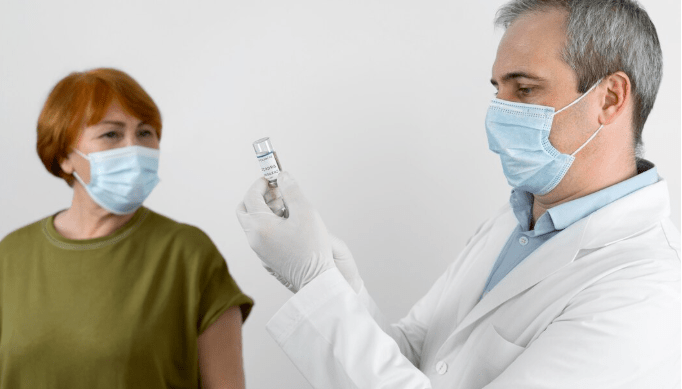
There’s a feeling that Pfizer is treading carefully in this situation, and that caution stems from a particular historical event. There used to be a Lyme vaccine. The FDA approved LYMErix in 1998, and it was sold for a few years before being quietly removed from the market in 2002. This wasn’t because regulators thought the vaccine was dangerous, but rather because the public’s demand had collapsed due to an unproven theory that the vaccine caused arthritis.
The FDA looked into it. concluded that it didn’t. However, the manufacturer decided to stop selling it because the harm to consumer confidence had already been done. Pfizer will now have to deal with public skepticism once more as a result of that incident, which left the field without a preventive option for over 20 years. Observing the company proceed with this submission in spite of the statistical complexity of the trial—the primary endpoint was technically not met, but a second pre-specified analysis did cross the threshold—indicates that they feel the public health case is compelling enough to present it directly to regulators.
The science underlying the vaccine’s mechanism of action is truly fascinating. PF-07307405 targets the tick itself while it is feeding, as opposed to merely teaching the human immune system to combat the bacteria after exposure. The tick consumes both the blood meal and the antibodies produced by the vaccination when it bites an immunized person. The Borrelia bacteria that reside inside the tick are then prevented from migrating from the tick’s gut into the human host by those antibodies binding to proteins on the bacteria. The tick consumes food. The bacteria are immobile. Researchers have called this mechanism “elegant,” and it’s important to note that the six bacterial strains covered by the vaccine include the most common ones in both North America and Europe, suggesting that its potential applications go well beyond Vermont’s forested hills.
It should be noted that the illness it aims to prevent is far more serious than the term “tick bite” might imply to someone who hasn’t personally experienced it. Lyme disease can spread from the typical bull’s-eye rash to the heart, joints, and nervous system if treatment is not received. Even after receiving antibiotics, some patients continue to have symptoms like disturbed sleep, joint pain, and cognitive impairment for months or even years. Since early symptoms like fatigue and mild fever are easily misinterpreted as something else entirely, many public health researchers believe the true number is significantly higher than what is officially reported. The CDC estimates cases in the hundreds of thousands each year in the US alone.
Given the main endpoint question from the VALOR trial, it is still unclear how long the FDA approval process will take or whether the agency will need more data. Pfizer has stated that it is confident in the submission, and the company has a good case because efficacy above 70% was consistently shown in two pre-specified analyses. Following approval, the vaccine’s pricing, insurance coverage, and level of promotion by public health departments in high-risk states will determine whether it becomes a true population-level tool or a specialty product that is primarily accessible to individuals who seek it out.
The stakes seem real and immediate to Vermont. There are people in this state who have experienced multiple cases of Lyme disease, who have modified their outdoor lifestyles to avoid the risk, and who check on their kids every summer evening with the same silent fear that currently has no effective remedy. The vaccine has not yet received approval. It might still encounter challenges. However, the option is at least starting to appear on the horizon for the first time in over two decades, and that is something to be aware of.
