

As a polymer chemist, Theo Dingemans spends his professional life contemplating the molecular structure of cutting-edge materials, such as those utilized in water filtration systems and aircraft. He has never had kidney disease and is not a clinician. However, his perspective on the issue changed when a coworker advised him to visit a UNC-Chapel Hill dialysis clinic to gain a better understanding of the patients his engineering work might eventually assist.
He entered a room filled with people waiting for four-hour sessions that would keep them alive until their next appointment three days later while seated in chairs and hooked up to machines. “Patients told me about how they had to be tied to a big dialysis machine three days a week because it keeps them alive,” he said, “and when they’re done at the clinic, they go home and sleep because they’re so tired.” He had a different perspective when he left the clinic. Apparently, so did his research.
| Category | Details |
|---|---|
| Global Dialysis Burden | 3.8 million people worldwide depend on dialysis to survive; approximately 2.8 million depend specifically on hemodialysis; 600,000 Americans rely on dialysis daily |
| Current Treatment Protocol | Standard hemodialysis requires four-hour sessions, three times per week, typically in a hospital or clinic setting — leaving patients exhausted and severely limiting work, travel, and social life |
| 5-Year Survival Rate | Only 41% of patients who begin hemodialysis in the US are alive after five years; approximately 50% survive to the three-year mark — outcomes that have changed little in decades |
| Technology Age | Modern dialysis is based on the same fundamental principles used in the first dialysis machine built in 1944 — over 80 years ago; core filtration technology has seen remarkably little structural change since |
| GENESIS Project (UNC-Chapel Hill) | Graphene oxide membrane technology approximately 100 times thinner than a human hair; aims to create a wearable device ~1,500 times smaller in volume than a standard dialysis machine — roughly smartphone-sized |
| NeoKidney (UMC Utrecht) | Portable hemodialysis device designed for home and travel use; uses only 4.5L of dialysis fluid vs. 30L+ for standard machines; no home modifications required; targeting CE certification in 2026–2027 |
| NeoKidney Treatment Schedule | Designed for 4–7 shorter sessions of 2 hours per week — more frequent, gentler treatment reducing fluid and waste fluctuations compared to the traditional 3×4-hour schedule |
| Chronic Kidney Disease Scale | An estimated 850 million people globally live with chronic kidney disease; by 2040, kidney disease is projected to rise from the 12th to the 5th leading cause of death worldwide |
| Wearable Artificial Kidney (WAK) | The only wearable kidney device tested in humans to date; weighs approximately two pounds in its latest version; three human studies completed with positive results; further trials ongoing before public availability |
| Future Vision | Researchers at UMC Utrecht envision dialysis eventually possible without large devices or needles through implantable technology — still years away but the trajectory of development is accelerating |
In its most basic form, the hemodialysis machine to which those patients were attached is a 1944 invention that can be found in clinics all over the United States and the world. More than eight decades ago, the first dialysis machine was constructed. Remarkably little has changed since then in the fundamental technology used to remove excess fluid and toxins from the blood. This is not a minor observation. One of the more bizarre facts of contemporary medicine is that a treatment that keeps about 3.8 million people alive worldwide is based on a mechanical idea that predates commercial television. Dialysis is effective. However, it functions similarly to a 1944 solution: it is heavy, immobile, demanding, and designed with the needs of the machine rather than the patient’s life in mind.
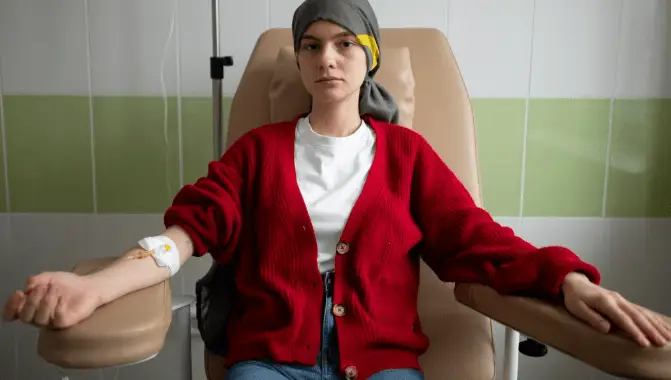
The current generation of engineers and researchers is attempting to undermine that. Dingemans and his colleagues at UNC-Chapel Hill are working on a graphene oxide membrane technology that is about 100 times thinner than a human hair. The goal is to reduce the size of today’s refrigerator-sized dialysis machines to a smartphone-sized device that could be strapped to a patient’s arm and continuously filter their blood while they go about their daily lives.
Although the project, known as GENESIS, is still in the prototype stage, the idea is so compelling that it has garnered significant scientific interest. The final device would be about 1,500 times smaller in volume than what is currently found in dialysis clinics if the membrane functions as intended. The nephrologist who initially brought Dingemans to that clinic, Dr. Prabir Roy-Chaudhury, referred to it as a “smartphone moment”—the moment when cutting-edge technology becomes available at a lower cost and fundamentally alters everyone’s life. The iPhone analogy is purposeful and, it seems, well thought out.
Another team in the Netherlands has already advanced past prototypes. In January 2026, researchers at UMC Utrecht started testing the NeoKidney, a portable artificial kidney, with real patients at home. This was the first trial of its kind in the nation. The NeoKidney is more like a carry-on suitcase than a smartphone at this point. However, no special electrical wiring, no connection to a dedicated water line or drainage system, and no home modifications are needed. Unlike standard hemodialysis, which uses more than 30 liters of dialysis fluid per session, it uses 4.5 liters.
The study’s participants dialyze four to seven times a week in shorter two-hour sessions, which results in more gentle, continuous treatment with fewer of the sharp fluctuations in fluid and waste levels that make the conventional schedule so physically taxing. “Dialysis is life-saving, but also very burdensome,” the nephrologist in charge of the Utrecht study, Karin Gerritsen, stated. “With a portable artificial kidney, we want to give patients more freedom and make the treatment fit better with their daily lives.” The trial’s results are anticipated in 2027, and CE certification in Europe may come soon after.
It’s difficult not to feel something as you watch this happen, a subtle blend of long-needed relief and mild annoyance at how slowly medicine usually progresses. In the US, the five-year survival rate for dialysis patients is approximately 41%. For decades, that figure has been obstinately resistant to improvement, in part because the underlying treatment hasn’t evolved sufficiently to change it. Dialysis would not only be more convenient with the wearable and portable devices currently under development.
Researchers believe that continuous or more frequent dialysis could significantly improve cardiovascular outcomes and overall survival because it more closely resembles what healthy kidneys actually do, filtering continuously rather than in concentrated bursts three times a week. In nephrology circles, cautious optimism is growing, but caution is stressed. The WAK, a wearable artificial kidney that has been tested on humans, is currently two pounds in weight and needs more clinical testing before it can be made available to the general public.
It is truly hard to comprehend the scope of the need underlying all of this. Currently, an estimated 850 million people worldwide suffer from chronic kidney disease. Kidney disease is expected to rise from its current ranking of twelfth to the fifth most common cause of death worldwide by 2040. Approximately one in seven adults in the US suffer from the illness. Although the pipeline from early chronic illness to kidney failure is lengthy, it is heavily populated, and the infrastructure in place to manage it was not designed for the future. Implantable artificial kidneys, wearable technology, and portable devices are not specialized medical oddities. If the research is correct, they are the only realistic solution to an issue that is subtly growing much bigger.
The regulatory path in both the US and Europe is extremely complicated, and it’s still unclear when any of these devices will transition from trial to widespread clinical use. However, compared to earlier cycles of optimism in this field, the direction has changed in a way that feels different. The materials are superior. The engineering partnership is more serious. And somewhere in a dialysis clinic, a patient is waiting to go home and sleep for the fourth hour while sitting in a chair. The patient is unaware that the person attempting to alter the situation is a polymer chemist who has learned to speak a different language.
