

The question practically answers itself when you stroll down Kingsland Road on a Tuesday afternoon. A Polish grocery store, a Vietnamese pho restaurant, and a Caribbean takeaway with a hand-painted sign that reads both English and patois are all adjacent to a Turkish bakery. For a hundred years, the buses have rumbled past with the same uncaring rhythm.
However, the conversations that spill out of the doorways—in Bengali, Yoruba, Urdu, Spanish, Albanian, and occasionally three of them combined into a single sentence by a teenager texting their mother—indicate that there is more going on than just menu variety.
| Information | Details |
|---|---|
| City | London, capital of England and the United Kingdom |
| Population (2024) | 9.1 million |
| Languages spoken | Over 300, according to municipal data |
| Founded | Around AD 47 as Roman Londinium |
| Local government | Greater London Authority and 33 borough councils |
| Mayor (current) | Sadiq Khan, in office since 2016 |
| Most multilingual borough | Hackney, with 88+ recorded languages |
| Notable cultural institutions | British Museum, National Gallery, British Library |
| Bilingual status proposal | Informal campaign, not yet government-backed |
| Reference for demographics | Office for National Statistics census records |
This is the texture that almost unavoidably gave rise to the movement to make London the first bilingual city in England, which has been quietly gaining traction over the past eighteen months. The political class is still largely silent, the proposal is loose, and the coalition supporting it is unofficial. However, the concept is no longer novel. It is being discussed in academic seminars at SOAS, on community boards in Tower Hamlets, and in the kind of comment threads where people engage in surprisingly civil debate.
The advocates’ argument is both emotional and demographic in nature. Approximately one-third of Londoners do not speak English as their first language. That number rises in some boroughs, especially Newham and Hackney. Between 2004 and 2010, sociolinguists studying Hackney discovered friendship groups of five-year-olds whose parents were from Cockney, Bangladesh, Morocco, Albania, Turkey, and the Caribbean. The Cockney of their grandparents was not the English those kids grew up speaking. Drawing from a “feature pool” as one researcher put it, it was something looser and constantly evolving.
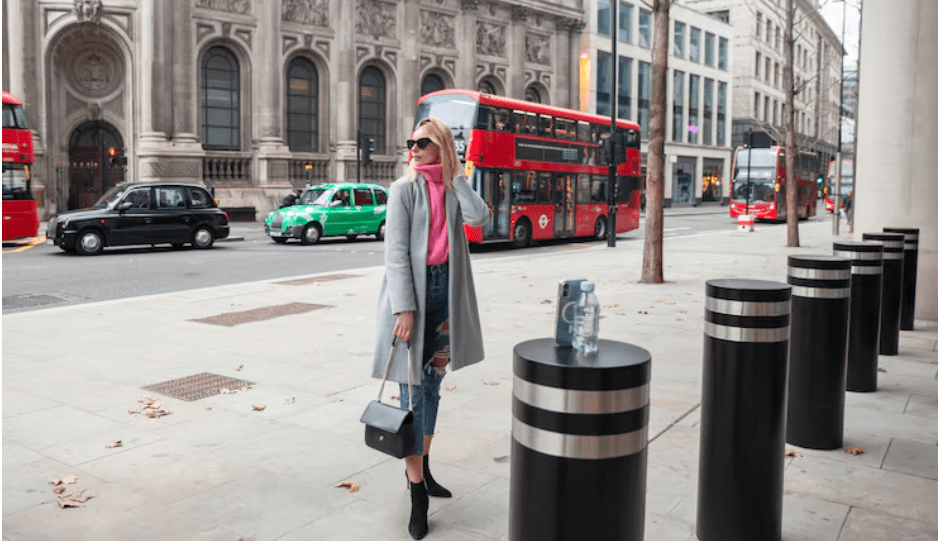
The messier part of the conversation is what “bilingual” would actually mean in practice. Some advocates want a second language to be officially recognized; depending on the neighborhood, they typically recommend Bengali, Urdu, or occasionally Polish. Some advocate for a Welsh-style model in which government communications, public services, and signage would automatically appear in two languages. In a city where there are already more than 300 languages spoken, a third, smaller but more vocal group says it is impossible to choose just one second language. They say you insult the others if you choose one.
When resistance occurs, it’s difficult to ignore the fact that it’s not always where you would anticipate it. Long-term immigrant communities have expressed some of the strongest opposition, fearing that official recognition would freeze their way of life and transform reality into bureaucratic categories. Others see it as another deterioration of something they can’t quite put their finger on, especially older residents who still identify as East Enders. There is an unspoken sense that London has been evolving more quickly than any city has the right to, and that this would just be another declaration of a reality that has already been achieved.
The statement made by Sadiq Khan last year that London is “an English and a British city” runs counter to all of this. He was correct. In the most recent census, about 3.5 million people in London identified as English, which is more than Birmingham’s total population. Lord’s, Twickenham, Wembley, and the kind of folk-music institutions that subtly demand a more profound Englishness than the tourist-postcard version are all located in the capital. None of that would be replaced by a bilingual London, should it ever come to pass. It could just formalize what people have been saying on the streets for decades.
It remains to be seen if Westminster is interested in the discussion. Most likely not—at least not just yet. However, it is unlikely that the campaign will end. Cities ultimately have a tendency to enact laws only after experiencing their reality for a considerable amount of time.
London Bilingualism's content on health, medicine, and weight loss is solely meant for general educational and informational purposes. This website does not offer any diagnosis, treatment recommendations, or medical advice.
We consistently compile and disseminate the most recent information, findings, and advancements from the medical, health, and weight loss sectors. When content contains opinions, commentary, or viewpoints from professionals, industry leaders, or other people, it is published exactly as it is and reflects those people's opinions rather than London Bilingualism's editorial stance.
We strongly advise all readers to consult a qualified medical professional before acting on any medical, health, dietary, or pharmaceutical information found on this website. Since every person's health situation is different, only a qualified healthcare provider who is familiar with your medical history can offer you advice that is suitable for you.
In a similar vein, any legal, regulatory, or compliance-related information found on this platform is provided solely for informational purposes and should not be used without first obtaining independent legal counsel from a licensed attorney.
You understand and agree that London Bilingualism, its editors, contributors, and affiliated parties are not responsible for any decisions made using the information on this website.
