

American doctors often come to a quiet realization somewhere between the third coffee of a long shift and the fourth patient who speaks only Spanish. They did not agree to serve as translators. They also didn’t anticipate that a language they only vaguely remembered from high school would suddenly prevent them from receiving an accurate diagnosis. But increasingly, that’s precisely where they end up.
When you enter any urgent care facility in Houston, Phoenix, or even rural Georgia, the waiting room’s rhythm conveys the story before the charts do. A mother is seen practicing an English sentence under her breath while holding her daughter’s hand. An elderly man is using a translation app while his thumb trembles. With perhaps forty seconds to spare, the doctor enters, hoping that the interpreter line will pick up. Usually, it doesn’t—at least not quickly enough.
| Topic Snapshot | Details |
|---|---|
| Subject | The growing trend of U.S. physicians enrolling in medical Spanish intensives |
| Primary Audience | Doctors, medical residents, nurse practitioners, public health workers |
| Typical Program Length | One to four weeks of full immersion |
| Common Destinations | Guatemala, Mexico, Costa Rica, and stateside hospital partnerships |
| Estimated U.S. Spanish-speaking patients | Over 62 million Hispanic residents nationwide |
| Driving Factor | Patient safety, malpractice risk, and the shortage of medical interpreters |
| Cost Range | $1,500 to $5,500 per program, often reimbursed as continuing education |
| Notable Accreditation | CME credits recognized by the American Academy of Family Physicians |
| Skill Focus | Clinical interviews, symptom vocabulary, cultural competency |
| Outcome | Improved diagnostic accuracy and patient trust |
Medical Spanish intensives have begun to fill that gap, and it has become more difficult to ignore the demand. Waitlists are being reported by programs in Oaxaca, Mexico, and Antigua, Guatemala. Intensives in the United States, such as those offered by university medical schools, have discreetly doubled in number. Vacation days are being used by locals. Attendees must pay for their attendance out of pocket. It’s not just policy that has changed.
Plain numbers make up part of it. Spanish-speaking patients now make up a significant portion of caseloads in almost every specialty, from pediatrics to oncology, as the Hispanic population in the US continues to grow. There are telephone interpreting services available, but they are costly, cumbersome, and slow. Practicing physicians believe that those services were never really intended for the speed at which medicine is practiced. There may not always be time for a three-way call when a patient describes chest pain.
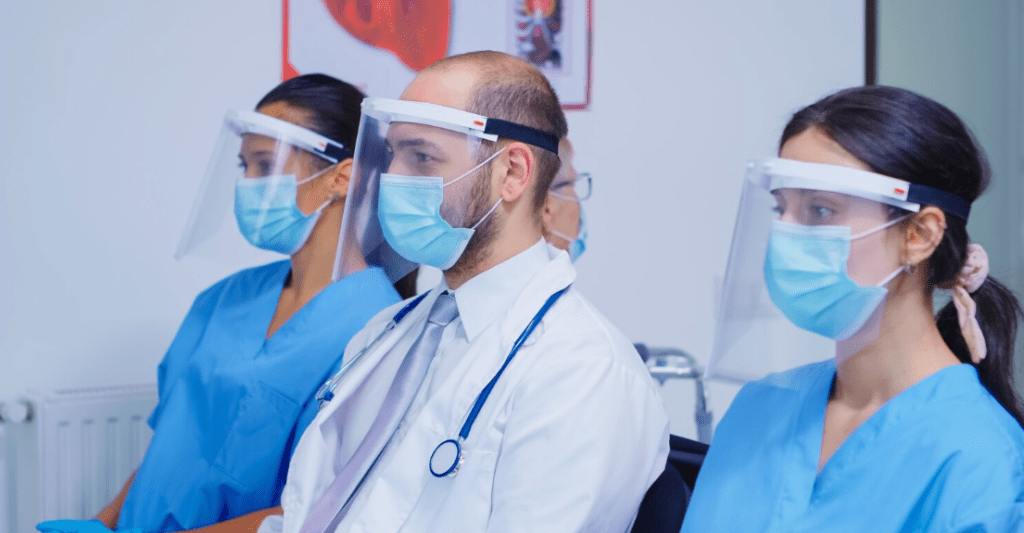
Then there’s the trust component, which may be more significant but is more difficult to measure. A doctor enters the room in a different way if they can say “voy a tomarte el pulso” with a steady voice and ask “₂desde cu Españo te sientes α?” without fumbling. Patients notice it right away. They bend closer. They divulge information that they might have otherwise kept to themselves. Everyone who has worked in a clinic that serves immigrant communities will tell you the same thing, frequently with a weary smile: the door was already there, but the language opens it.
Some attendees are surprised by how demanding the intensives themselves are. Vocabulary exercises, role-playing with fictitious patients, and occasionally a homestay with a local family who is impatient with English are all done for seven hours every day. Doctors report feeling humbled and speechless upon returning home, but also feeling more self-assured than they had anticipated. One doctor I spoke with last spring, a Minneapolis internist, said the experience brought back memories of her first year of residency—that combination of clarity and fatigue. Since then, she has continued to use it.
In a few years, the trend might slow down. Perhaps when AI translation tools become sufficiently proficient, the urgency diminishes. However, as this develops, it’s difficult to ignore how frequently technology has promised to solve human problems and how frequently it hasn’t. An app is not necessary for a patient like Alfonso, the man with the concealed tumor. He requires a physician who can look him in the eye and ask where it hurts in his native tongue. That is a minor issue. Quietly, it’s also everything.
London Bilingualism's content on health, medicine, and weight loss is solely meant for general educational and informational purposes. This website does not offer any diagnosis, treatment recommendations, or medical advice.
We consistently compile and disseminate the most recent information, findings, and advancements from the medical, health, and weight loss sectors. When content contains opinions, commentary, or viewpoints from professionals, industry leaders, or other people, it is published exactly as it is and reflects those people's opinions rather than London Bilingualism's editorial stance.
We strongly advise all readers to consult a qualified medical professional before acting on any medical, health, dietary, or pharmaceutical information found on this website. Since every person's health situation is different, only a qualified healthcare provider who is familiar with your medical history can offer you advice that is suitable for you.
In a similar vein, any legal, regulatory, or compliance-related information found on this platform is provided solely for informational purposes and should not be used without first obtaining independent legal counsel from a licensed attorney.
You understand and agree that London Bilingualism, its editors, contributors, and affiliated parties are not responsible for any decisions made using the information on this website.
