

A parent is being instructed to speak only English at home somewhere in a pediatrician’s office. Their two-and-a-half-year-old child speaks rich, natural, and full Mandarin, Spanish, or Tagalog, but the advice is given with quiet authority: stick to one language, lessen confusion, and give the child a better chance. Uncertain, the parent departs. Maybe guilty. When they get home, they begin to speak to their child differently, substituting a language that doesn’t come naturally to them for the one that does.
For decades, this advice has been incorrect. The research has been inaccurate. The clinical presumption was incorrect. Thousands of bilingual families were advised to deprive their kids of their linguistic environment in the name of developmental health, and the results have been significant and mostly undetectable because the families who heeded the advice were unaware of what they had lost.
It is easy to debunk the central myth. Overall, bilingual kids acquire language at the same pace as monolingual kids. Their combined vocabulary in both languages is similar to that of a child who is monolingual at the same age. Combining words from two languages in a single sentence, or “code-switching,” is a normal developmental phenomenon rather than an indication of disorder or confusion. A child is keeping up if they know fifteen words in one language and thirty-five in another. Simply put, the mathematics of bilingual development differs from the arithmetic that monolingual assessment instruments were intended to measure, and the incorrect tool yields the incorrect result.
| Topic | Misconceptions about bilingualism and speech/language delays in children |
|---|---|
| Key Research | Gross & Dubé (2025), Perspectives ASHA Special Interest Groups — speech-language pathologists’ language practices with bilingual children |
| Key Statistic | 22% of US residents ages 5+ speak a non-English language at home; only 8.5% of SLPs identify as multilingual providers |
| Key Finding | Only 21.5% of bilingual clients received intervention in both their languages |
| States with Most Multilingual SLPs | Texas (17.6%), California (17.0%), Florida (16.6%), New York (12.8%) |
| States with Fewest | Massachusetts (6.3%) — yet 24.5% of residents speak a non-English language at home |
| Core Myth Debunked | Bilingualism does not cause speech delays; bilingual children develop language at the same overall rate as monolingual children |
| Normal Bilingual Behavior | Code-switching (mixing languages) is developmentally typical, not a sign of disorder or confusion |
| Key Clinical Error | Assessing a bilingual child in only one language produces inaccurate, often falsely alarming results |
| Relevant Organizations | ASHA (American Speech-Language-Hearing Association); The Voz Institute, Washington DC; Ability Rehab, Melbourne |
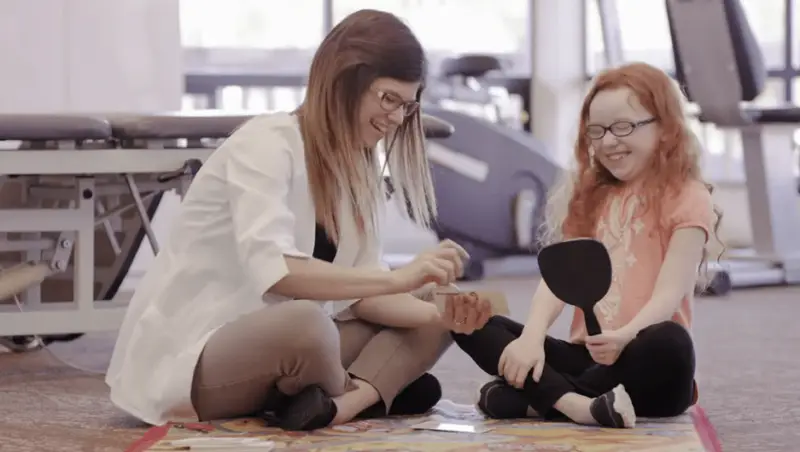
Bilingualism is not a risk factor for speech or language disorders, according to Speech Pathology Australia. Clinical guidelines supporting intervention in a child’s two languages have been published by the American Speech-Language-Hearing Association. However, there is still a large and concerning discrepancy between what is advised by professional associations and what actually occurs in clinic rooms across the United States. Only 21.5% of bilingual clients described by survey respondents were receiving intervention in both of their languages, according to a 2025 study by researchers Megan Gross and Kylie Dubé that was published in the journal Perspectives ASHA Special Interest Groups. Not both. Only one. English, most of the time. And it’s easy to figure out why: 22% of people over five speak a language other than English at home, but only 8.5% of speech-language pathologists in the US identify as multilingual providers.
That gap has structural repercussions and is a structural issue. When evaluated accurately in both languages, a bilingual child assessed solely in English may appear noticeably delayed; the deficiency is not in the child’s development but rather in the assessment tool and the clinician’s linguistic range. The child is flagged. The parents become anxious. Occasionally, a referral comes next. Additionally, the already nervous family frequently takes in a message that the bilingualism itself is the issue, regardless of how it is presented. This may have been the case for the majority of the previous fifty years in pediatric waiting rooms.
Serving both Spanish-speaking and English-speaking families, the Voz Institute in Washington, DC, functions as a bilingual speech therapy clinic. The pattern they describe is consistent throughout their caseload. Well-intentioned professionals advise families to speak only one language when they arrive. Their children are growing normally when they arrive. It turns out that the kids haven’t been confused. It’s difficult to ignore the fact that the families most impacted by this ongoing clinical error are also the ones who already encounter the greatest obstacles in the healthcare system: immigrant households, communities of color, and families whose primary language is not the one in which their child will eventually receive an education.
A few indications of change are present. The clinical guidelines published by ASHA have changed. Bilingual assessment frameworks are becoming more and more important in training programs. Pediatric speech therapy that is culturally and linguistically competent is being demonstrated by clinics such as Ability Rehab in Melbourne and The Voz Institute in Washington. It’s still unclear if these changes are making it to the pediatrician’s office, where incorrect advice is frequently given before consulting a specialist. That might be the more difficult issue to resolve. The parents seated in those waiting rooms deserve better than a myth about how their family should communicate at home that has been around for fifty years and is confidently repeated.
London Bilingualism's content on health, medicine, and weight loss is solely meant for general educational and informational purposes. This website does not offer any diagnosis, treatment recommendations, or medical advice.
We consistently compile and disseminate the most recent information, findings, and advancements from the medical, health, and weight loss sectors. When content contains opinions, commentary, or viewpoints from professionals, industry leaders, or other people, it is published exactly as it is and reflects those people's opinions rather than London Bilingualism's editorial stance.
We strongly advise all readers to consult a qualified medical professional before acting on any medical, health, dietary, or pharmaceutical information found on this website. Since every person's health situation is different, only a qualified healthcare provider who is familiar with your medical history can offer you advice that is suitable for you.
In a similar vein, any legal, regulatory, or compliance-related information found on this platform is provided solely for informational purposes and should not be used without first obtaining independent legal counsel from a licensed attorney.
You understand and agree that London Bilingualism, its editors, contributors, and affiliated parties are not responsible for any decisions made using the information on this website.
