

Mateo, a four-year-old, is fighting with a plastic owl in a tiny apartment outside of Houston. The owl, which operates on a cloud-based language model and costs roughly sixty dollars, has just fixed his Spanish. The word is galleta, he insists. After agreeing, the owl politely asks if he wants to try saying it in English as well. Mateo lets out a sigh that only a weary preschooler can. His mother laughs without looking back while doing the dishes a short distance away. Later on, she tells me that the owl is more patient than she is on most evenings during the week.
The strange thing is that stories like this are becoming commonplace. More than three-quarters of the more than five million emergent bilingual students in American public schools speak Spanish at home. These children have navigated systems that frequently viewed their native tongue as a barrier rather than a benefit for decades. A generation is now being raised alongside machines that can speak both languages fluently, never get frustrated, and recall every mispronunciation from last Tuesday—almost without anyone’s knowledge.
| Field | Detail |
|---|---|
| Topic | AI-driven bilingual learning in early childhood |
| Estimated emergent bilingual students in U.S. public schools | Over 5 million |
| Share of U.S. K-12 student body | Roughly 10% |
| Most common home language among learners | Spanish (over 75%) |
| Common AI tools cited by educators | ChatGPT, MagicSchool.ai, Diffit, Elsa Speaks |
| Key advocate referenced | Lizdelia Piñón, bilingual education researcher |
| Federal data source | National Center for Education Statistics |
| Translation tools used in schools | Google Translate, DeepL, Microsoft Translator |
| Notable academic finding | Wei (2023) on AI-mediated language gains |
| Related federal policy office | U.S. Department of Education’s Office of English Language Acquisition |
| Time horizon discussed | 2025 to 2125, in ten-year increments |
The educators I’ve talked to have conflicting opinions. A longtime supporter of bilingual education, Lizdelia Piñón, has maintained that while AI won’t replace teachers, it might at last give them more space. When you observe a single classroom teacher juggling six proficiency levels at once, her argument takes on a different meaning. Speaking with professionals in this field gives the impression that the technology was introduced as a silent act of triage rather than as a luxury.
A sort of soft scaffolding for kids’ language development is starting to emerge. AI chatbots mimic dialogue. Real-time pronunciation scores are provided by speech recognition software. In a matter of seconds, platforms such as Diffit and MagicSchool produce culturally appropriate reading passages—a task that used to take up whole weekends. Parent-teacher conferences that previously depended on a bilingual cousin who was called in at the last minute are now mediated by translation apps, despite their flaws.
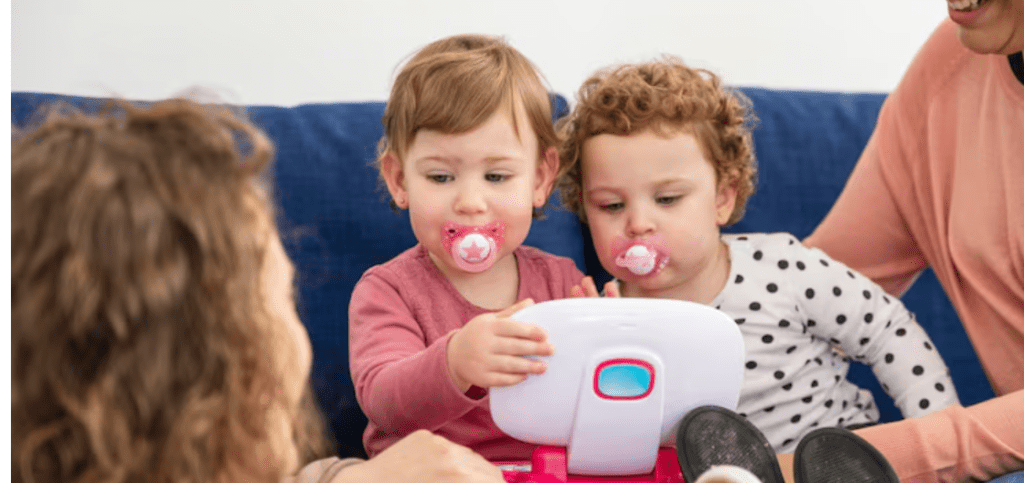
The amount of this that takes place outside of the classroom is difficult to ignore. Kitchen smart speakers. tablets before going to bed. plush toys that sing lullabies in two languages. The true change might be occurring at home rather than at school. Although the long-term picture is still genuinely unclear, researchers like Wei have shown quantifiable improvements in children’s motivation and self-regulation when using AI-mediated language tools. Simply put, we have no idea what it’s like to grow up with a machine that responds all the time.
There are genuine concerns as well. Certain accents have been shown to be biased by speech recognition software, which occasionally flags children who are perfectly fluent as needing remediation. Sometimes, sentences that no human would write are produced by translation tools. And the deeper question, the one parents tend to raise after a second cup of coffee, is harder to answer: what happens to a child’s relationship with language when one of its earliest conversation partners is an algorithm?
Still, watching this unfold, it’s difficult to dismiss the upside. A boy in Houston is learning two languages because a plastic owl refuses to give up on him. His mother, exhausted, finally has a partner in the work of raising him bilingual. Decades from now, demographers may look back at this moment as the unlikely beginning of America’s most multilingual generation, raised partly by parents, partly by teachers, and partly by something humming quietly on the kitchen counter.
London Bilingualism's content on health, medicine, and weight loss is solely meant for general educational and informational purposes. This website does not offer any diagnosis, treatment recommendations, or medical advice.
We consistently compile and disseminate the most recent information, findings, and advancements from the medical, health, and weight loss sectors. When content contains opinions, commentary, or viewpoints from professionals, industry leaders, or other people, it is published exactly as it is and reflects those people's opinions rather than London Bilingualism's editorial stance.
We strongly advise all readers to consult a qualified medical professional before acting on any medical, health, dietary, or pharmaceutical information found on this website. Since every person's health situation is different, only a qualified healthcare provider who is familiar with your medical history can offer you advice that is suitable for you.
In a similar vein, any legal, regulatory, or compliance-related information found on this platform is provided solely for informational purposes and should not be used without first obtaining independent legal counsel from a licensed attorney.
You understand and agree that London Bilingualism, its editors, contributors, and affiliated parties are not responsible for any decisions made using the information on this website.
